

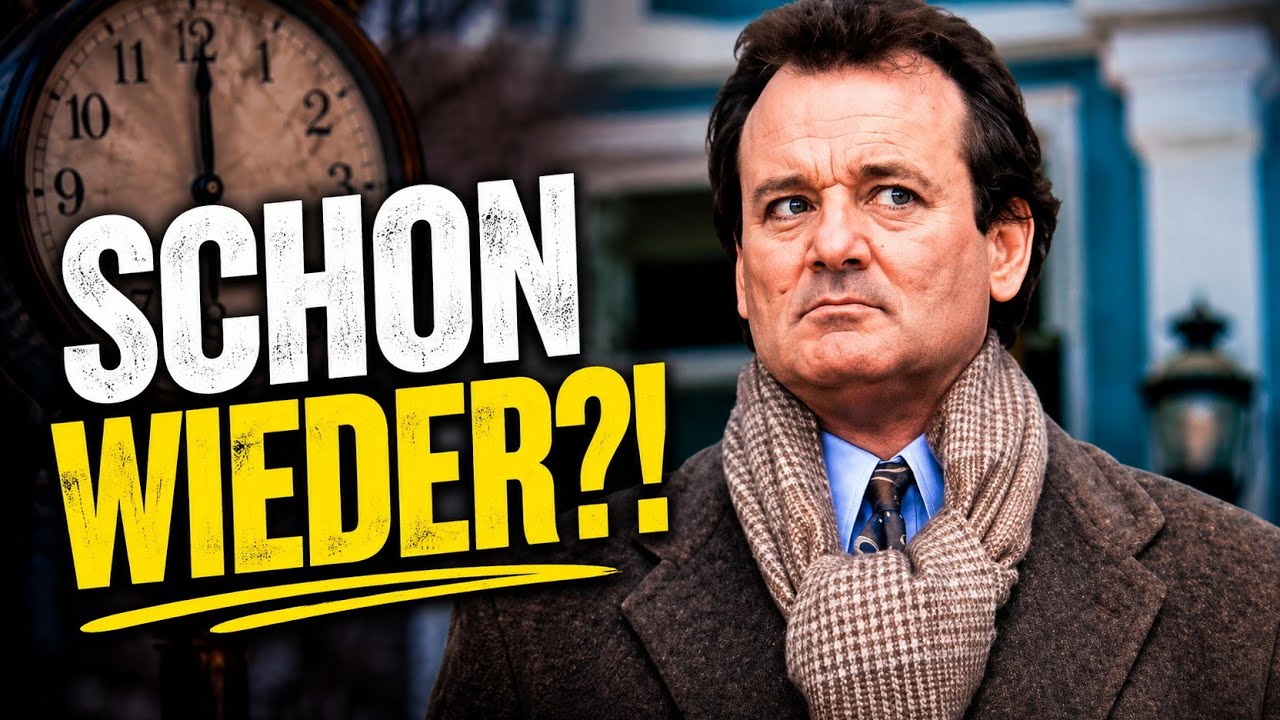
More than a time-loop premise
Cynical weather presenter Phil Connors is stuck: he experiences the same Groundhog Day over and over. Harold Ramis and screenwriter Danny Rubin turn that simple fantasy premise into a mixture of comedy and romance that reaches far beyond the puzzle of the time loop. Bill Murray provides the right central character: a man whose dry humour entertains even as his cynicism keeps people at a distance.
One of the film’s great achievements is that the repetition never becomes monotonous. Camera, editing and music keep giving the same day a different effect. Sonny & Cher’s I Got You Babe becomes a storytelling device as the morning wake-up call: the familiar music alone makes the loop tangible.
Spoilers: detailed discussionContains story spoilers. Open deliberately.
What Phil has to change
At first, Phil uses the repetitions for his own pleasure. But that apparent freedom brings him up against the emptiness of his existence. Excess gives way to despair, depression and repeated suicide attempts. Ramis allows the film to reach the darker implications of its premise. The search for an escape becomes a question of meaning and fulfilment.
At its heart is Phil’s transformation from a self-absorbed egotist into someone who values others. He begins to understand compassion and personal growth. The comedy remains: Murray’s dry humour connects the absurd possibilities of the repeated day to small shifts in Phil’s behaviour.
His relationship with producer Rita is essential to that development. Andie MacDowell gives her a warm, grounding presence. Her scepticism and gradual recognition of Phil’s change form a convincing counterpoint to him. Their relationship shows that love cannot be manufactured through manipulation. Genuine growth and self-reflection finally make possible the closeness Phil wants. Ultimately, that path leads him to love and out of the loop.
Comedy, belief and the shape of repetition
The loop can also be read as a spiritual allegory. Rebirth, repentance and enlightenment offer connections to Buddhist, Christian and Jewish interpretations. The everyday question beneath them remains central: what consequences do our actions have, and what could we do better next time? The film turns that into entertainment while leaving room to reflect on our own lives.
Ramis balances comedy and depth masterfully. Punxsutawney, filmed in Woodstock, Illinois, gives the setting a timeless quality. The camera finds different perspectives on recurring events; editing and music keep the variations alive. The form repeats while Phil’s relationship to the day changes. That makes the repetitions interesting and gives them meaning.
Murray delivers a career highlight. Sarcasm, despair and growing humanity make Phil’s development convincing even as his surroundings continually reset. MacDowell’s warmth provides a counterweight and makes their growing affection believable. The production history, including the collaboration and tensions between Ramis and Murray, adds an interesting background: creative differences accompanied one of the most significant films of their careers.
Verdict
For me, Groundhog Day is a timeless masterpiece. The inventive story, performances and Ramis’s direction combine comedy with a serious idea of how a person can change. The repetition gains its meaning from Phil’s growing attention to others. That is why this endlessly recurring day remains worth watching decades later.