

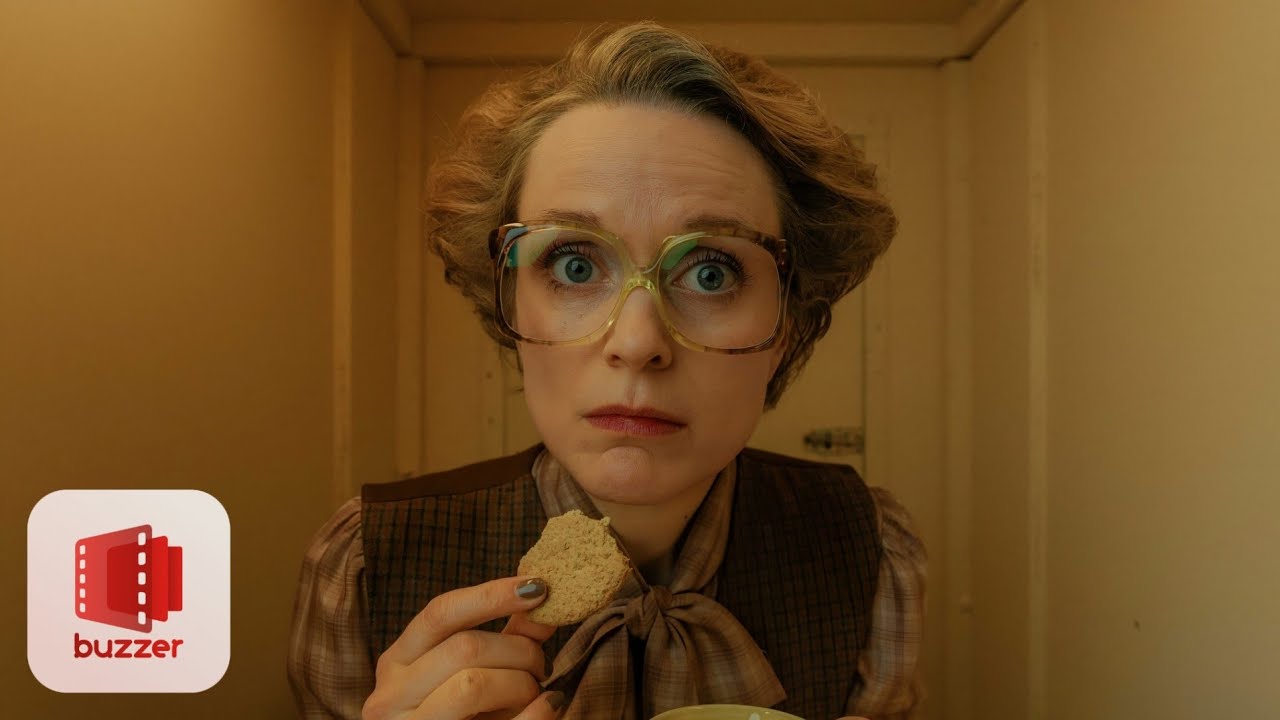
Zweigstelle is a remarkably strange feature debut from Julius Grimm. Four young people die in a car accident and arrive neither in heaven nor hell, but in an afterlife administration office. Unaware that they are dead, they wait, take numbers, complete forms and negotiate their fate with peculiar clerks. Bureaucracy continues beyond death in this intermediate world.
Bureaucracy in the afterlife
Sarah Mahita plays Resi, travelling with an urn and considerable emotional baggage. Along with three fellow travellers, played by David Ali Rashed, Beritan Balci and Julian Gutmann, she enters this world after the crash. Discovering how the office works is part of the game: everything is questioned, misunderstood or ignored rather than explained. That is the film's appeal. The afterlife becomes an administrative procedure, complete with waiting tickets, closed doors and a caretaker who knows more than everyone else.
Situational humour
I like that the film does not rely on cheap jokes or slapstick. The humour grows from situations and the absurdity of everyday life. Its spaces are plain and almost empty, and its mood moves between tragicomedy and quiet absurdity. Being dead but still needing the right form to discover where you are going is more than satire: it reflects our world through a supernatural scenario.
A scattered middle
Not everything works. The film wants to do a great deal, perhaps too much. Some office characters remain functions rather than fully developed people. Even at around 98 minutes, the middle feels scattered. Flashbacks, emotional hints and smaller storylines do not all contribute equally. I wanted more development within the central group; sometimes we get outlines where depth was needed.
Sarah Mahita
Mahita nevertheless convinces. Resi is both resistant and vulnerable, her looks communicating unspoken anger, grief and defiance. She becomes the film's clear emotional anchor. Rainer Bock, Johanna Bittenbinder and Luise Kinseher also make small but distinctive appearances in the office afterlife.
The distinctive tone
What makes Zweigstelle special to me is its tone. Melancholy reflection and administrative grotesquerie work surprisingly well together. There is a strange calm despite its concerns with death, guilt and identity. It is neither a conventional comedy nor a straightforward drama, but something of its own. That is far from inevitable in German cinema.
Verdict
I give Zweigstelle 6 out of 10. It is bold, unusual and human in its own way. Its weaknesses are real, but it attempts an uncommon combination of humour and death without becoming silly. Viewers willing to engage with that mixture should find it rewarding.