

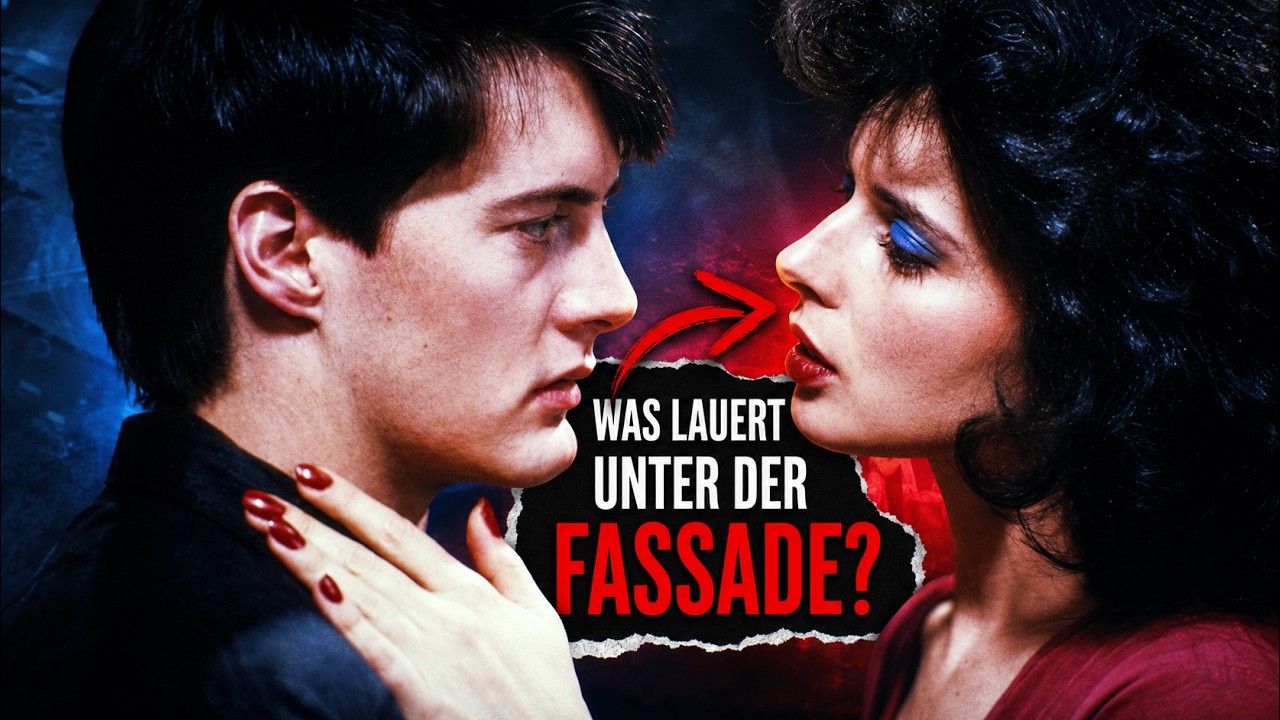
Blue Velvet remains a divisive, fascinating landmark of American cinema. David Lynch exposes the darkness behind a seemingly perfect small town, creating a disturbing portrait of violence, symbolism and hidden desires.
An ear in Lumberton
Kyle MacLachlan plays Jeffrey Beaumont, returning to Lumberton after his father becomes ill. White fences, neat gardens and friendly neighbours suggest an ideal town. Finding a severed ear in the grass disrupts that picture and draws Jeffrey towards a world of violence and corruption.
Jeffrey, Sandy and Dorothy
With Sandy Williams, played by Laura Dern, Jeffrey investigates. Their search leads to singer Dorothy Vallens, played by Isabella Rossellini, and the violent Frank Booth, played by Dennis Hopper. Jeffrey's curiosity becomes a dangerous attraction. Lynch reveals how easily investigation can turn into obsession, and how uncertain the boundary between good and evil becomes.
The town’s façade
The film draws its power from contrasts. Sunny streets face dark apartments and filthy back rooms. The reassuring surface of Lumberton hides what its residents would rather suppress. That confrontation with the American Dream's hypocrisy gives Blue Velvet a lasting force beyond its thriller plot.
Spoilers: detailed discussionContains story spoilers. Open deliberately.
Characters in darkness
Jeffrey's relationship with Sandy suggests an aspiration towards innocence, while his attraction to Dorothy exposes suppressed desires. He is no uncomplicated hero: exploring the town also means encountering his own darkness. Dorothy is trapped by abuse and coercion, with control and pain dominating her connection to Frank. Hopper makes Frank terrifying through volatile rage and bizarre behaviour. He can be read as the chaos concealed by civilisation's tidy appearance.
An artificial peace
The conclusion seems to restore normality. Jeffrey sits with Sandy and her family, sunshine returns and a robin offers an image of hope. Yet the bird looks mechanical. For me that artificial appearance complicates the apparent peace: harmony may be a constructed surface hiding darkness that has merely been covered over. Sandy's earlier association of robins with love makes the contrast especially striking.
The confrontation
The confrontation in Dorothy's apartment makes the corruption concrete. Her husband is dead, and the badly wounded 'Yellow Man' remains strangely upright. Frank arrives in disguise; Jeffrey survives by killing him. That disturbing, almost surreal scene brings criminal violence and police corruption together, while making escape depend on personal violence rather than a clean restoration of innocence.
Velvet and an ear
The blue velvet fabric becomes a fetish within Frank's coercive behaviour. It connects power, control and sexual obsession. Reading it through a damaged mother-child relationship is possible, but remains an interpretation rather than a confirmed biography. The severed ear works differently: an invitation to listen more deeply and enter a world that the town's surface conceals.
Gas and role-playing
Frank's repeated gas inhalation is never given a dependable explanation in the film. Speculation about the substance cannot establish what it is. Symbolically, the ritual can suggest attempted self-numbing or a damaged mind trying to control itself. His 'Mommy' and 'Baby' roles similarly invite questions about childhood, but Lynch supplies no explicit history. Frank can also function as destructive evil without an explanation that makes him safe or comprehensible.
Jeffrey’s attraction to violence
Jeffrey does not merely oppose the darkness. He is fascinated by the power and violence within it, and his own behaviour towards Dorothy becomes disturbing. Lynch locates the possibility of cruelty within apparently decent people as well as within Frank. Dorothy's situation is a coercive, abusive captivity; a psychological reading should not confuse it with a freely chosen relationship.
Verdict
Blue Velvet disturbs, fascinates and invites thought. Lynch tears away normality's façade and refuses easy answers. As thriller, psychological drama and social criticism, it is a timeless work whose nightmare lingers after the credits. It is something to experience, not simply solve, and it does not easily let go.
Watch the film at home
As an Amazon Associate I earn from qualifying purchases. Using these links does not add to the price you pay.