

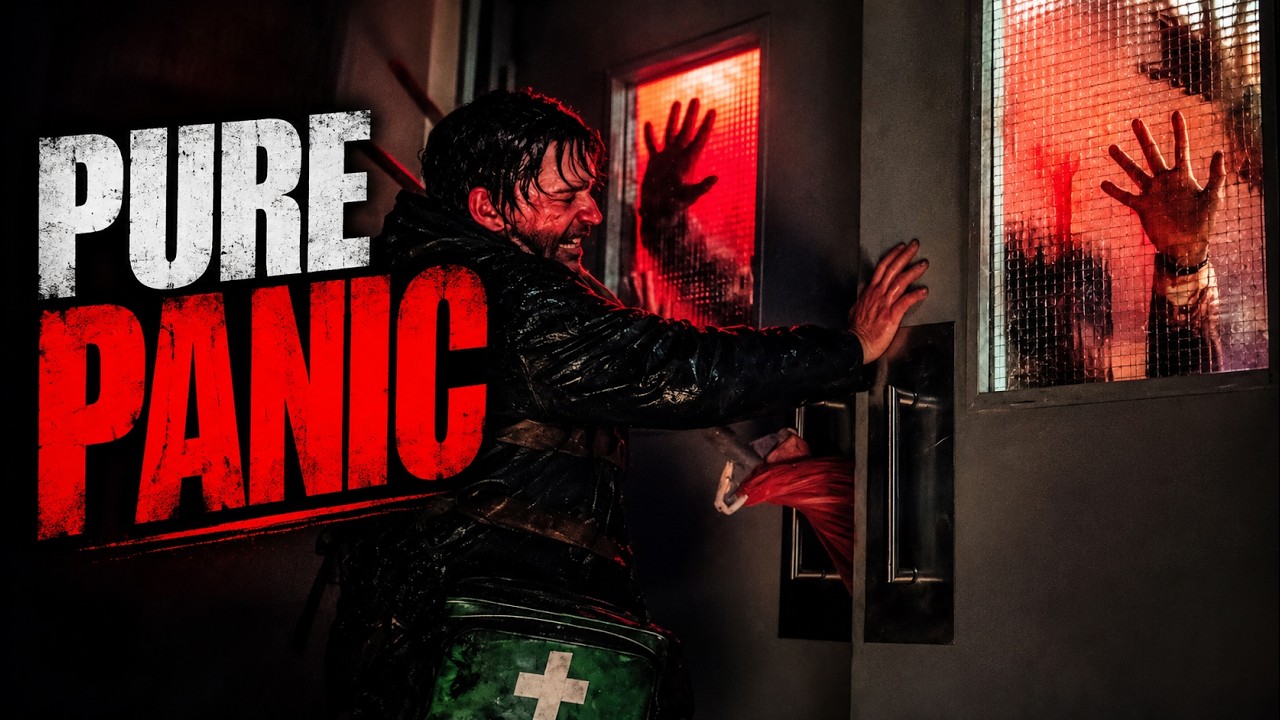
A film built from panic
Most video game movies try to copy the story. Resident Evil does something smarter: it copies the panic.
Faithful to the pressure
Zach Cregger’s Resident Evil is not a direct adaptation of Resident Evil 2, 4, 7, or any other game. Instead, it takes the basic rhythm of the series and turns that into a movie: limited ammo, bad decisions, locked doors, disgusting creatures, and the constant feeling that the next room might be worse than the last. That makes it surprisingly faithful without being chained to a familiar plot or existing protagonist.
Bryan is no action hero
Austin Abrams plays Bryan, a medical courier who accepts one final delivery to Raccoon City on a freezing night. He is not a soldier, not a cop, and definitely not an action hero. That choice is the film’s smartest move. Bryan is scared, clumsy with weapons, and constantly forced to learn how to survive while everything around him becomes more absurd and more dangerous.
Humour under pressure
Abrams carries the film with a performance that makes panic funny without turning Bryan into a joke. His reactions keep the movie grounded even when Cregger starts throwing increasingly grotesque monsters at him. The humor is dark and often very effective because it comes from stress, frustration, and disbelief rather than from characters treating the danger like a punchline.
Playing without a controller
Visually, the film understands something most game adaptations miss: fidelity is not about recreating cutscenes. It is about recreating the pressure of playing. Searching rooms, conserving bullets, moving through dark corridors, finding the wrong key, and realizing that going forward is the only option all become part of the cinematic language. Cregger even shifts perspective at key moments, but the technique supports the tension instead of feeling like a gimmick.
Horror in small spaces
The horror works best when the scale stays small. A lonely building, a narrow hallway, a creature you cannot fully see yet. Cregger is very good at making ordinary spaces feel unsafe. The creature effects are nasty, imaginative, and often genuinely surprising, and the movie keeps finding new ways to escalate without simply becoming another endless zombie shootout.
Where the film loses precision
The main weakness is that the film gets less precise as it grows bigger. The later sections lean harder into spectacle and comedy, and some of the tension gets diluted. The supporting cast is also thinly used, and the emotional thread around Bryan never becomes as strong as the survival mechanics around him. A few quieter character beats feel more functional than genuinely affecting.
Verdict
But that is also what makes this version interesting. Resident Evil understands that the series has never only been about lore. It is about vulnerability becoming competence one mistake at a time. Bryan survives not because he suddenly becomes cool, but because he keeps learning. It is messy, funny, brutal, and much smarter about adapting a video game than its simple plot suggests. Resident Evil finally feels less like a movie wearing the name and more like a movie built from the same survival-horror DNA.