

A routine examination becomes a trap
A dead body should be the least dangerous person in the room. This one turns an ordinary examination into a trap. The Autopsy of Jane Doe is André Øvredal's supernatural horror mystery, released in the US in December 2016. Brian Cox and Emile Hirsch play father-and-son coroners investigating an unidentified woman's body. The examination starts as routine work. Then the evidence stops making sense.
Evidence the rules cannot explain
That contradiction is the film's strongest weapon. Jane's skin looks almost untouched, but the discoveries beneath it tell a completely different story. Each finding answers one question and opens something worse. The body becomes a puzzle that cannot be solved by the rules these men have spent their lives learning. The early scenes give the procedure time to breathe. Instruments, notes, observations: the ordinary rhythm of the job makes the impossible details more disturbing. Tommy and Austin are not charging into an abandoned building looking for trouble. They are competent people following evidence. Their professionalism gives the horror something solid to dismantle.
A convincing father and son
Cox is essential to that balance. Tommy's confidence feels earned, and the gradual erosion of it carries more weight than another loud noise in a corridor. Hirsch gives Austin enough hesitation to keep the relationship from becoming a demonstration of perfect teamwork. There is affection here, but also the pressure of a family business and a son whose future might lie elsewhere. Those small tensions make the pair worth following before the supernatural machinery takes over.
Stillness dominates the room
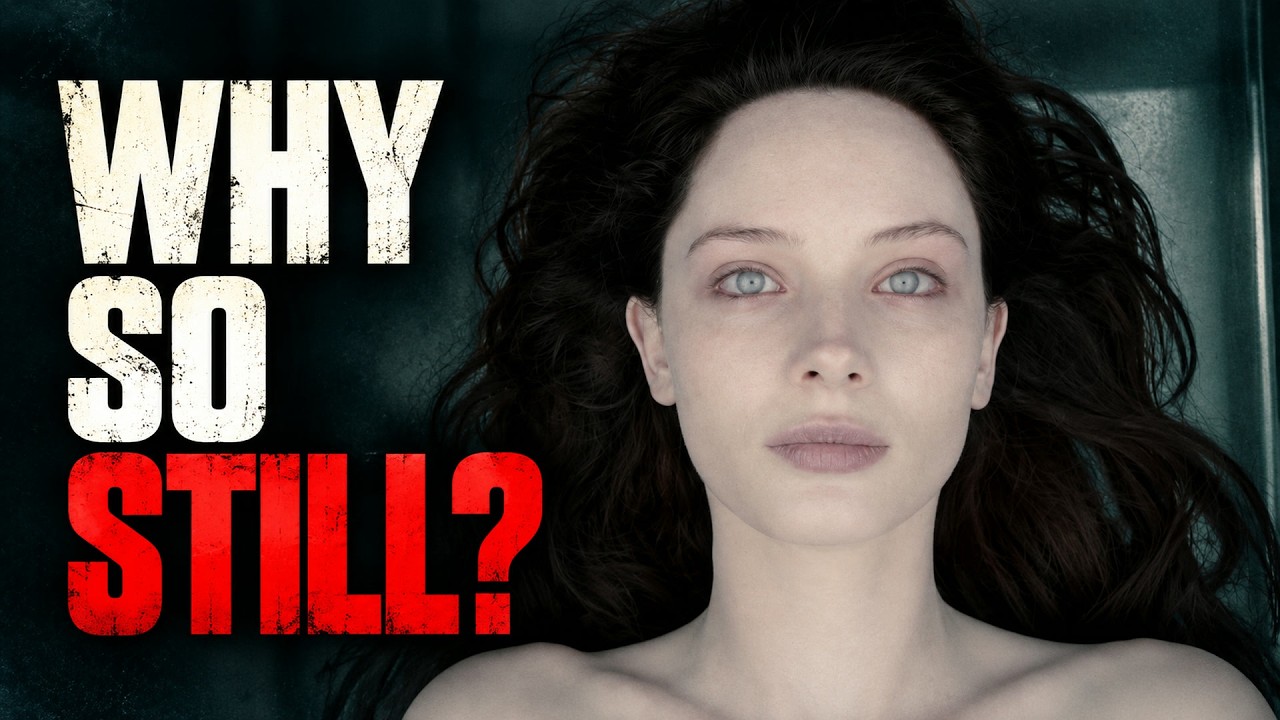
The morgue does equally important work. Its corridors and workrooms establish a confined space that can still hide things. As the examination continues, familiar routes become less reassuring. The film keeps returning to the same body while the surroundings grow harder to trust. Jane barely needs to move to dominate the room. Olwen Kelly's stillness is a remarkable part of that effect. A fixed expression invites scrutiny without offering any comfort. The camera returns to her face, and suddenly an almost motionless image feels like a threat.
A bell makes silence threatening
The tiny bell attached to a corpse's toe is another beautifully economical detail. Once the film establishes what that sound means, a quiet room no longer feels empty. There is graphic autopsy imagery, so the clinical setting comes with a genuine bodily unpleasantness. But the strongest fear comes from anticipation: what will the next discovery change, and how much longer can an explanation hold everything together?
Where the precision weakens
The trouble arrives when the mystery has to become a more conventional supernatural confrontation. The careful accumulation of evidence gives way to familiar scares and a heavier load of explanation. Some ambiguity is valuable; some of the later mechanics simply feel less convincing than the setup. At around 86 minutes, the film stays lean, but its final stretch cannot quite sustain the precision of its opening half.
Spoilers: detailed discussionContains story spoilers. Open deliberately.
Spoilers: suffering offers no easy escape
Spoilers from here: the ending reveals why solving the mystery offers no easy escape. Tommy connects Jane's injuries to ritual persecution. His explanation turns the case upside down: the violence inflicted on her may have created the very evil her tormentors feared. Understanding her suffering does not make her harmless. The attempt to bargain through sacrifice fails to bring father and son to safety.
The nightmare travels with her
By morning, Jane's body appears undamaged again, while the people who examined her are dead. Her transfer elsewhere turns the apparent conclusion into another beginning. The final signs of movement and the returning music suggest that the danger travels with her. The morgue was one stop, rather than the source of the nightmare.
Verdict
That ending gives the film a nasty circular shape, even if the explanation is less frightening than the uncertainty that preceded it. The Autopsy of Jane Doe remains a strong, tightly contained horror film: an excellent central idea, a convincing double act, and an atmosphere that outperforms the more familiar final shocks. I give it 7 out of 10.