

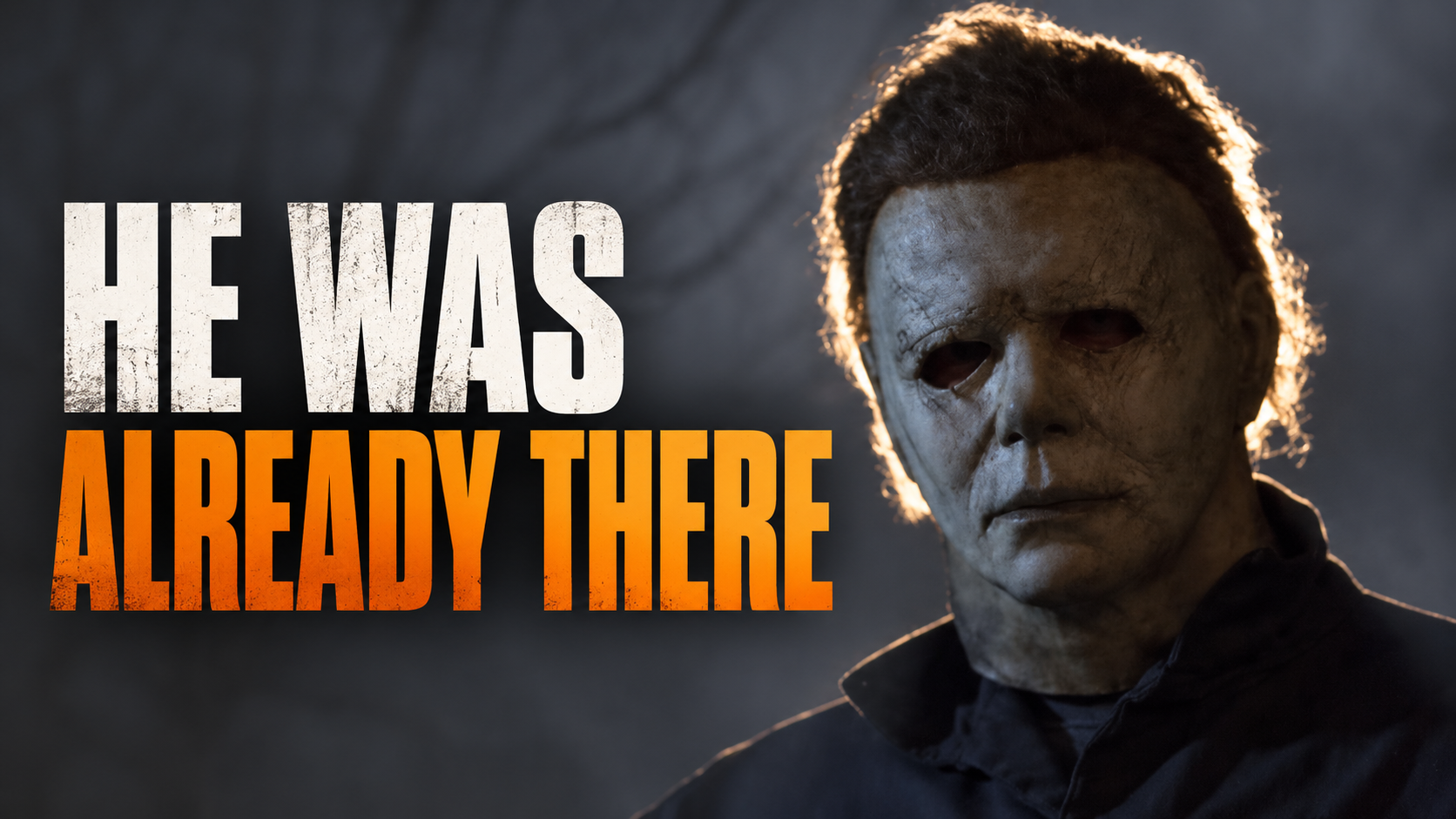
An empty street becomes unsettling
You already know who the killer is. Why does looking at an empty street still make you uncomfortable?
A familiar image, precisely used
John Carpenter's 1978 Halloween has a problem other films might envy: its images are so familiar that it's easy to forget how precisely they work. The white mask, the hedge, the piano theme. What matters is how Carpenter distributes these elements across an ordinary day. He gradually makes Haddonfield feel unsafe. There are spoilers ahead for the original film, including its ending.
Spoilers: detailed discussionContains story spoilers. Open deliberately.
Fear enters everyday life
Michael Myers escapes from the psychiatric institution where he has been held since murdering his sister. He returns to his hometown and stalks Laurie Strode and her friends. The premise takes very little time to explain. Carpenter and co-writer Debra Hill then spend a surprising amount of time on walks home, conversations, and babysitting. Those everyday routines give the fear a specific place to enter.
The threat at the edge of the frame
Michael is already standing among houses and hedges in broad daylight. Laurie notices him, then he disappears again. The film reveals just enough to change the way we pay attention. A street becomes a searching exercise. Empty space beside a character suddenly matters. Dean Cundey's wide compositions leave us considering whether somebody is already waiting at the edge. The shot holds, and we hold our breath with it.
Who sees Michael first?
Our relationship to the killer also changes. The opening ties our viewpoint to Michael's movement. Later, we see him at a distance or discover him behind another character. Sometimes we know more than Laurie, sometimes we're searching alongside her. That shifting distribution of information keeps the suspense active. Understanding that a masked murderer is loose doesn't tell us where the next danger will appear.
The mask leaves questions open
The mask helps because it communicates so little. We can't read an expression, identify an emotion, or anticipate a response. The original film also withholds an explanation that would make Michael's actions understandable. Loomis describes him as evil. That's the language of his fear and conviction, rather than a useful psychiatric explanation. The film makes powerful use of what remains unanswered. We can look at this threat without coming close to understanding it.
Laurie acts despite her fear
Laurie provides an essential counterweight. Jamie Lee Curtis initially makes her attentiveness part of an ordinary, somewhat reserved teenager. Later, it becomes vigilance and the ability to act. Laurie looks after the children, tries to get help, and fights back with whatever she can find. Her fear doesn't disappear when she takes action. That's what makes her resistance feel so immediate, with each improvised decision carrying real effort.
More than the “good girl” formula
The familiar reading that the good girl simply survives doesn't adequately account for this character. The film certainly places sexuality and danger beside each other. Its suspense, however, depends on whether Laurie recognizes a situation and manages to respond. Her friends don't deserve their deaths, any more than Laurie needs to earn rescue through moral purity. Reducing the struggle to that formula overlooks the concrete physical work in Curtis's performance.
Music turns waiting into suspense
Carpenter's music hangs over the images like a recurring alarm. The piano theme is instantly recognizable, but its effect develops through its relationship with movement and duration. Michael can stand still while the music puts the moment under pressure. Very little visible blood is needed. Anticipating another attack occupies us for longer than the attack itself.
A pursuit with clear geography
Not every moment is equally elegant. Laurie's repeated failure to keep hold of a weapon tests our patience. Some supporting characters mostly provide material for the next dangerous situation. Yet the spatial clarity of the pursuit carries the climax: doors, stairs, and the closet become obstacles we understand. We know how little distance remains between Laurie and Michael.
The ending changes familiar places
After Loomis shoots Michael and he falls from the balcony, the film should finally settle. Then the body is missing. Views of familiar locations follow, accompanied by breathing. Carpenter offers no new rule explaining Michael's abilities. He changes the meaning of spaces we already know. The attacker has disappeared, while our attention remains trapped.
Verdict
Halloween shows how lasting suspense can become when a film trusts its images. By the end, even the empty street looks suspicious again. A classic whose filmmaking fully supports its reputation: 10 out of 10.