

A beautiful world struggles to move
Dream tries to stabilise his realm and confront his past. His guilt concerning Nada and Orpheus provides major conflicts. The opening two or three episodes nevertheless feel like a long introduction to me: extensive conversation, mythology and worldbuilding, but little genuinely gripping action. Importance does not replace a living story.
Morpheus needs more emotional range
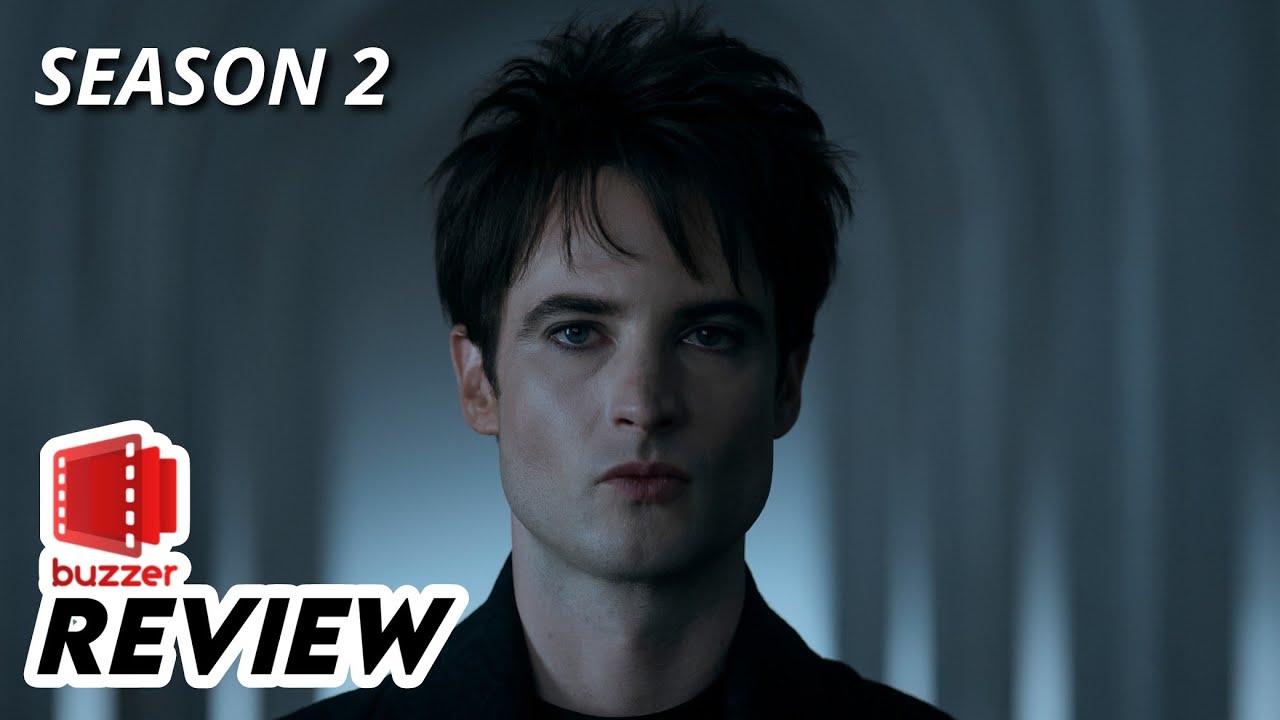
Tom Sturridge’s cool melancholy is consistent but also tiring. Dream can seem too rigid within his conflicts. When Nada or Orpheus reveal his vulnerability, the character regains depth. The encounter with his son particularly affects me. I wanted more frequent cracks in that composure.
The fantastical design remains a pleasure
The Dreaming sits between art cinema and digital fairy tale, while Hell provides powerful imagery. Gwendoline Christie gives Lucifer commanding authority that suits the setting. Delirium brings chaotic energy, and Desire remains ambiguous. Death supplies heart and calm. These supporting characters and encounters give the fantasy world individuality.
The second half finally finds its pain
Guilt, forgiveness and self-sacrifice are major themes. Some monologues feel strained and theatrical; the staging sometimes becomes too heavy. When the conflicts finally connect emotionally, the mixture of mythology and humanity returns. The second half feels deeper and stays with me more strongly. It is a pity that clarity arrives so late.
Verdict
The complete second season cuts both ways for me. Its imagery is excellent, performances solid and storytelling uneven. An overloaded first half gives way to a more emotionally focused second. There are outstanding moments, but they arrive late. Patient viewers are rewarded; those wanting concise fantasy storytelling must accommodate slower passages. My rating is 7 out of 10.
Watch the film at home
As an Amazon Associate I earn from qualifying purchases. Using these links does not add to the price you pay.