

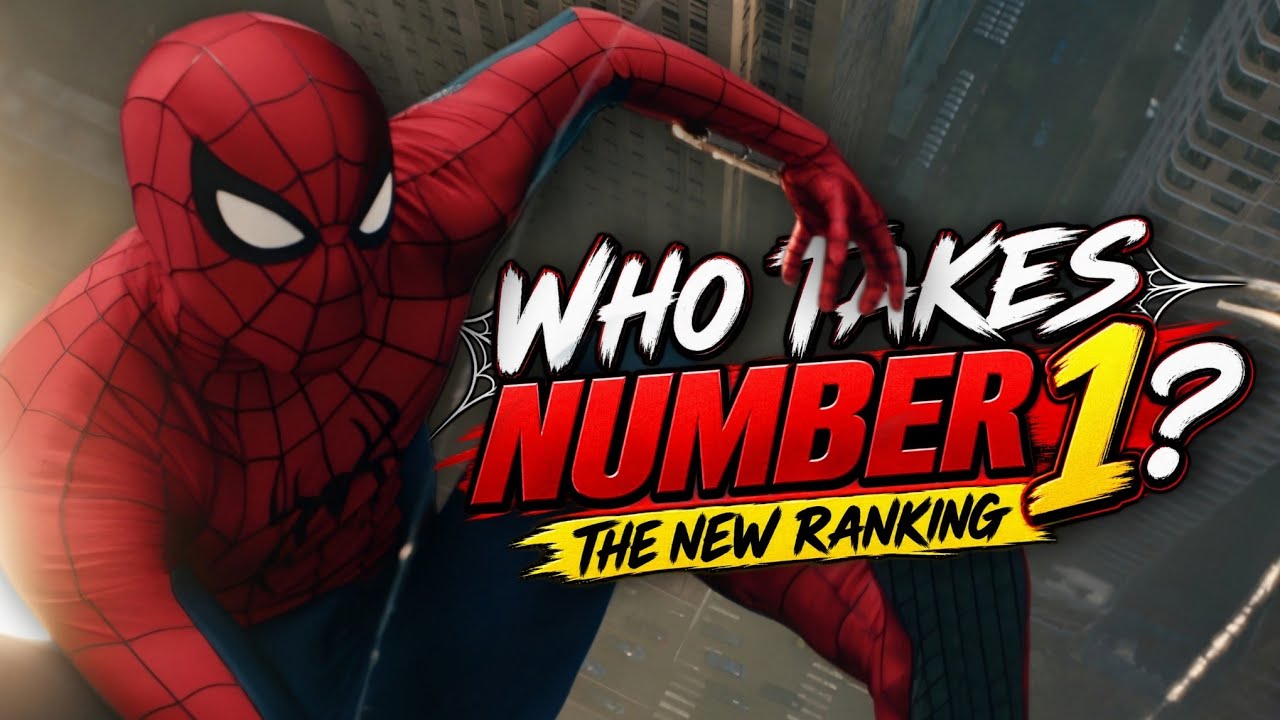
Responsibility matters more than scale
This order covers the eleven Spider-Man theatrical films in my September 2026 selection, moving from the weakest entry to first place. What matters to me is not the size of the spectacle but how well a film understands the personal cost of heroism.
11. The Amazing Spider-Man 2
Andrew Garfield and Emma Stone give the film an emotional pulse, but Electro, Harry, Oscorp and Peter’s family history compete for space. Individual scenes have energy; the whole feels like a collection of obligations. Their chemistry deserved a cleaner film.
10. Spider-Man 3
Sam Raimi’s finale is messy but never boring. Thomas Haden Church gives Sandman real melancholy, while Tobey Maguire makes Peter’s arrogance understandable. Too many arcs and a squeezed-in Venom weigh it down. Raimi’s idiosyncratic images nevertheless rescue a great deal.
9. The Amazing Spider-Man
The reboot has to justify retelling a familiar origin. Garfield and Stone’s natural connection provides its best answer. The romance receives space; the Lizard and family mythology are weaker. A solid restart caught between fresh instincts and familiar duties.
8. Spider-Man: Far From Home
Europe and Jake Gyllenhaal’s theatrical Mysterio bring lightness and visual trickery. Holland remains likable, but Peter circles Tony Stark’s legacy too much. The film is highly polished without achieving the emotional completeness of the entries placed above it.
7. Spider-Man: Homecoming
The smart decision is to go smaller. Jon Watts connects high-school comedy with superhero consequences, while Michael Keaton’s Vulture belongs to Peter’s everyday world. Peter’s impatience is the key conflict. Despite the MCU connections, the film usually keeps this teenager at its centre.
6. Spider-Man: Brand New Day
Destin Daniel Cretton gives Holland’s older Peter a more isolated, street-level pulse. I like that the consequences of No Way Home are not simply reset. Franchise connections remain visible, but the sense of personal consequence is stronger than in Far From Home.
5. Spider-Man
Raimi’s 2002 film is sincere and takes its comic-book material seriously. Maguire makes Peter awkward, lonely and decent; Willem Dafoe gives Norman Osborn enormous intensity. Some effects have aged, but the connection between responsibility and personal sacrifice remains clear.
4. Spider-Man: No Way Home
The film could have collapsed under fan service. Instead, familiar characters become part of a story about responsibility and the cost of good intentions. The multiverse mechanics are busy, but Holland gives his strongest performance of the first three solo films. Nostalgia becomes personal material.
3. Spider-Man: Across the Spider-Verse
The different visual worlds have their own textures and rhythms. Miles also struggles over who gets to define a hero’s story. The design is extraordinarily ambitious. Its deliberately incomplete narrative makes it less self-contained for me than the top two entries.
2. Spider-Man: Into the Spider-Verse
Miles expands the mask’s meaning without needing to replace Peter. Comic-book printing, graffiti and animation create a distinctive style. What ultimately matters is the complete emotional arc: warm, funny and precise, handling several Spider-people without losing its own centre.
1. Spider-Man 2
Raimi understands Peter’s contradiction best: when Spider-Man succeeds, Peter’s ordinary life becomes harder. Maguire conveys exhaustion, guilt and longing; Alfred Molina makes Doctor Octopus human. Action and quiet scenes serve the same conflict. Responsibility feels painful, funny and sincere.
Verdict
Brand New Day shows me that the series can move forward. Spider-Man 2 remains the standard: no other entry connects Peter’s desires and the cost of his responsibility so clearly. The two Spider-Verse films expand that idea with a visual language that is more than a new franchise costume.
Watch the film at home
As an Amazon Associate I earn from qualifying purchases. Using these links does not add to the price you pay.