

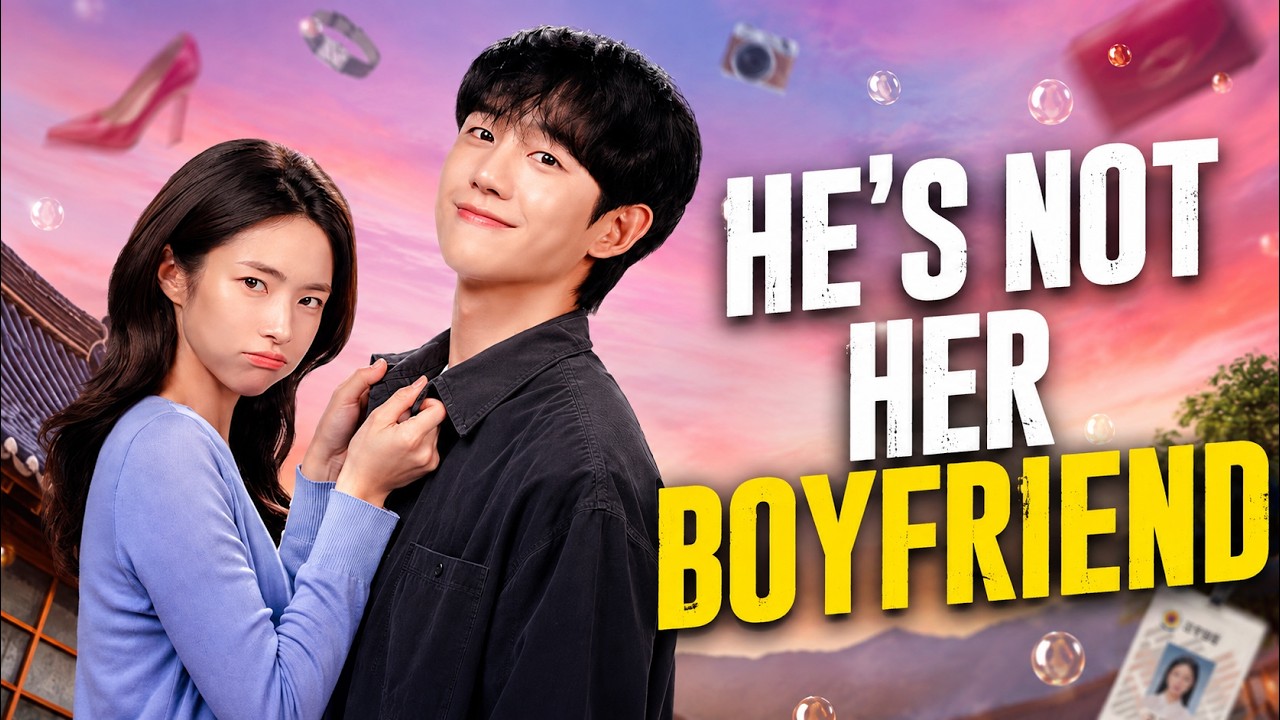
The 12-episode South Korean limited series starts with an almost absurd setup: ambitious prosecutor Go Eun-sae loses her memory and wakes up without a reliable identity. Then Jang Tae-ha appears, a former boxer who now works as a boxing coach, and claims to be her boyfriend. It quickly becomes clear that there is more behind that claim, and the show builds its strange mix of rom-com, small-town comfort, and gangster thriller from that deception.
The biggest strength is the chemistry between Ha Young and Jung Hae-in. Even without her memories, Eun-sae never becomes a passive character who simply gets pushed through the story. Her instincts, intelligence, and suspicion remain intact. Ha Young plays that with sharp comic timing without turning her into a caricature. Jung takes the opposite approach. Tae-ha can handle a physical fight much better than an emotional conversation, and that contrast gives the character an appealing vulnerability.
Our Sticky Love is strongest whenever it stops trying to be clever. Life in Taffy Village, the nosy local women, and the everyday friction between Eun-sae and Tae-ha create the warmth you want from a good Korean romantic comedy. Tae-ha’s criminal past keeps the sweetness from becoming weightless. Heo Sung-tae also gives Baek Sang-gil enough menace to make the danger feel real, even if the series does not use him consistently enough. Director Kim Jang-han reinforces the contrast visually, moving between bright, cozy village romance and much darker gangster material.
That is also where the main weakness appears. Our Sticky Love wants to be romance, comedy, action, noir, gangster drama, family story, and secondary romance at the same time. Twelve episodes are not too many by default, but the balance often feels strange. Some supporting characters receive a surprising amount of attention while more important conflicts disappear for long stretches. By the final third, you can feel the screenplay working to close several different threads at once. The series is rarely boring, but it is more stretched out than necessary.
The premise is also morally uncomfortable by design. A romance that begins with a major lie told to a woman who cannot remember her own life needs careful handling. The show at least understands that and refuses to make Eun-sae blindly trusting. Still, viewers have to accept the artificial setup before the later emotional beats can fully land.
In the end, Our Sticky Love is not a revolutionary K-drama, but it is surprisingly entertaining. The familiar tropes are obvious, the story could be tighter, and not every genre shift works. But Ha Young and Jung Hae-in carry the series with charm, humor, and believable affection that smooths over many of its weaknesses. If you like romantic K-dramas with a little gangster and thriller flavor, this is an easy binge. I’m giving Our Sticky Love 7 out of 10.