

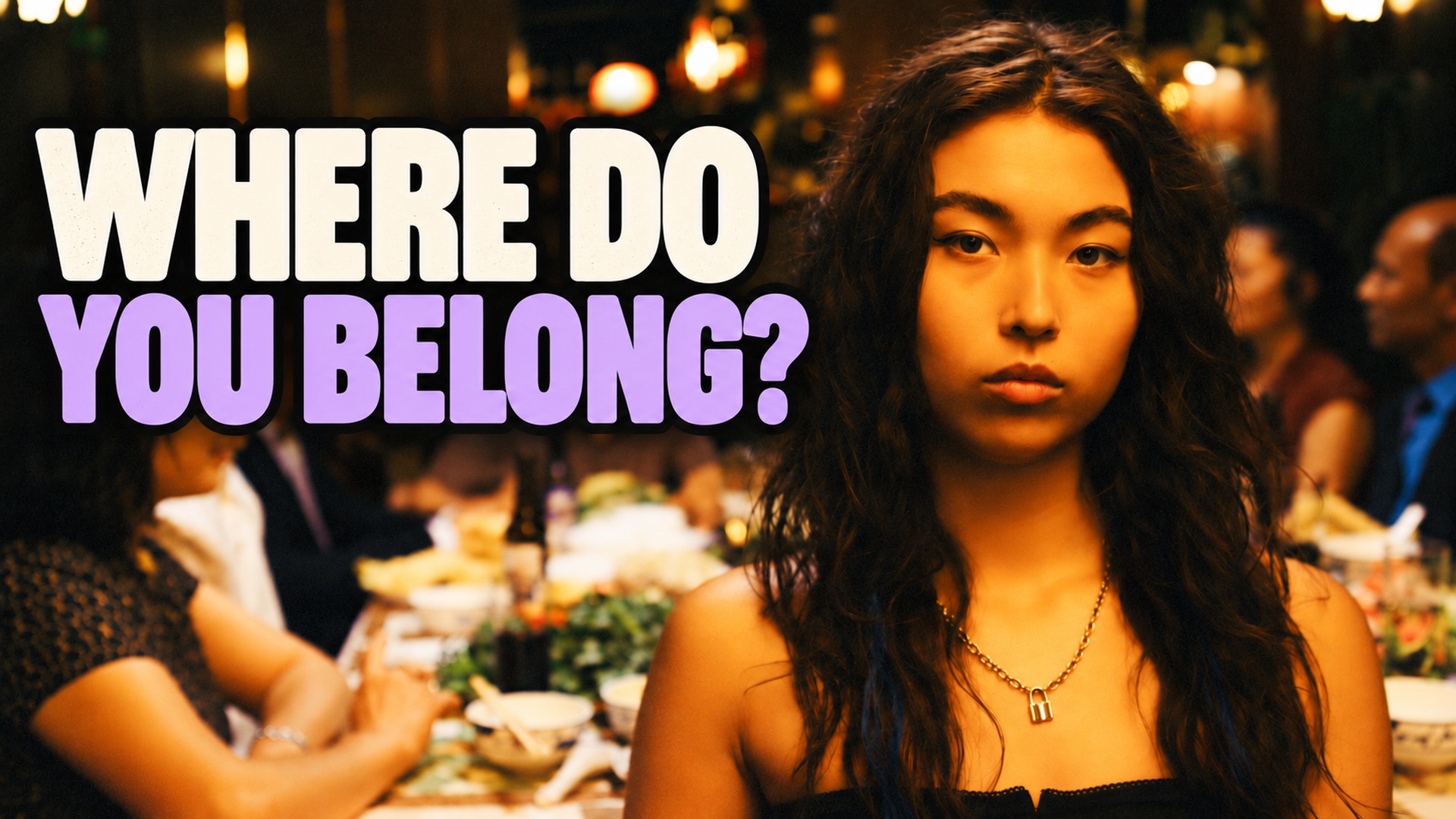
Made in Germany gives six young Berliners individual space within a drama about identity, family and belonging. Its greatest strength is the authenticity of the performances, even when its conflicts receive too little development. They were born and raised in the city, and the pressures they face include prejudice and racism as well as the pull between family expectations and modern urban life.
Each episode concentrates on one character. Their experiences involve expectations from parents, pressure from the surrounding society and the difficulty of defining themselves between those influences. The different perspectives keep the subject from becoming one uniform experience. The six are Ani, Coumba, Jamila, Mo, Zehra and Nikki. Ani is ashamed of her Vietnamese father, while Coumba, a Black influencer wearing a headscarf, challenges stereotypes. Those particular conflicts show the difficulty of defining oneself amid the competing expectations of parents and society.
The largely non-professional ensemble found through community casting is a major source of the series’ authenticity. Maria Mai Rohmann as Ani and Vanessa Yeboah as Coumba are particularly impressive, giving the characters’ uncertainty and ambition an unforced emotional presence that makes them feel close and believable.
Camera work and editing remain functional rather than distinctive, keeping attention on the stories. Franziska May's atmospheric music adds feeling to the quieter scenes. That modest visual approach may be a deliberate way of giving the characters’ emotional stories priority.
Some conflicts resolve too quickly. Subjects such as racism, cultural connection and family traditions need more room than they receive, reducing the depth of otherwise promising material.
For me, the series remains worth seeing because it brings rarely centered experiences into view with convincing people. It does not fully explore every question it raises, but its authentic performances and range of perspectives create a valuable, engaging look at lives shaped by differing expectations.