

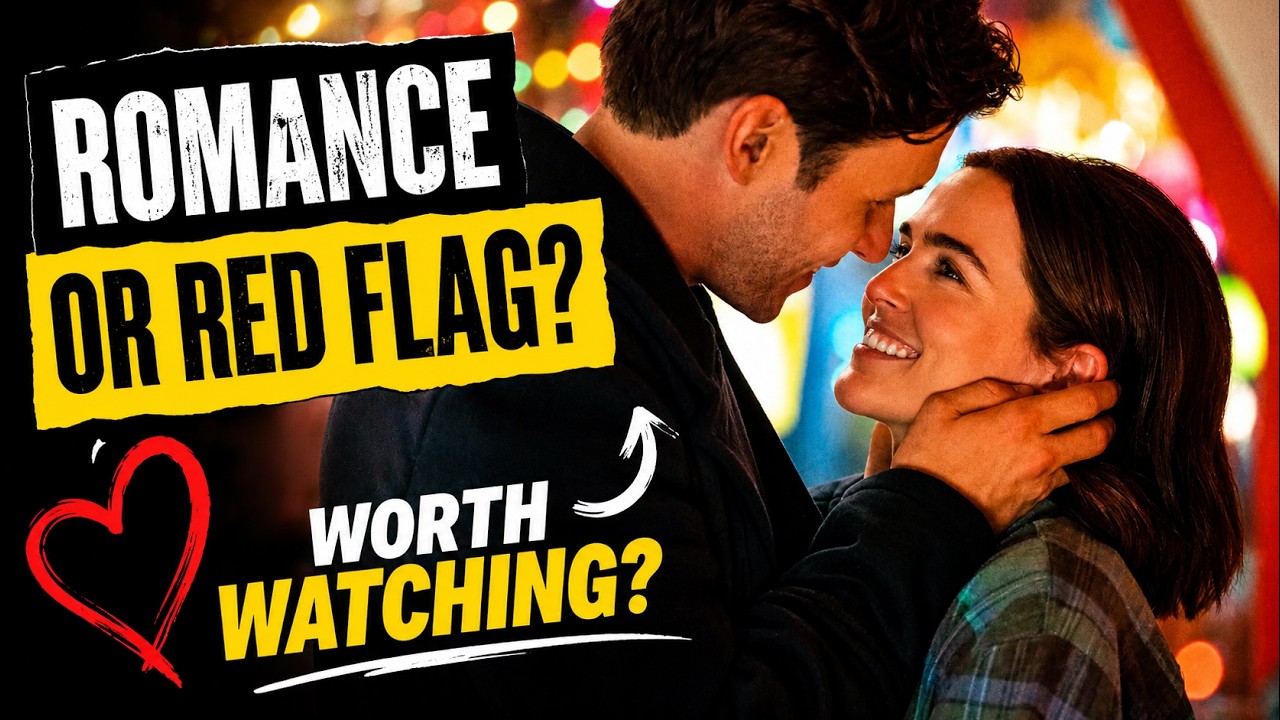
At first glance, Voicemails for Isabelle looks like exactly the kind of streaming romantic comedy Netflix has been trying to revive: attractive leads, grief, messy dating, big feelings, and a meet-cute that is both sweet and honestly a little alarming. But the film is more interesting than that simple package suggests.
The story follows Jill, played by Zoey Deutch, an aspiring baker in San Francisco who is still grieving the death of her younger sister Isabelle. Instead of letting go, she keeps calling Isabelle’s old number and leaving voicemails. These messages become a private ritual: part diary, part confession, part emotional lifeline. Jill talks about bad dates, her difficult boss, her career frustrations, her loneliness, and the small absurd moments of everyday life. The problem is that Isabelle’s number has been reassigned. The person listening now is Wes, played by Nick Robinson, a real estate agent in Austin, Texas.
And that is where the movie gets tricky. As a romantic concept, it has the old-fashioned charm of You’ve Got Mail or Sleepless in Seattle: two people connecting before they truly know each other. But in a modern context, Wes listening to Jill’s most intimate messages and then seeking her out without telling her the truth is not just quirky. It is invasive. The film clearly understands that. It jokes about it, it points at the discomfort, and it tries to turn the creepiness into self-aware romcom fuel. Sometimes that works. Sometimes it feels like the movie wants us to forgive Wes a little too quickly.
What keeps Voicemails for Isabelle alive is Zoey Deutch. She gives Jill sparkle, warmth, comic timing, and a believable sadness underneath the bright surface. Jill is not simply a cute romantic heroine waiting for love. She is someone trying to survive grief by talking into the void, hoping that somewhere, somehow, her sister still feels close. The best scenes are not necessarily the big romantic moments, but the quieter ones where the film understands how grief can hide inside jokes, food, work, anger, and routine.
Nick Robinson is likable, and Wes has sweet moments, but the character remains the film’s biggest weakness. His emotional connection to Jill makes sense as a fantasy, yet his actions are hard to excuse. The chemistry between the two leads is there, but it has to fight against the moral awkwardness of the premise.
Writer-director Leah McKendrick gives the movie a glossy, colorful, very deliberate romantic-comedy style. San Francisco and Austin are used as warm, cinematic spaces, and the film leans heavily into classic genre pleasures: montages, emotional revelations, awkward flirting, rain-soaked gestures, and supportive friends. Nick Offerman adds sharp comic flavor as Chef Bastien, while Harry Shum Jr., Lukas Gage, Ciara Bravo, and McKendrick herself help fill out Jill and Wes’s worlds. Some supporting characters could have used more depth, but they keep the movie lively.
At nearly 2 hours, the film is too long, and some turns are very predictable. It also tries to be a nostalgic romcom and a modern critique of romcom behavior at the same time, and that balance is not always clean. Still, Voicemails for Isabelle has enough heart to matter. It is funny, tender, sometimes too constructed, sometimes uncomfortable, but also genuinely emotional.
In the end, this is not a perfect Netflix romcom, but it is one of the stronger ones: charming, flawed, carried by Zoey Deutch, and surprisingly sincere about love after loss.
My rating: 7 out of 10.