

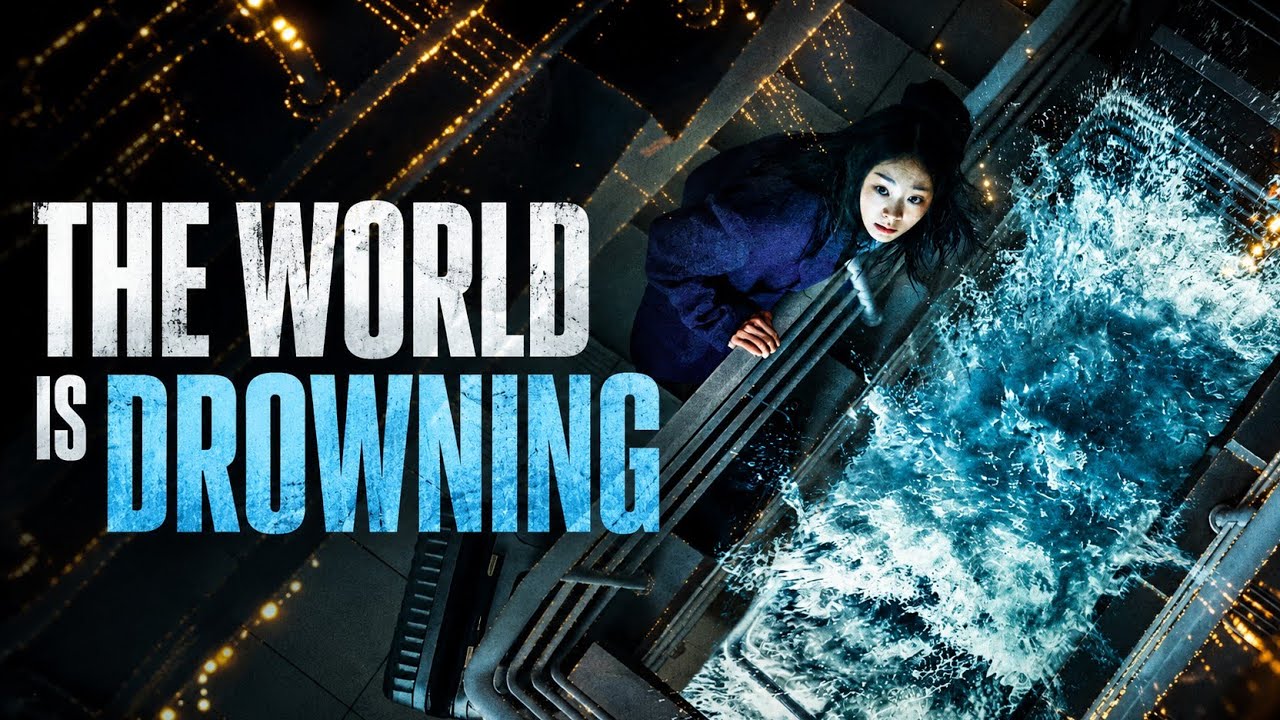
Going in, the promise feels clear and familiar: a large-scale disaster movie built around an overwhelming flood, modern infrastructure pushed to the breaking point, and ordinary people forced into impossible situations. For a while, the film delivers exactly that, and it does so with real technical confidence.
The opening stretch, roughly the first forty minutes, is easily the strongest part of the movie. The flood sequences are visually striking and convincingly staged. Water has force, destruction feels physical, and the sense of escalating chaos works. These scenes show careful craftsmanship, solid effects work, and a strong grasp of pacing. At this stage, The Great Flood plays like a polished, serious disaster film that understands the power of spectacle without turning it into empty noise.
Then the film begins to shift, and not subtly. What starts as grounded catastrophe cinema gradually pivots into science fiction. Advanced technology, ethical dilemmas, and large conceptual ideas move into the foreground. On paper, that ambition is admirable. In execution, it is where the film starts to lose its balance. The transition feels rushed, as if the story is trying to reinvent itself halfway through without fully earning that turn.
Thematically, the film aims high. It wrestles with climate anxiety, human arrogance toward nature, scientific responsibility, and the belief that technology can fix problems it may have caused. These are strong, timely ideas, but they are often introduced faster than they can be explored. Instead of letting moments breathe, the script tends to move on quickly, stacking concepts rather than developing them. Dialogue frequently explains ideas that would have landed harder through character behavior or visual storytelling.
That lack of patience also affects the characters. Several are introduced with compelling setups and emotional potential, but as the narrative grows more abstract, they start to feel like symbols rather than people. In the second half especially, emotional engagement becomes inconsistent. When major events occur, the film signals their importance clearly, yet the emotional impact does not always follow.
The performances themselves are solid across the board. No one drags the film down, and in quieter scenes there are flashes of genuine emotional depth. Unfortunately, those scenes are too rare. The direction prioritizes concepts and imagery over intimacy, and the film is at its best when it briefly slows down and focuses on human reactions rather than big ideas.
To its credit, The Great Flood is not a safe or lazy film. It takes risks and refuses to stay in a single genre lane. Visually, it remains impressive from start to finish. Narratively, however, it struggles under the weight of its own ambition.
In the end, I land firmly in the middle. This is a film with striking visuals, thoughtful intentions, and moments of real power, but also with structural issues and emotional distance. Viewers open to genre-blending and conceptual storytelling may find a lot to chew on here. Those hoping for a focused, emotionally gripping disaster movie are likely to walk away feeling unsatisfied.