

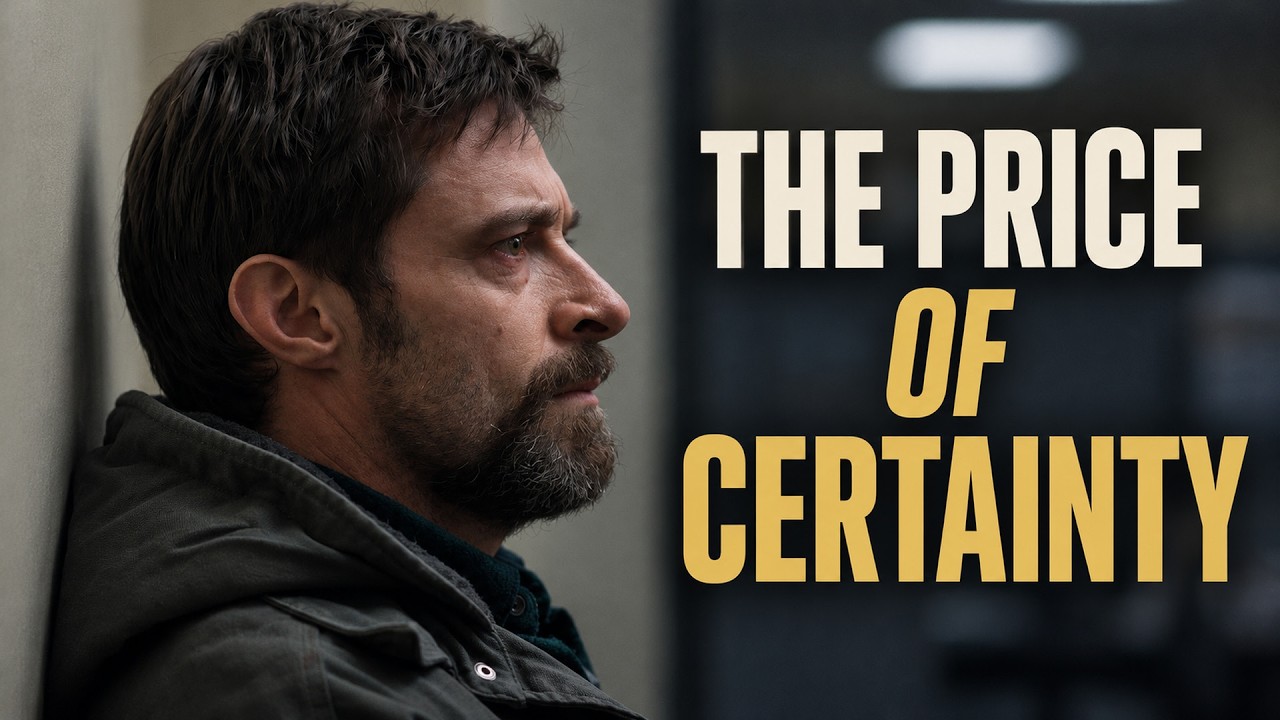
When Every Hour Matters
A father who prepares for every emergency meets a detective who has to live with uncertainty. Then two girls disappear, and the same question starts driving them both. How long can you wait for proof when every hour matters?
Spoilers: detailed discussionContains story spoilers. Open deliberately.
A Slow-Burn Mystery
Prisoners is Denis Villeneuve’s 2013 thriller with Hugh Jackman as Keller Dover and Jake Gyllenhaal as Detective Loki. Its hundred and fifty-three minutes make room for silence, bad weather, and the sickening feeling that a reasonable decision might still come too late. It’s for viewers who like a slow-burn mystery with consequences that linger after the case. From here on, spoilers.
Keller Wants an Answer
Keller builds his life around the promise that he can keep his family safe. When the police release Alex, that promise collides with something he can’t stand: an investigation that can’t give him an answer. Keller takes Alex captive. He reads every silence as resistance and every scrap of information as proof he’s on the right track. Watch what that does to the way Jackman carries himself. He keeps pushing forward while his idea of what could have happened gets narrower.
Loki Can Still Change His Mind
Loki makes mistakes, too. Gyllenhaal lets you see the strain beneath the detective’s clipped questions and careful pauses. What matters is that Loki can still change his mind. When a detail stops fitting, he has to go back and look again. That difference comes into focus at Holly Jones’s house. Loki finds Anna alive and races her to the hospital. That gives the case a moment of relief. Keller is still missing.
The Whistle in the Dark
Villeneuve could have cut to a rescue and let the audience walk out with both stories tied up. Instead, Loki returns to the property after dark. The people searching the scene leave. He’s standing in the cold when a thin whistle breaks the quiet. Keller is beneath the yard, using the whistle Anna had been looking for. A small detail from the start of the film becomes the only way he can reach anyone.
The Last Shot Stays With Loki
The last shot stays with Loki. You can see him register the sound and listen for it again. For a few seconds, you have to pay attention the same way he does. The film gives you enough to imagine what he’ll do next, and then it cuts. A rescue is a reasonable inference. What happens to Keller after that is still open.
Why the Cut Matters
Screenwriter Aaron Guzikowski has said that a longer ending was filmed. The version Villeneuve kept makes Loki’s decision to keep listening the last thing we see. That changes the emphasis. Keller has spent the film trying to force someone to give him an answer. When he needs help himself, he has almost no power over whether someone will hear him. The whistle is tiny, but by then the gap between hearing it and dismissing it feels enormous.
Verdict
That’s why the ending can be hopeful and still leave a knot in your stomach. Finding Anna matters. So does the damage Keller has done while trying to find her. The cut gives him a chance of being found and leaves him with the consequences.