

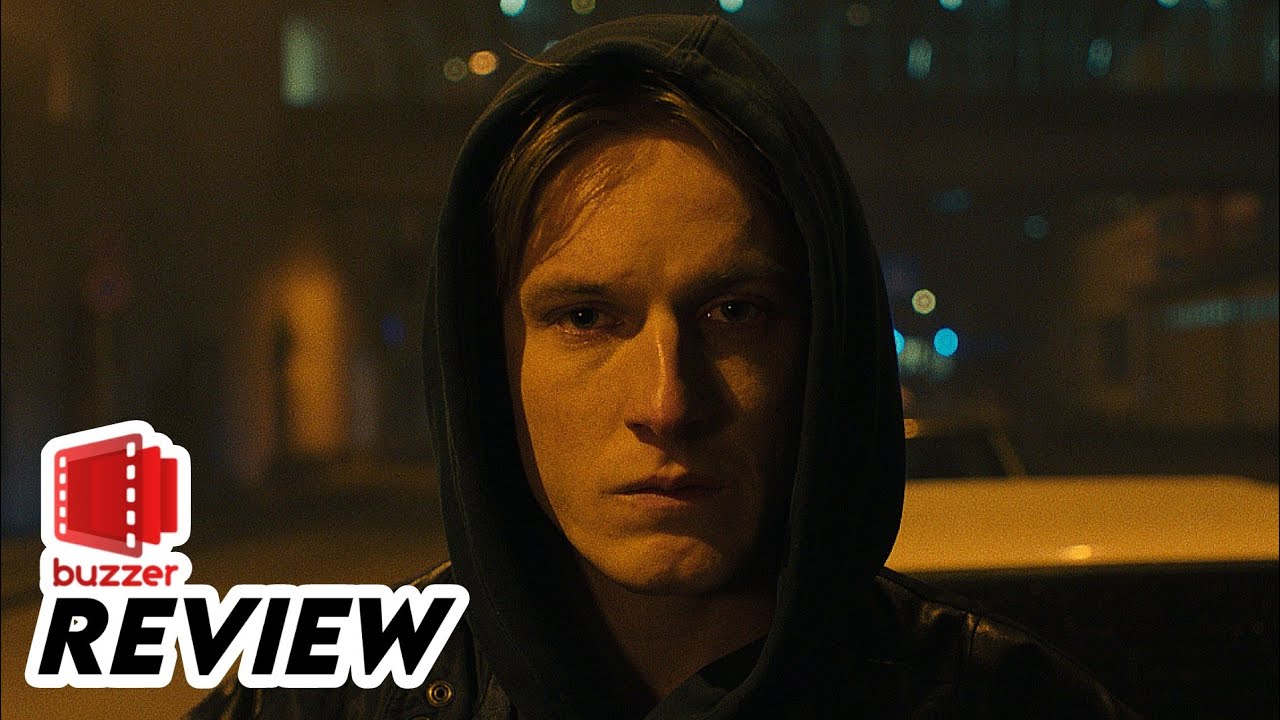
Frisch is a punch to the stomach. This is no cosy film or gentle arthouse diversion, but a raw, intense drama about family, violence, loyalty and what remains when every certainty collapses. That is precisely what makes it worth seeing.
Kai and Mirko
Louis Hofmann plays Kai, a young father hoping for a quiet, uncomplicated life with his wife and child. He works in a meat factory in the Ruhr region, does his job and keeps his head down. Then his older brother Mirko arrives, freshly out of prison and full of pressure and threats. Franz Pätzold plays him as a ticking bomb: unpredictable, manipulative and driven by anger and control. Mirko demands money Kai no longer has. Kai is pulled into a spiral that leads only downwards.
An alliance becomes a threat
What gripped me was the enormous tension between the brothers. Their past includes childhood memories, rituals and a promise to stand together. They call themselves 'the Apaches', a childhood alliance against the world. What once gave strength has become a vulnerability. The older brother who used to protect Kai now threatens him. That emotional dynamic carries the film, and it hurts.
Hofmann and Pätzold
Hofmann is powerful because he suppresses so much. His character says little, yet his eyes reveal the conflict, panic and guilt. Pätzold is loud, direct and threatening without becoming one-dimensional. Behind his violence we sense a broken person. Together they are electrifying.
Harper’s direction
Damian John Harper keeps his direction consistently close to the characters. The dialect, bleak rooms and grey Ruhr atmosphere feel real. The film is almost documentary-like without becoming an exhibition of misery. Violence is painful because it has consequences. When it erupts, you feel it in your stomach. That discomfort is exactly right here.
Flashbacks
The narrative jumps between present and past, which can initially be confusing. Some flashbacks feel as though they belong to another film. As the story develops, however, those childhood memories reveal their importance. They give the characters depth and explain where they come from and why they behave as they do.
Voice, sound and photography
At 98 minutes, Frisch feels compact. No scene seems wasted or unnecessary. Ralf Richter's voice-over works as a rough, honest inner monologue. The soundtrack exerts subtle but effective pressure, and the photography remains close to faces, without flourishes or escape routes.
Love and violence
Frisch is unpleasant but important. It shows how closely love and violence can sit together and how a family bond can become blackmail. How far would you go to protect yourself, and what would that cost?
Verdict
I give Frisch 7 out of 10. Not everything works perfectly, but the strongest elements hit hard. It is uncompromising, forceful, emotional and, above all, authentic. If you want cinema that affects you rather than merely entertaining you, do not miss it.