

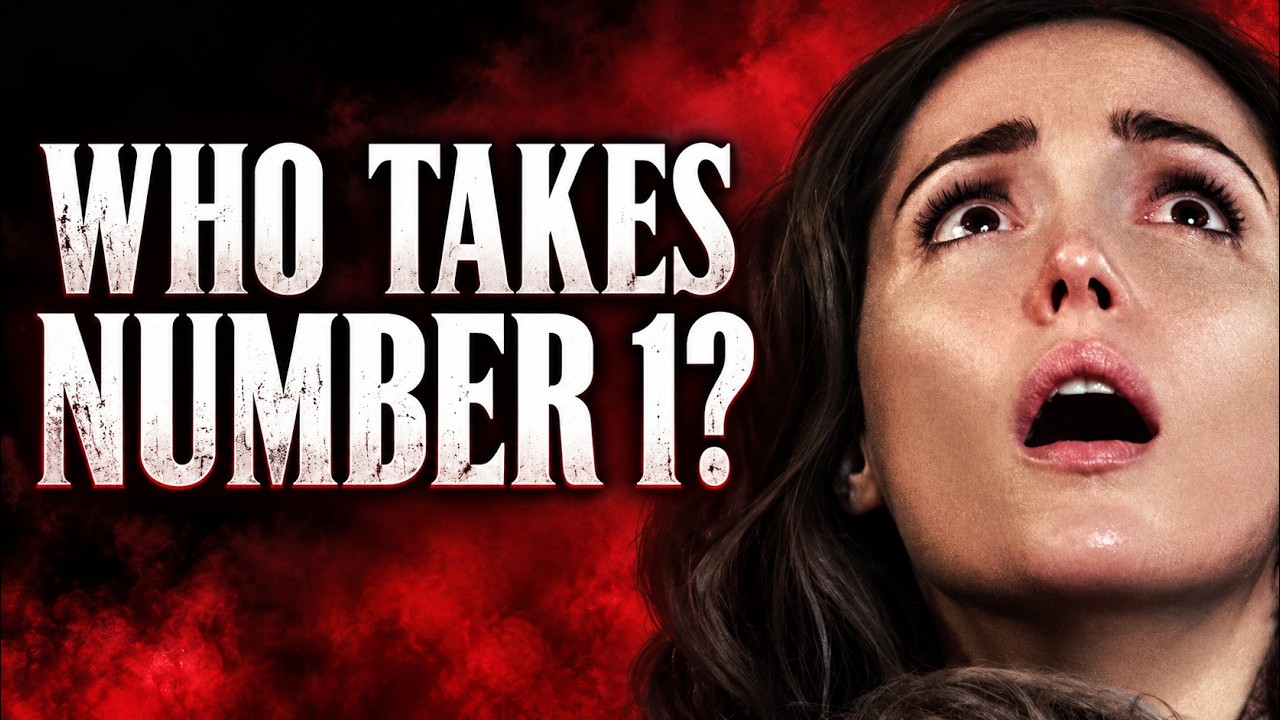
Six trips into The Further, three different directing eras, and one brand-new sequel. But after fifteen years, which Insidious movie actually deserves to be called the best?
6. Insidious: Out of the Further
Number six: Insidious: Out of the Further. The newest entry arrives with the hardest job in the franchise: continue a mythology that already felt finished, introduce a new family, and still make The Further feel dangerous instead of familiar. Jacob Chase finds a few smart visual ideas, and the decision to move away from the Lamberts gives the film room to breathe. Amelia Eve also gives the story a grounded center, while Lin Shaye remains the instant connection to everything that came before. The problem is that the movie keeps circling back to the same franchise machinery. The jump scares are plentiful, the sound design knows exactly when to punch, and the imagery occasionally gets weird in a welcome way, but too much of it feels programmed rather than discovered. The Further used to feel like a place with no rules; here it often feels like a location the series knows too well. That familiarity drains tension from scenes that should feel unknowable. Out of the Further is not incompetent, and fans will find enough recognizable DNA to make the trip worthwhile. But as a sixth chapter, it rarely gives the series a new reason to exist. The newest film lands at the bottom because it is the one most trapped by the formula it inherits.
5. Insidious: The Red Door
Number five: Insidious: The Red Door. Patrick Wilson’s directorial debut has a stronger emotional reason to exist. Returning to Josh and Dalton years after Chapter 2 gives the film a clear point of view: this is less about expanding lore and more about what unresolved fear does to a family over time. Wilson understands the visual grammar of Insidious, and several early scare sequences show that he learned plenty from working with James Wan. The movie is also willing to slow down and let Ty Simpkins carry more of the story, which gives the Lambert material a sense of age and consequence. But the horror and the family drama do not always reinforce each other. Once the film leans fully into familiar supernatural business, its ideas become less specific and the pacing starts to sag. The Red Door works best when it treats The Further as an emotional wound rather than a theme-park attraction. Unfortunately, it cannot sustain that tone all the way through. Still, there is something valuable about a franchise sequel that tries to close a character arc instead of simply opening another portal. It is uneven and rarely as frightening as it wants to be, but it has more personal weight than the newest film.
4. Insidious: The Last Key
Number four: Insidious: The Last Key. By the fourth movie, the franchise had already discovered its most reliable asset: Lin Shaye. Giving Elise Rainier the lead was absolutely the right call, because Shaye brings warmth, dry humor and vulnerability to material that could easily collapse into exposition and noise. The Last Key also has a strong basic idea in bringing Elise back to the home connected to her childhood, giving the haunting a personal dimension instead of treating her as the expert who simply arrives to solve somebody else’s problem. Adam Robitel gets some effective atmosphere out of the setting, and the film occasionally plays with expectation instead of firing a jump scare at the first available silence. The weakness is that its best ideas are surrounded by very familiar horror mechanics. Some imagery is memorable, but the story keeps slipping toward generic franchise plotting, and the comic relief can break tension at exactly the wrong moment. It is a movie with a genuinely compelling protagonist trapped inside a more ordinary sequel. Even so, The Last Key earns fourth place because the focus on Elise gives it an identity. It may not unlock a radically new version of Insidious, but at least it knows whose movie it should be.
3. Insidious: Chapter 2
Number three: Insidious: Chapter 2. James Wan’s second film is messier than the original, but it is also much more ambitious than its reputation suggests. Instead of simply repeating the first movie, Chapter 2 tries to connect the haunting, the Lambert family and The Further into a larger puzzle. That expansion creates problems. The mythology becomes busier, characters spend more time explaining what is happening, and the movie occasionally mistakes complication for mystery. But Wan is still exceptionally good at directing the viewer’s attention. He knows how long to hold on a doorway, when to leave empty space in the frame, and how to turn a domestic location into something that feels temporarily unsafe. Patrick Wilson also gets more interesting material than a standard horror sequel usually gives its returning lead. Chapter 2 is not as clean or as scary as Insidious, but its willingness to take structural risks keeps it alive. It feels like a sequel made by filmmakers who are still curious about the world they created, not merely protecting a brand. The film’s excess can be exhausting, yet that excess is also part of its personality. In a franchise that later becomes increasingly cautious, Chapter 2 looks better in retrospect precisely because it is willing to be strange, complicated and occasionally ridiculous.
2. Insidious: Chapter 3
Number two: Insidious: Chapter 3. Leigh Whannell’s directorial debut is the best sequel because it understands that a prequel does not need to explain everything. Instead, it narrows the focus. A new family gives the story distance from the Lamberts, while Elise becomes the emotional center long before The Last Key makes that choice permanent. The result is a more intimate film built around grief, fear and the decision to re-enter a world that has already caused pain. Whannell does not have James Wan’s visual confidence yet, but he has an excellent sense of timing. Several scares work because the film lets silence sit long enough to become uncomfortable, then delays the expected release. More importantly, the characters matter. Stefanie Scott gives the haunting vulnerability, and Shaye gets enough room to make Elise feel like a person rather than franchise connective tissue. Chapter 3 is still recognizably an Insidious movie: it has loud jolts, familiar supernatural rules and moments designed for a crowded theater. But it is more focused than Chapter 2 and more emotionally coherent than the later films. It proves that the series can change protagonists without losing its identity. If the original did not exist, Chapter 3 would be the easiest entry to recommend as the franchise at its most balanced.
1. Insidious
Number one: Insidious. The first film still wins because it has something none of the sequels can recreate: uncertainty. In 2010, audiences did not know what The Further was, what the rules were, or how far James Wan and Leigh Whannell were willing to push a familiar haunted-house setup. That lack of explanation gives the movie enormous energy. Wan builds tension with composition, negative space and sound rather than relying only on the jump itself. The film can be playful and almost absurd one minute, then genuinely unsettling the next, and that tonal looseness gives it a personality the later chapters gradually sand down. Patrick Wilson and Rose Byrne ground the supernatural material in a family that feels frightened rather than merely positioned for the next scare. Lin Shaye arrives and instantly changes the temperature of the movie. Even the rough edges help. Some effects are simple, some ideas are unapologetically pulpy, and the final stretch embraces a kind of nightmare logic that would become more organized in the sequels. But organization is exactly what the original does not need. It feels dangerous because the filmmakers are inventing the language as they go. Fifteen years and five sequels later, every return to The Further is measured against that first descent. None has matched its combination of economy, atmosphere and pure haunted-house nerve.
Verdict
The franchise has found new doors, new families and new demons. The first Insidious still knows best how to make us afraid of opening one.