

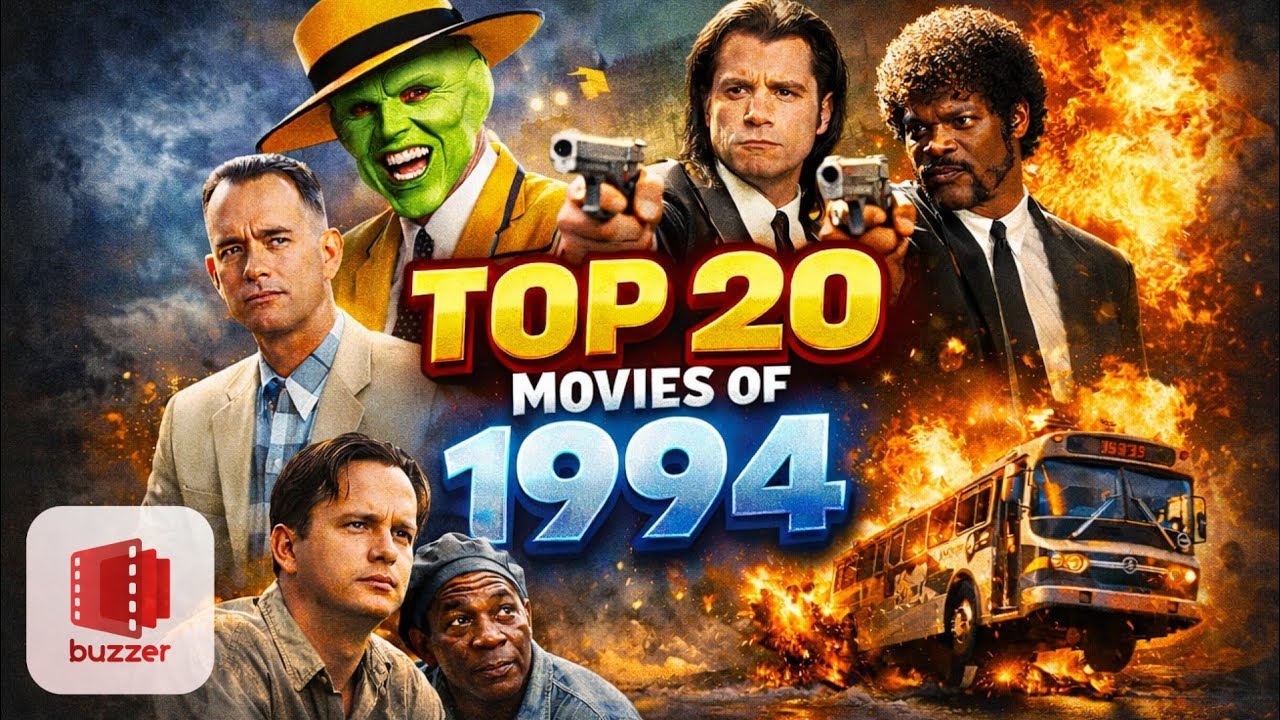
Nineteen ninety-four – a year that sounds almost magical to film fans. What was going on? It's hard to believe how many absolute cult classics were released in those twelve months. But was it really the greatest movie year of all time? I took a close look at twenty outstanding films from that year – spanning all genres. Let’s take a trip back to a cinematic year like no other.
The Shawshank Redemption
The Shawshank Redemption relies on quiet intensity instead of explosions and thrives on its meditative storytelling. Frank Darabont tells the story of wrongly convicted Andy Dufresne like a timeless painting about hope, friendship, and moral resilience. Tim Robbins plays Andy with inner calm and almost stoic clarity, while Morgan Freeman brings warmth, humor, and a lifetime of experience to Red. The cinematography is deliberately restrained, the soundtrack minimalist – which only heightens the emotional impact. It’s a film that shows how humanity can survive within a system built to crush it – and it moves me deeply every time.
Pulp Fiction
Pulp Fiction is Tarantino’s anarchic masterpiece – a film that punches convention in the face, with dialogue that echoes longer than a gunshot. Its episodic structure isn’t just unconventional, it feels organic – each character more familiar, each moment more surprising. Samuel L. Jackson and John Travolta deliver iconic scenes, Uma Thurman dances her way into cult status with fragile coolness, and Bruce Willis surprises in a noir context. Tarantino blends gangster film, black comedy, and pop culture with unmatched flair. The camera work feels deliberately retro, the cuts are sharp – and in the end, what remains is a cinematic pull that leaves a mark.
Forrest Gump
Forrest Gump tells the journey of a simple man through major moments in U.S. history – with emotional honesty instead of sentimentality. Tom Hanks plays Forrest with such tenderness that you believe he can carry the entire story. Vignettes about Vietnam, politics, and music are reflected through his eyes – not with flashy effects, but through quiet storytelling power. The digital integration into historical footage was subtly done and ahead of its time. The film shows that compassion, loyalty, and innocent kindness can be more powerful than any revolution. And personally, it touches me because it dares to be emotional without slipping into kitsch.
Léon: The Professional
Léon: The Professional is a gritty thriller with surprising emotional depth. Luc Besson weaves violence, vulnerability, and an unusual bond between a hitman and a twelve-year-old girl with artistic restraint. Jean Reno plays Léon as a silent, methodical pro with a hidden heart – Natalie Portman shines in her debut role with boldness, wit, and a blooming maturity. Gary Oldman as the unhinged Agent Stansfield is terrifyingly convincing, never cartoonish. Cinematography and soundtrack build a tension that needs no loud spectacle. The film walks a fine line between moral ambiguity and unconventional closeness – and that’s what makes it unforgettable.
Quiz Show
Quiz Show is a smart, elegant drama about truth, public perception, and moral control. Robert Redford turns a real-life scandal into a psychological duel that’s quietly unsettling rather than loud or flashy. Ralph Fiennes plays the conscientious Van Doren with restraint and charm, while John Turturro adds a layer of understated irony. The direction is subtle, the dialogue sharp, and the tension builds from the murky space between ambition and integrity. The film shows how a seemingly harmless TV quiz show can shake an entire society’s trust – and it does so with quiet force.
The Crow
The Crow is a dark, atmospheric revenge fable with a tragic backstory and visually stunning gothic style. Brandon Lee brings raw presence to the vengeful spirit Eric Draven – vulnerable, furious, determined. The world he moves through is both gritty and stylized: decaying streets, neon lights, and a heavy soundtrack. What stands out is how the direction feels almost poetically brutal – pain and beauty intertwined, revenge and redemption placed side by side. To me, it was never just another comic book hit but a deeply emotional genre piece that still resonates.
Drunken Master II
Drunken Master II is Jackie Chan in full motion – comedic, acrobatic, and visually brilliant. Chan plays young Wong Fei-hung, who must master the art of drunken boxing, blending ridiculous agility with fierce precision. The fight scenes are choreographed stunts full of wit, timing, and improvisation. The film fuses comedy and martial arts with a youthful energy that’s totally infectious. Despite the technical difficulty, it feels playful, and the simple story serves its purpose well. To me, it’s not just an action flick – it’s physical cinema at its finest.
Dumb and Dumber
Dumb and Dumber is a bold slapstick statement – proudly stupid, shamelessly absurd, and totally committed thanks to the full-body performances of Jim Carrey and Jeff Daniels. As Lloyd and Harry, they deliver a rollercoaster of cringe-worthy moments with wild enthusiasm. The humor is intentionally primitive – and that’s exactly what makes it work: the timing, the facial expressions, the chemistry are spot-on. Even though critics often dismissed it, I see it as a prime example of how comedy can push limits and redefine them. A full-throttle comedy classic of the ’90s.
Speed
Speed is a hard-hitting adrenaline ride in bus form – minimalist concept, maximum impact. The film thrives on a simple but brilliant setup: if the bus drops below a certain speed, it explodes. Keanu Reeves and Sandra Bullock make a dynamic pair – Reeves stoic and cool, Bullock grounding the chaos with charm. The action starts immediately, the tension never dips, and the finale is pure cinema with zero excess. This is an action film that keeps its momentum without gimmicks – and that’s exactly why it works so well.
Interview with the Vampire
Interview with the Vampire is a darkly poetic vampire epic that goes far beyond genre clichés. Brad Pitt plays Louis with haunting melancholy, Tom Cruise surprises as the manic Lestat, and Kirsten Dunst delivers a disturbingly mature performance as the child vampire. The cinematography, set design, and lighting create an oppressive elegance rarely seen in horror. The story explores existential loneliness, guilt, and immortality – taking its audience seriously and asking what it costs to live a life that never ends. For me, it remains one of the most fascinating vampire films ever made.
Four Weddings and a Funeral
Four Weddings and a Funeral is British romance at its best – charming, witty, and surprisingly profound. Hugh Grant plays the bumbling Charles with unmatched understatement, while the film gracefully moves from one wedding to the next – culminating in a touching finale. Richard Curtis’s screenplay balances humor with emotional depth without ever sliding into sentimentality. That balance is exactly what makes the film so enduringly lovable. Andie MacDowell brings dignity and charisma, and the supporting cast adds warmth and nuance. A romantic comedy with real substance – one that always makes me smile and sigh.
Three Colors: Red
Three Colors: Red is a quiet film that achieves powerful emotional impact through subtle scenes and poetic visuals. The Mediterranean red of the trilogy symbolizes fraternity – a theme woven into the chance encounters of various characters in Geneva. The direction is minimalist, dialogue sparse, editing deliberate and rhythmic. It explores coincidence, connection, and moral responsibility – without preachiness, but with deep reflection. I’m struck by how the film creates lasting introspection without any spectacle – arthouse cinema that feels almost transcendent.
Hoop Dreams
Hoop Dreams is one of the most powerful documentaries of the ’90s – and far more than just a sports film. Shot over nearly five years, it follows two African American teenagers from Chicago chasing the dream of becoming pro basketball players. What starts as a story of hope becomes a complex portrait of poverty, inequality, and personal determination. The camera stays close but never judges – and that’s what gives the film its emotional power. For me, it’s a perfect example of how documentary storytelling can be incredibly moving when it combines patience, empathy, and a critical eye.
True Lies
True Lies is part action comedy, part spy film – over-the-top, explosive, and knowingly self-ironic. Arnold Schwarzenegger plays a secret agent who keeps his double life hidden from his wife (Jamie Lee Curtis) – until they both get caught up in chaotic mayhem. James Cameron directs with trademark spectacle, but also a sharp sense of humor: the mix of family comedy and terrorism thriller works surprisingly well. The action scenes are elaborate, and the jokes land more often than expected. For me, it’s a blockbuster that’s fun precisely because it knows how ridiculous it is.
Ed Wood
Ed Wood is Tim Burton’s most affectionate biopic – about one of the “worst directors of all time,” told with surprising respect and tenderness. Johnny Depp plays Ed Wood as an enthusiastic, unshakable optimist who believes in his vision even when no one else does. Shot in black and white, the film captures the look of the 1950s and salutes trash cinema without a hint of cynicism. Martin Landau as the aging Bela Lugosi is the emotional anchor – dignified, tragic, and wonderfully eccentric. I think the film celebrates failure in a way that’s uplifting: passion matters more than perfection.
The Lion King
The Lion King is more than an animated film – it’s an emotional widescreen epic that left a mark on generations. Simba’s journey to face his destiny is archetypal, universal, and yet deeply personal. Visually, the film makes full use of traditional animation – with sweeping savanna landscapes, fluid movement, and iconic lighting. The soundtrack by Elton John and Hans Zimmer is legendary. To me, The Lion King is a prime example of how Disney in the ’90s fused heart, visuals, and music into a complete experience.
The Mask
The Mask is a wild, cartoonish rush that cemented Jim Carrey’s place as a true ’90s legend. With a magical green mask, the shy Stanley Ipkiss transforms into an unleashed comic figure full of energy, cheek, and outrageous charm. Carrey’s facial expressions, body language, and breakneck speed are so virtuosic, you could watch the film for his performance alone. But the design, special effects, and jazzy soundtrack all contribute to the unique vibe. It’s a film that never sits still – a mix of slapstick and soul – and Cameron Diaz shines in a dazzling debut. For me, it's a perfect example of how trash can turn into pop culture gold.
Ace Ventura: Pet Detective
Ace Ventura: Pet Detective is loud, bizarre, and completely over-the-top – and in its unapologetic style, it’s become a cult classic. Jim Carrey plays the unhinged pet detective with extreme physical comedy, outrageous expressions, and anarchic timing. The story about a missing dolphin mascot is almost irrelevant – everything revolves around Carrey’s total commitment to the character. The humor isn’t for everyone, but there’s no denying the performance’s intensity and uniqueness. To me, the film proves that comedy can hit hardest when it totally breaks the rules.
Stargate
Stargate is a fascinating blend of sci-fi and Egyptian mythology – a film that mixes adventure with cosmic imagination. The concept of a star gate leading to other worlds is brought to life with impressive visuals. Kurt Russell plays the tough soldier, while James Spader brings heart and intellect as the brilliant linguist. Director Roland Emmerich creates a pulpy mix of epic sets, alien cultures, and military action. For me, Stargate has a unique tone – floating somewhere between science fiction, historical drama, and action flick – and that’s exactly what makes it stand out.
Natural Born Killers
Natural Born Killers is a feverish, furious, hyper-stylized trip through a media-saturated world. Oliver Stone directs the killer couple Mickey and Mallory with brutal visual force – split screens, color shifts, TV inserts – the whole thing feels like a nightmare in channel-surfing form. The film is explicit and provocative, but never senseless. Instead of glorifying violence, it holds up a mirror to society: how much has media warped our view of evil? Woody Harrelson and Juliette Lewis don’t just play the roles – they embody a toxic system. For me, it’s a controversial but powerfully effective film that still sparks debate today.
Verdict
Twenty films – twenty reasons why 1994 was an absolutely phenomenal year for cinema. From blockbusters to indie masterpieces to animated classics, it had everything. And honestly – when a single year gives us The Shawshank Redemption, Pulp Fiction, and The Lion King, that speaks volumes.