

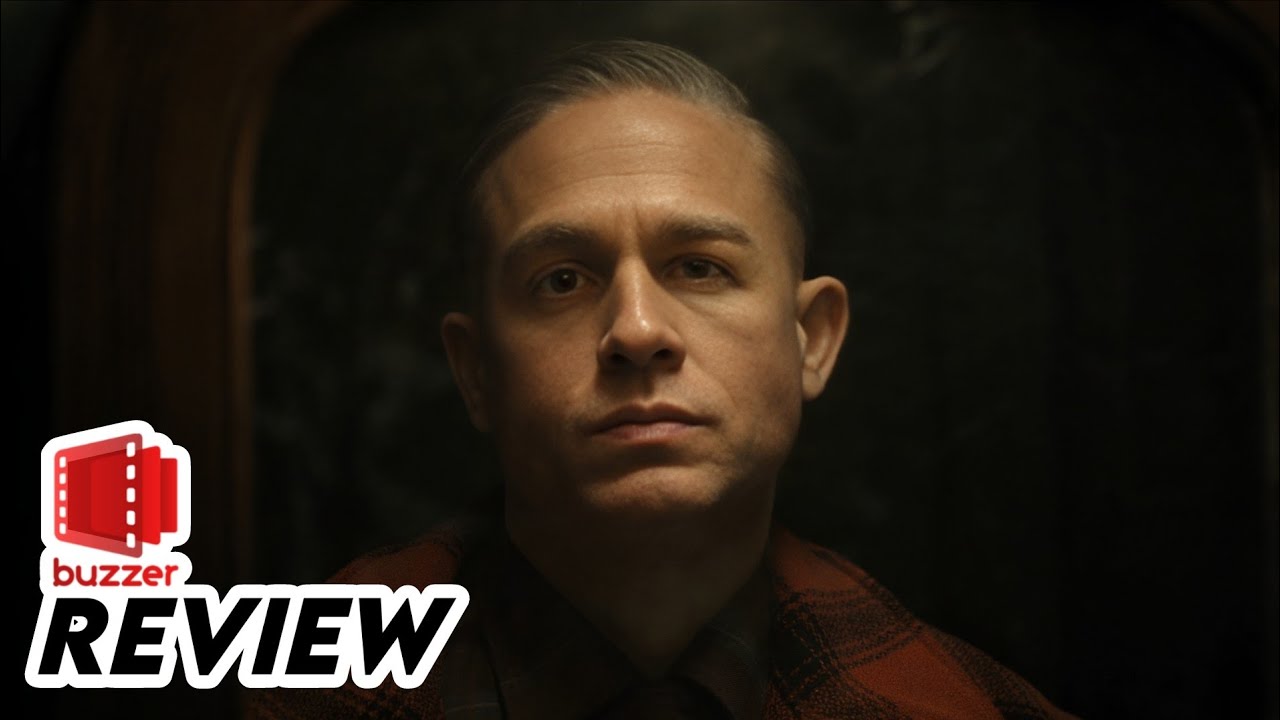
The Ed Gein Story wants to be a portrait, a true-crime drama, horror, a psychological study and a reflection on media fascination all at once. That ambition gives the third Monster season substance, but also makes it heavy and unfocused. It frequently seems more interested in a clever connection than in sustaining an emotional one.
Charlie Hunnam’s performance is a major strength. Cast against his familiar image, he makes Gein’s stillness disturbing without relying on conspicuous displays of madness. His expression and posture suggest guilt, dependence and the damaging influence of his mother. Laurie Metcalf gives that relationship an intensity the wider season struggles to match.
The shifts between childhood, adulthood and later cultural reception create an intellectually interesting structure. They also keep interrupting the emotional involvement. Neglect, mental illness and social marginalisation are present, but the attempt to combine art, shock and analysis often leaves me observing from a distance.
Cold colours, carefully designed interiors and controlled camerawork create an impressive nightmare atmosphere. Yet symbolic passages and side stories repeatedly draw attention away from a clear dramatic direction. The final episode’s attempt to gather the strands does not entirely compensate for that scattered build-up.
There is also an uneasy ethical balance. At points, the treatment of cruelty feels close to celebrating the horror rather than simply confronting it. The problem is not only what is graphically shown, but the fascination surrounding the images. Those moments pulled me out of the story.
For me, the mother-son relationship remains the real centre: a convincing knot of hatred, dependency and guilt. I give the season 6.5 out of 10 points. Its performances and visual mood are strong, but its lack of consistency and focus prevents the ambition from becoming a fully absorbing whole.