

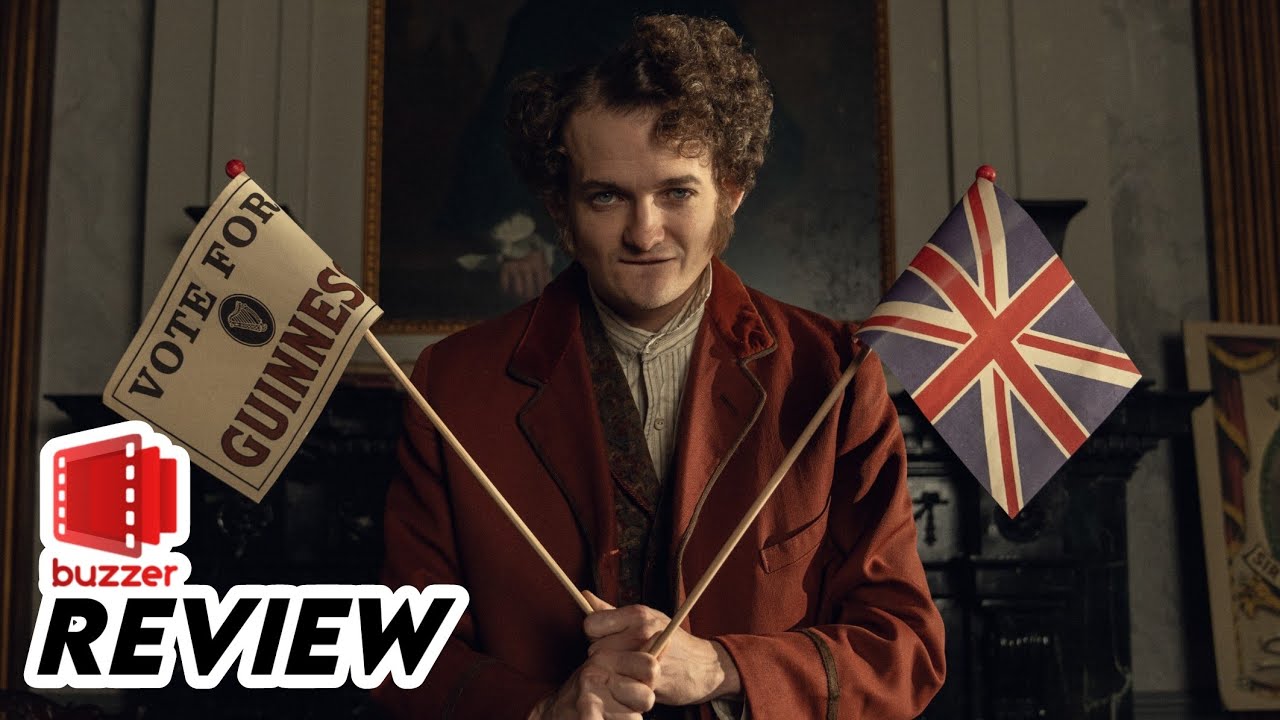
House of Guinness leaves me with mixed feelings. With Steven Knight behind it, I expected forceful storytelling and style, and the style certainly arrives: smoky pubs, grand houses, dark colours, atmospheric music and carefully charged images. Underneath that impressive surface, the family drama is less steady.
The story centres on Sir Benjamin Guinness’s children and the power, money, religion and political tensions surrounding them in the nineteenth century. When the camera does the talking, the series can be absorbing. Rain against a window, a hand tightening into a fist or the political weight inside a church can say more than another lengthy confrontation.
Too often, though, its people seem conscious of their own historical significance. Arthur becomes the ambitious operator, Edward the unstable brother and Anne the determined idealist. Their conflicts are explained, threatened and argued so emphatically that natural behaviour and unspoken feeling get crowded out. My objection is not that history has been dramatised; it is that the drama sometimes turns its characters into outlines.
The middle also drifts through political discussions and family disputes that lack clear consequences. Some conflicts build and fade, while others arrive abruptly. Anthony Boyle brings strength, if some stiffness, to Arthur; Emily Fairn is convincing as Anne; Louis Partridge gives Edward energy that can feel rather modern. What is missing is a character whose development really pulls me in emotionally.
The music, transitions and production design show both budget and vision. At its best, image, sound and performance come together beautifully. But those moments expose how much stronger the whole could have been with greater restraint. I give House of Guinness 7 out of 10 points: visually impressive, with good ideas, but often overloaded and short on subtlety.