

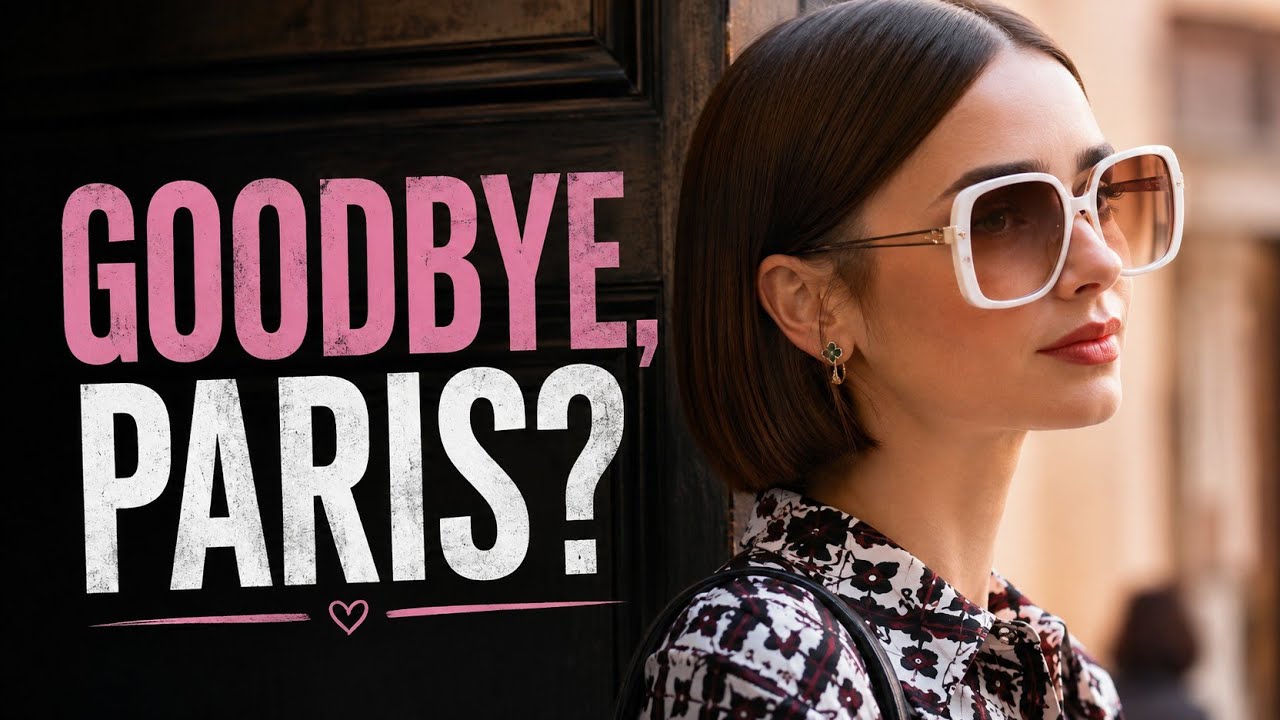
The fifth season of Emily in Paris plays like a quiet turning point for the series — just not the one it desperately needs. After four seasons of glossy escapism, this is where the show should either deepen its emotional stakes or fully embrace its absurdity. Instead, season five hesitates, and that hesitation defines almost everything that follows.
Spoilers: detailed discussionContains story spoilers. Open deliberately.
Rome and the old relationship patterns
On paper, the move to Rome promises reinvention. New city, new culture, new professional challenges, and a clean slate for Emily’s personal life. In execution, Rome rarely becomes more than a beautiful backdrop. The streets are stunning, the cafés inviting, the fashion immaculate, but the city never truly drives the story. It doesn’t challenge Emily in meaningful ways. It decorates her. That choice becomes clearer as the season progresses, especially once the Italian office storyline quietly collapses and the narrative drifts back toward familiar Parisian ground.
The romantic arc highlights this creative stagnation. Marcello initially feels like a genuine reset. He’s calmer, more grounded, and less entangled in the exhausting cycles that defined Emily’s past relationships. For a brief stretch, the show flirts with emotional maturity. Then it retreats. The relationship is rushed, underexplored, and ultimately discarded with surprising ease. The series slips back into old habits: misunderstandings instead of growth, dramatic gestures instead of honest conversations. Emily’s emotional orbit slowly tilts back toward Gabriel, not because the story earns it, but because the show seems unwilling to imagine a future beyond him.
The look evolves
Where season five still shines is presentation. Visually, it may be the most self-aware season yet. Emily’s wardrobe evolves noticeably, leaning into cleaner lines and a more adult sensibility. This shift quietly suggests character growth that the scripts rarely articulate. Sylvie remains the series’ sharpest presence — composed, incisive, and refreshingly aware of the ridiculous world she inhabits. Every scene with her feels intentional in a season that often struggles with focus.
Comfort viewing becomes too comfortable
That struggle becomes harder to ignore because the show clearly understands its reputation. It leans into being a “comfort watch,” almost using that label as armor. Light entertainment doesn’t have to be shallow, but here the writing often settles for the easiest possible version of each conflict. The fun is still there, but it’s inconsistent. Several episodes feel like they’re marking time rather than building momentum.
One unexpectedly grounded moment arrives at the very end, with a dedication honoring a crew member who passed away during production. It’s quiet, respectful, and sincere — and for a brief moment, the series feels more human than it has all season.
Verdict
In the end, season five is not a disaster, but it is the weakest chapter so far. It’s polished, fashionable, and intermittently charming, yet emotionally thin and narratively cautious. If you come for the visuals, the fantasy, and the familiar rhythms, you’ll find comfort. If you’re hoping Emily in Paris finally commits to real change, this season mostly plays it safe — and that safety comes at a cost.