

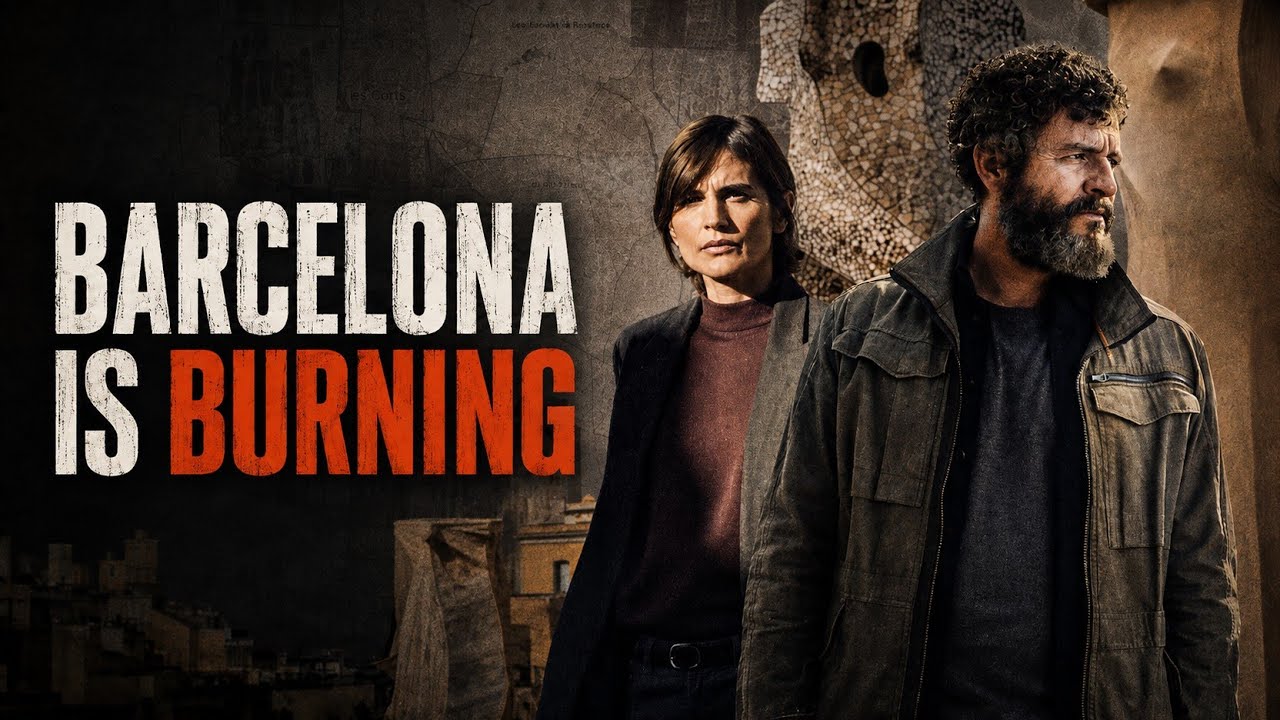
“City of Shadows” premiered in the United States on December 12, 2025, on Netflix, and from the very first minute it feels like a series that wants to work primarily through atmosphere. Internationally, it is also known under its Spanish title Ciudad de sombras. Barcelona is at the center of the story, but not as a bright, inviting postcard city. Instead, it is presented as a cold, heavy place shaped by history, secrets, and unresolved conflicts. The opening immediately establishes a dark tone and makes it clear that this is less about a traditional whodunit and more about mood, power, and the quiet weight of what lurks beneath the surface.
Investigators at a distance
The series follows an investigator duo that is deliberately written without easy charm. Milo Malart comes across as exhausted, emotionally closed off, and burdened by unresolved baggage. Rebeca Garrido appears more controlled and disciplined, but she carries her own scars just beneath that surface. What works well for me is that the show does not constantly explain its characters. Much of who they are is communicated through pauses, looks, and restrained reactions. That restraint gives them credibility, even if it sometimes keeps the audience at a distance.
Atmosphere costs momentum
Narratively, City of Shadows is a slow burn in the purest sense. The first few episodes take their time establishing locations, routines, and side characters. This approach creates a dense, brooding atmosphere, but it comes at the expense of momentum. There were moments where I felt the series was deliberately holding back tension to preserve mood, and in doing so risked losing emotional engagement. Around the midpoint, the story begins to tighten, and that is where the underlying potential becomes clearer. The investigation starts to connect with deeper layers of the city and its past, hinting at broader systems rather than isolated acts.
Thematically, the series revolves around power structures, buried connections, and the idea that the past never truly stays buried. It suggests corruption, influence, and long standing arrangements that shape the present. These ideas are compelling, but the show often plays them cautiously. Not every thread is fully explored, and some narrative turns feel familiar rather than daring. It is competent genre storytelling, but rarely bold.
Barcelona as a character
Visually, the series is consistently strong. The camera makes deliberate use of architecture, shadow, and space. Barcelona feels monumental and distant, almost indifferent to the people moving through it. Night scenes in particular carry a quiet, oppressive stillness that mirrors the emotional isolation of the characters. This visual consistency is one of the show’s greatest strengths, and it often communicates more than the dialogue does.
The performances are solid across the board. The leads anchor the series with understated work, avoiding big emotional outbursts or melodrama. Everything is kept tightly controlled, which fits the tone, though it also means that true emotional peaks are rare. The result is a cohesive, if restrained, dramatic experience.
Verdict
In the end, I land somewhere in the middle, roughly around 6.5 out of 10. City of Shadows is a well produced, atmospheric thriller miniseries that prioritizes mood over suspense. It is at its best when it stays quiet and focused, and less effective when it leans into familiar genre mechanics. Not a standout, but steady enough to leave a lingering impression.