

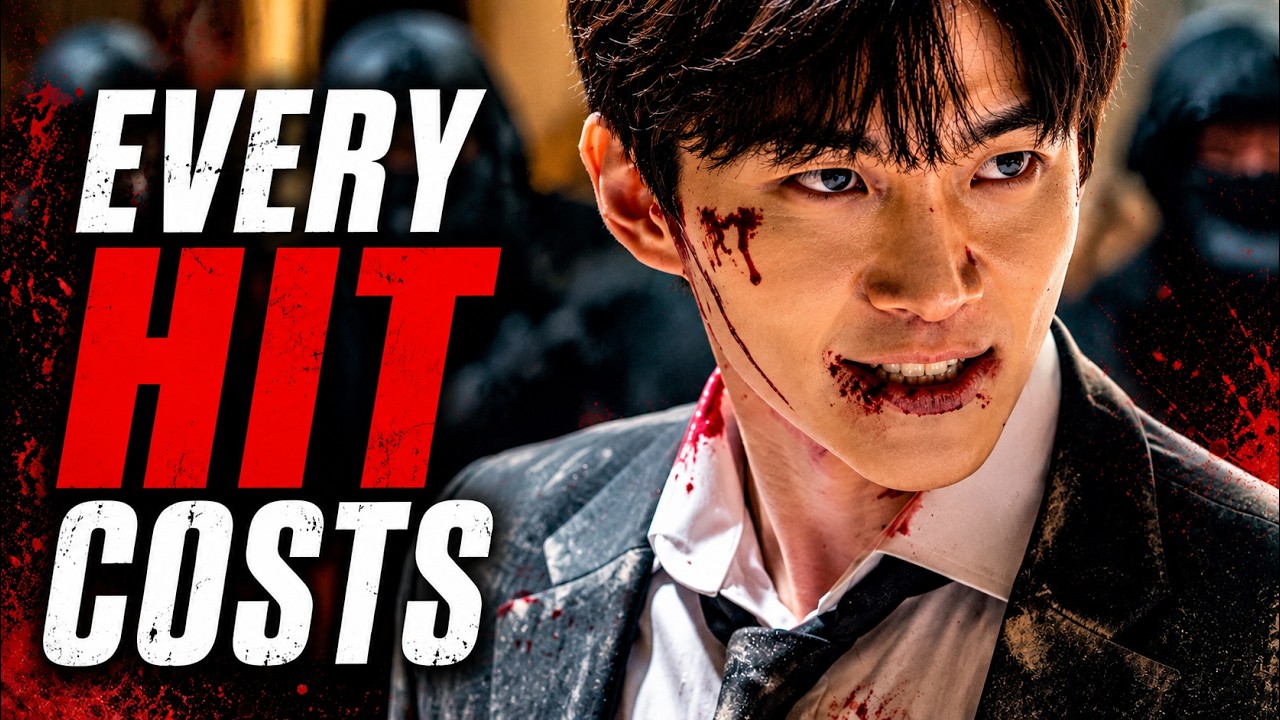
Cashero immediately sets itself apart in an overcrowded superhero market. From the opening episode, it is clear that this show wants to approach the genre from a different angle. The central idea is refreshingly grounded: Kang Sang-woong, an ordinary civil servant in Seoul, gains superhuman strength, but only as long as he has cash on him. Every heroic act literally burns money. Punches, jumps, rescues all come with a visible price tag. It is a clever, almost painfully relatable concept, and in its early stretch, the series uses it very well.
At its heart, Cashero is not really about saving the world. It is about navigating everyday survival. Sang-woong is not driven by ego or destiny. He wants financial security, a home of his own, and a future with his girlfriend. His powers constantly force him into uncomfortable moral math. Is intervening worth losing his savings? Can he afford to help today and still live tomorrow? These dilemmas give the show its strongest emotional pull. By tying heroism directly to money, the series quietly turns economic pressure into its most persistent antagonist.
As the season progresses, the world expands. Other powered individuals appear, each with abilities tied to oddly specific limitations, ranging from physical needs to personal habits. This idea adds flavor and avoids the usual godlike power fantasy. Unfortunately, it is also where the series starts to lose focus. Larger threats, secret organizations, and broader mythologies are introduced, and while none of this is inherently bad, it pulls attention away from the intimate, character-driven storytelling that initially made Cashero compelling.
The tonal balance is another weak point. The show frequently jumps between light comedy and serious action drama. Sometimes this contrast works, giving the series a playful edge. Just as often, it feels uneven. Humor undercuts tension, and dramatic moments do not always land with the weight they are clearly aiming for. Pacing becomes an issue as well, especially in the second half of the season, where too many story threads compete for space.
Lee Jun-ho carries the series with a restrained and believable performance. His portrayal of Sang-woong feels intentionally modest, which makes the character easy to connect with. He is most effective in quieter scenes, where doubt and responsibility sit heavier than spectacle. The supporting cast is hit or miss. Some characters feel genuinely lived-in, while others remain underwritten and function more as ideas than people.
By the finale, Cashero feels like a show that reached for something bold but did not fully commit. The closing episodes lean more on action and scale, losing some of the thoughtful simplicity that defined the beginning. It remains entertaining and often charming, but it stops short of being truly impactful.
Cashero is not a bad series. It is an ambitious and frequently engaging experiment with a strong hook and uneven execution. It offers a fresh perspective on what it costs to be a hero, both financially and emotionally. Still, when the credits roll, there is a lingering sense that with tighter storytelling and clearer priorities, it could have been something far more memorable.