

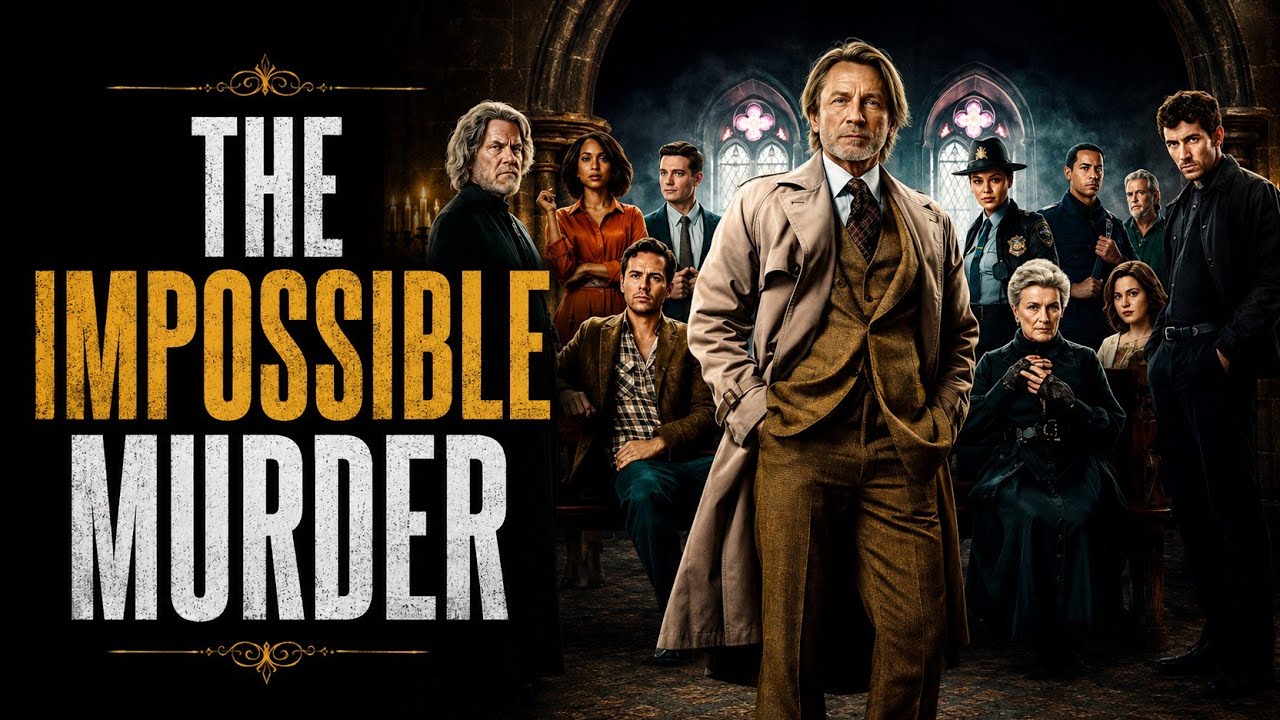
From the opening minutes it’s obvious that this third Benoit Blanc mystery wants to shift the tone of the series. This is not the bright, flashy satire of the first two films. It’s heavier, moodier, and far more interested in moral tension than in pure spectacle. That change feels deliberate, and for the most part, it works.
The story revolves around the murder of a prominent priest within a tightly knit religious community. At first, the setup plays like a classic whodunit: a closed circle of suspects, quiet secrets, polite smiles hiding resentment. But the film slowly reveals that the crime itself is only part of the picture. What really drives the narrative is an examination of faith, guilt, power, and the ways people justify their actions to themselves. The mystery becomes a tool rather than the destination.
Daniel Craig returns as Benoit Blanc, and this is his most restrained version of the character so far. He’s still sharp and observant, but there’s a reflective quality to his performance that suggests this case weighs on him differently. Blanc is not always the loudest presence in the room, and that’s one of the film’s strengths. The spotlight often shifts to the supporting characters, especially the young priest played by Josh O’Connor. His performance is layered and quietly intense, portraying a man torn between belief, doubt, and moral compromise. He never feels like a symbol or a narrative device, but a fully realized human being.
Rian Johnson’s direction leans heavily into atmosphere. The pacing is slower, more deliberate, allowing scenes to breathe and silences to linger. Churches, confessionals, and shadowed interiors are filmed with a somber beauty that reinforces the film’s themes. Nathan Johnson’s score complements this approach perfectly, using restrained, almost mournful tones rather than playful motifs. The result is a film that feels closer to a moral drama than a traditional mystery.
That said, this approach won’t land for everyone. At times, the film dwells so long on its thematic ideas that the forward momentum stalls. Viewers expecting constant twists and clever one-liners may find portions of the middle act too subdued. The final revelation is smart and coherent, but it doesn’t aim for shock value. Instead of a jaw-dropping twist, the ending offers a resolution that feels inevitable rather than explosive.
For me, that restraint is exactly what makes Wake Up Dead Man stand out. It’s thoughtful, mature, and willing to trade easy thrills for emotional weight. It may not be the most immediately entertaining entry in the series, but it’s the most resonant. Long after the mystery is solved, the questions it raises about belief, responsibility, and truth continue to linger.