

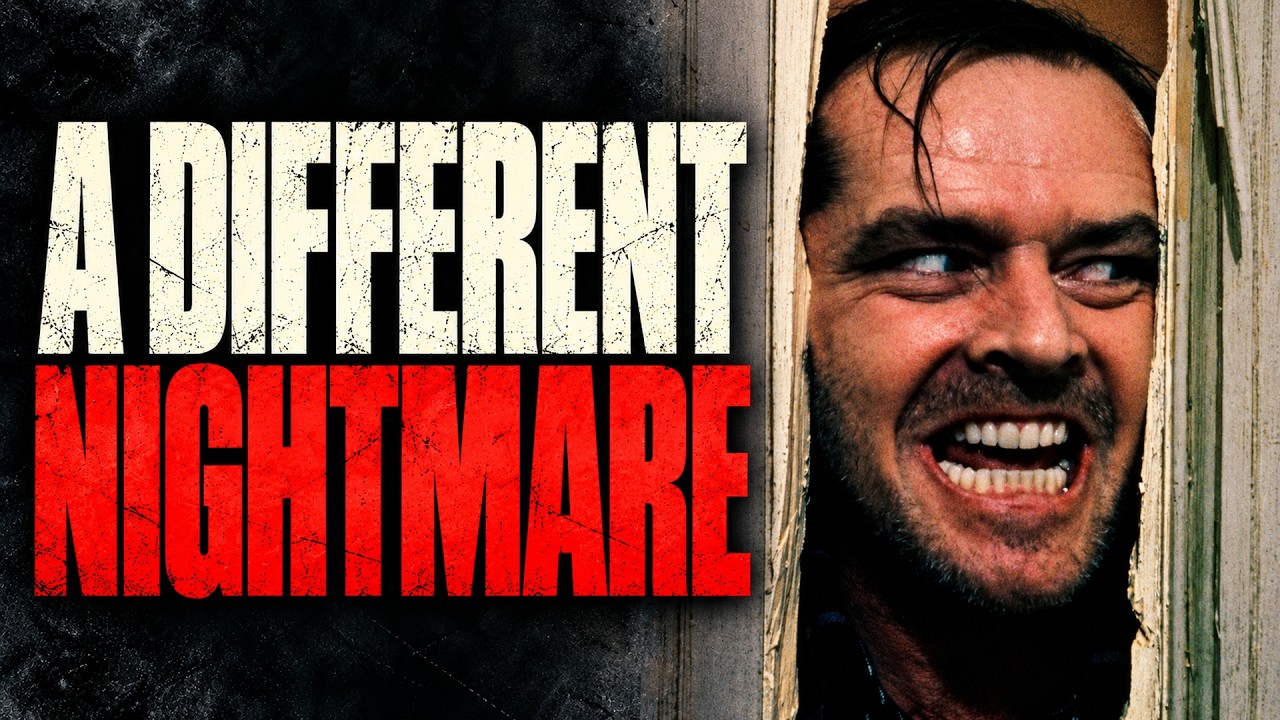
What Kubrick took away
The Shining gave horror some unforgettable images. But what if the biggest change was not what Kubrick showed, but what he took away?
The same hotel, a different fear
Stephen King's 1977 novel and Stanley Kubrick's 1980 film put the same family inside the Overlook Hotel. They make that family frightening in different ways. Look at the garden. King gives us animal-shaped hedges that move. Kubrick gives us a maze that stays still. The danger shifts from something coming alive to people losing their way.
Spoilers: detailed discussionContains story spoilers. Open deliberately.
Spoiler warning
Full spoilers for the novel and the film from here.
How close we get to Jack
Start with Jack Torrance. The novel puts us inside his shame, resentment and hope that this job might give him another chance. His drinking and violence have already hurt his family. The hotel does not create those problems. It finds them and pushes. That makes his collapse a struggle we follow from the inside, even when his excuses become ugly. Kubrick gives Jack much less room to explain himself. Nicholson's tight smile and sudden irritation make an ordinary conversation feel uncomfortable. There is still a history of drinking and abuse. What changes is how close we are allowed to get. Instead of sharing every attempt to resist, we watch someone whose next reaction becomes harder to predict. The missing background is part of that distance.
Wendy acts under pressure
Wendy changes with him. Shelley Duvall's fear is easy to reduce to screaming, but watch what she actually does. She keeps moving, checks on Danny and tries to get them out. The film makes us share her uncertainty. How much danger is she facing, and how quickly can she act? The book gives her more interior space. The film makes her decisions visible under pressure. Neither version works if she is treated as background decoration. Danny's gift also becomes less explanatory.
Tony and the unknown
In the novel, Tony connects to an older Danny. In the film, the moving finger and altered voice make that relationship stranger and less settled. Changing room 217 to room 237 is an obvious difference. The more important shift is how much explanation surrounds the fear. A changed number is trivia. A changed relationship with the unknown affects every scene.
The threat in the garden
The garden makes that especially clear. Moving hedge animals turn something decorative into a physical threat. Kubrick's maze needs no transformation. Danny can enter it, take wrong turns and disappear from view. Earlier, Jack looks down at a model while Wendy and Danny explore outside. The space starts to feel like something that can contain the family. By the ending, knowing how to move through it matters more than strength.
What happens to Hallorann
Then there is Dick Hallorann. The novel lets him survive. The film brings him all the way back to the hotel and kills him. That is more than a harsher surprise. His return looks like help finally arriving. Removing him destroys that expectation. Wendy and Danny must still escape, and the person who understood Danny's gift cannot simply resolve the danger for them.
The novel's last trace of Jack
The endings reveal the deepest difference. In the novel, Jack briefly breaks through the hotel's control and tells Danny to run. The neglected boiler ultimately destroys the Overlook. There is a last trace of the father inside the threat, and the building can be brought to an end.
The film leaves the hotel standing
Kubrick replaces that with the frozen maze. Danny survives by retracing his footprints. Jack keeps pursuing him and cannot find his way out. The hotel remains. Then the photograph places Jack inside its past. It gives us another disturbing image instead of a neat account of how everything worked. You can connect it to repetition and the hotel's hold over him without pretending it closes every question. These changes do not just shorten a novel. They change where the horror lives. King's story lets us feel a family being pulled apart from within. Kubrick makes that family increasingly difficult to read from the outside. The book gives Jack a final moment of recognition. The film leaves the Overlook waiting.