

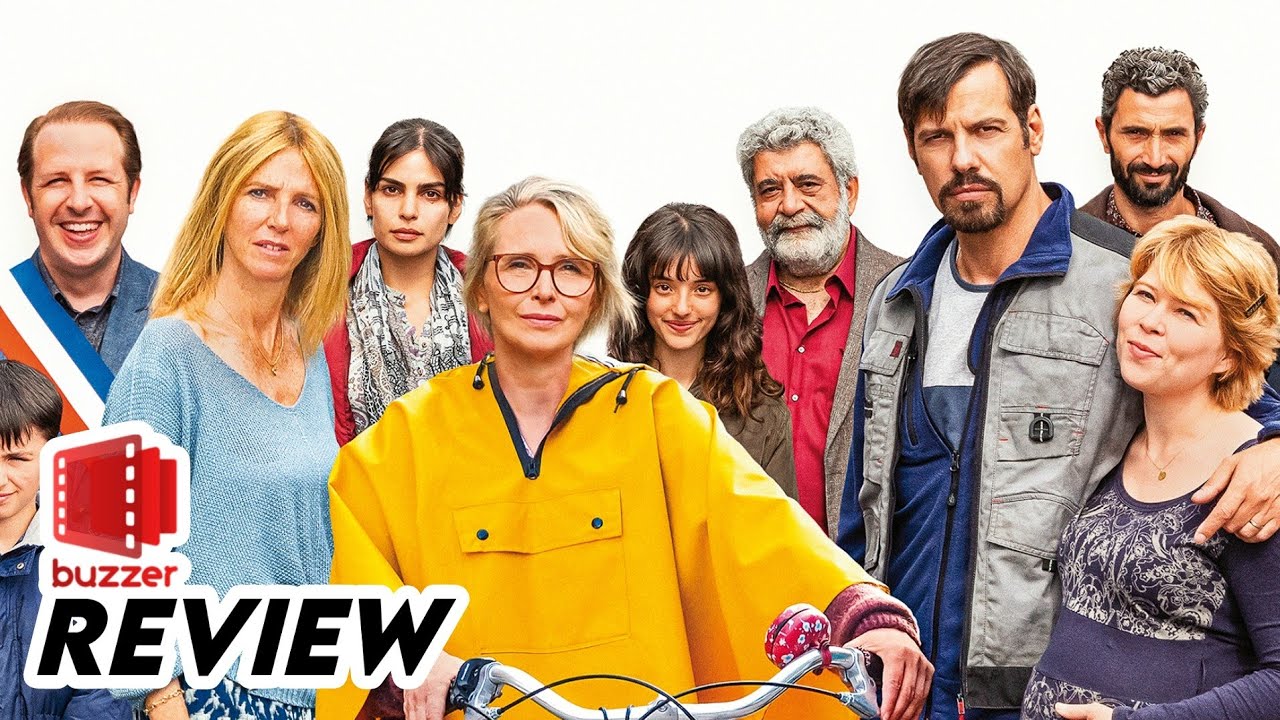
Meet the Barbarians is a satire that takes risks. Julie Delpy directs, co-writes and appears in a story set in a Breton village that considers itself open-minded as long as everything goes according to plan. When Syrian refugees arrive instead of the expected Ukrainian family, a different truth emerges beneath the community’s welcoming image.
Six chapters about village life
The story is divided into six chapters, giving the film an almost literary rhythm. Each exposes more of the façade of solidarity and compromised generosity. What begins as light comedy develops into satire and then drama. That shifting approach makes the narrative appealing: it plays with expectations, unsettles them and repeatedly holds up a mirror. The villagers resemble a well-rehearsed theatrical ensemble suddenly finding themselves in a different play.
Delpy and Kiberlain
Delpy plays Joëlle, a teacher committed to a nearly radical humanism. She becomes the story’s moral backbone without escaping vanity or self-righteousness. Her scenes with Sandrine Kiberlain’s Anne are particularly strong. Depressed and overwhelmed, Anne may be the film’s most honest character. Hervé, meanwhile, is a noisy, perpetually grumbling local nationalist, wonderfully exaggerated but also unnervingly recognisable. He concentrates the unease others would rather leave unspoken.
The Syrian family
Ziad Bakri, Dalia Naous, Rita Hayek and Farès Helou give the Syrian family a quiet but compelling presence. Without grand speeches or excessive sentiment, they show what it means to be told you are welcome while feeling merely tolerated. A scene involving their own video from Syria, with the sound continuing over a black image, is especially bold. Its restraint makes it powerful.
Landscape and barriers
The images are clear and unforced, with attention to detail. Brittany is more than scenery: its beauty and openness contrast with the barriers in people’s minds. The film offers neither easy questions nor convenient answers. Instead, it asks us to examine our own assumptions and how readily we offer help when it costs us little.
Shifts in tone
There are weaknesses. The movement from comedy to serious drama is not always smooth. The second half occasionally drags and some characters lose depth, becoming types rather than fully convincing people. These are dents in an otherwise strong film rather than a collapse of its approach.
Verdict
This is clever, sharp satire that remains humane rather than cynical. It is funny, political and worth thinking about. My rating is 7/10. It is not a masterpiece, but it is certainly worth seeing, especially for viewers who want both laughter and something to reflect on.