

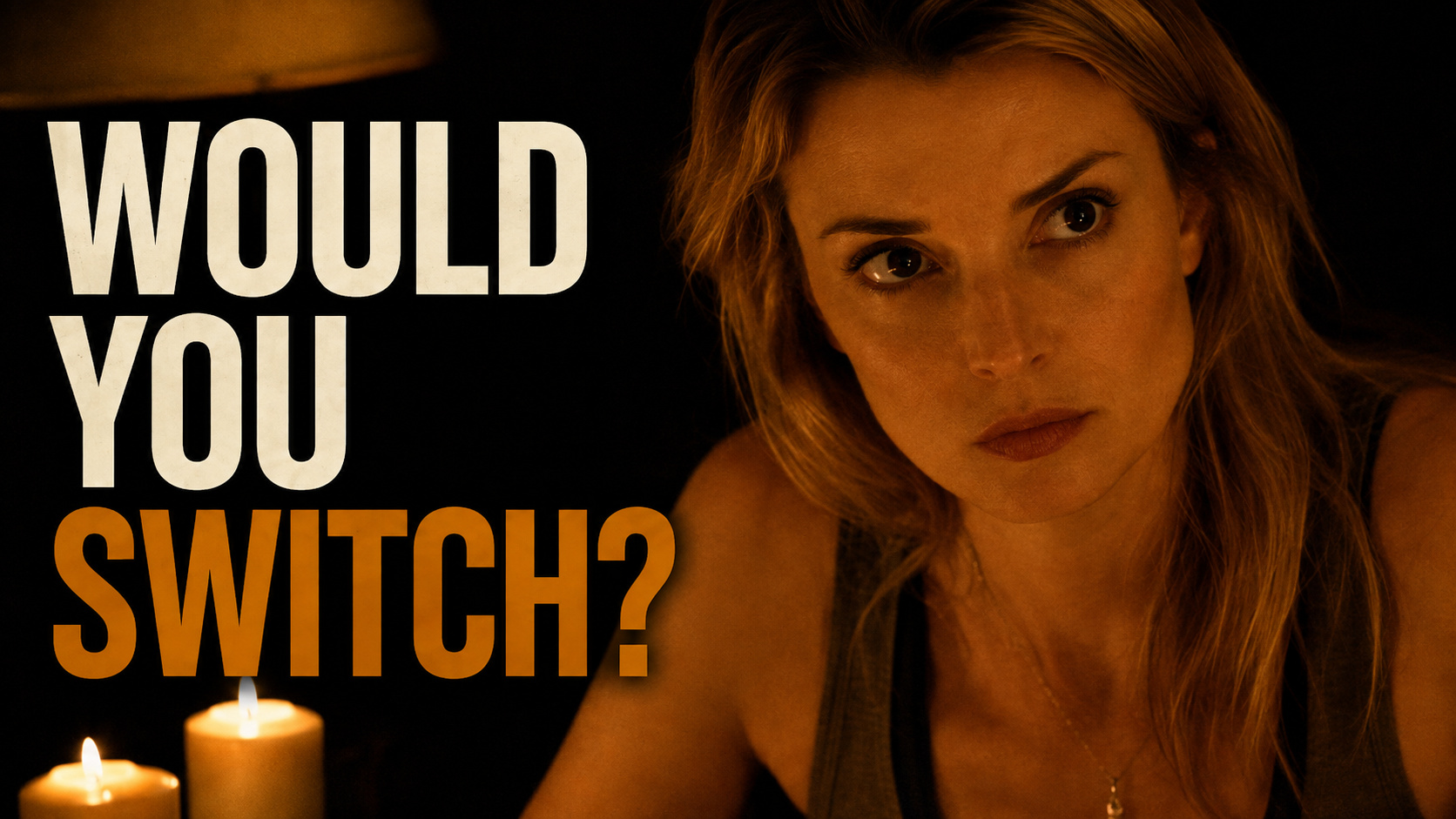
Coherence looks like a movie about parallel universes. But its most disturbing idea is much simpler: what if another version of you had built a better life?
Spoilers: detailed discussionContains story spoilers. Open deliberately.
The question beneath the puzzle
From here on, full spoilers. Coherence is usually sold as a puzzle. Which house is which? Who came from which reality? What do the boxes, numbers and glow sticks mean? Those questions are fun, but they are not the reason the film works. James Ward Byrkit built the story around something much more ordinary. He has said that regret, and the question of how life might look after different choices, became the emotional foundation of the film. That is why Emily slowly emerges as the central character.
A dinner party that feels real
The movie also feels unusually real for science fiction. Byrkit shot it over five nights in his own house. The actors received private information and motivations instead of a conventional full script, then improvised much of the dialogue. That loose, overlapping rhythm matters because Coherence is less interested in explaining a cosmic event than in watching normal people become suspicious of themselves. Even the convenient physics book is basically a joke. Byrkit later explained that it looks like the exposition device that should explain everything, but it never actually does. The rules are not the real point. Human behavior is.
Clues from different realities
Yes, there are many realities. The dark area outside works like a shuffle point. People leave one house and can enter another version of the same dinner party. The boxes, photographs, dice numbers and random objects work like fingerprints for each reality. By the time Emily puts the clues together, the people around the table no longer even come from the same universe. But that is where the more interesting horror begins.
What Mike fears in himself
Mike is terrified that another Mike might attack first. His solution is to consider violence, steal information and eventually blackmail his own double with the secret of his past affair with Beth. Then a blackmail note arrives from another Mike who had exactly the same idea. That is brutally simple. Mike is afraid of his double because he knows what he himself is capable of. Byrkit has described the film as being about people projecting their fears onto others. Here the “other” person is literally yourself. The threat outside the house becomes a reflection of the threat already inside it. Emily goes even further.
A better life seen through a window
Before the comet changes anything, she is already haunted by hesitation. She missed a major ballet opportunity not because she made one dramatic choice, but because she failed to say yes when she had the chance. She also hesitates over going to Vietnam with Kevin. Her life is defined by tiny decisions that she keeps replaying afterward. Then the universe gives her the most dangerous thing possible: comparison. Emily moves through different realities until she finds one where the evening looks peaceful, Kevin is affectionate, and another Emily appears to have the version of life she wants. But Emily knows almost nothing about that world. She sees a few happy minutes through a window and decides it must be better.
The double who wants to take over
That is the real nightmare of Coherence. It turns “what if?” into something physical. Emily does not simply envy her double. She decides that this other life belongs to her. She attacks the other Emily, drugs her, hides her and tries to take her place. The classic doppelgänger horror is usually about being replaced by someone who looks like you. Coherence flips it. Our protagonist becomes the double who wants to replace somebody else. The ending makes that failure unavoidable. Emily loses her own ring during the struggle and takes the other Emily’s ring. The next morning Kevin finds another ring in the bathroom while Emily is already wearing one. Then his phone rings. The caller is Emily. The woman she tried to erase is still alive.
Verdict
And that is why the ending is stronger than a simple multiverse twist. Emily believes there must be one clean reality where she finally made the right choices. But the moment she tries to possess that life, she contaminates it with another terrible decision. The film is not as philosophically bottomless as its puzzle-box reputation can make it sound. It does not need to be. Its sharpest idea is smaller and nastier: seeing every possible life would not necessarily make us grateful or wise. It might only give regret more evidence. Coherence turns alternate realities into the cruelest possible form of comparison. You are no longer measuring yourself against another person. You are measuring yourself against the person you think you could have been. That is much scarier than the comet, and it is why this tiny film still gets under the skin: 7.5 out of 10.