

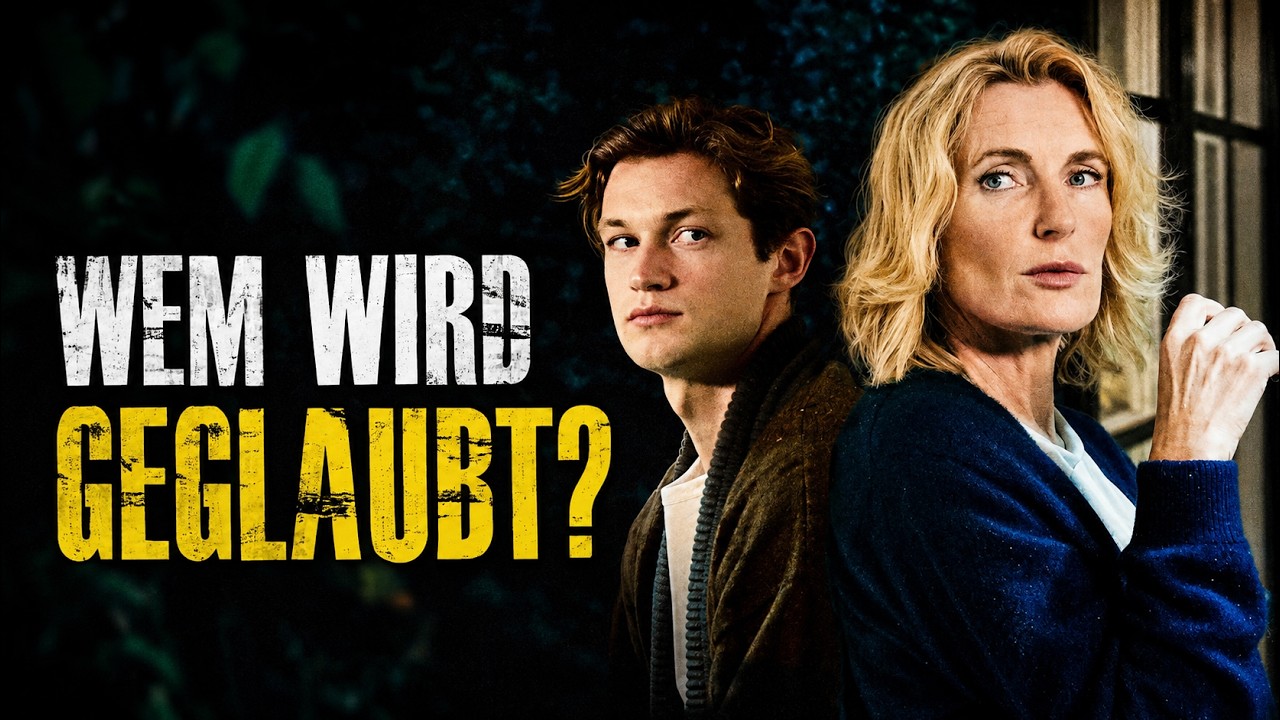
Saralisa Volm directs from a screenplay by Lena Fakler. Maria Furtwängler plays Martina, a successful neurosurgeon who spends a holiday with her husband, her daughter and a family they are close friends with. There, Martina is raped by Mischa, the son of her best friend, and initially tries to continue her life as if nothing happened.
That perspective is what gives the drama its real strength. Bis zur Wahrheit is less interested in asking what happened. The staging leaves little room for doubt about that. What matters is what follows: suppression, self-doubt and, above all, the reaction of people who do not want to hear the truth because accepting it would destroy their image of friendship, family and normality.
Furtwängler plays Martina with remarkable control. She is not presented as a passive victim but as a confident woman who has professional authority, enjoys flirting, drinks, occasionally smokes a joint and likes being in control of her own life. That makes the later accusations and attempts to shift responsibility especially uncomfortable. The film shows how quickly questions about the crime become questions about her behavior. Furtwängler won the German Television Award for Best Actress in 2025 for this performance, and it is easy to understand why.
Damian Hardung is equally important to the film’s impact. Mischa is not introduced as a conventional screen monster but as a young man from Martina’s closest social circle. The film deliberately moves away from the stereotype of the unknown attacker waiting in a dark alley. Margarita Broich is also excellent as a mother whose loyalty to her son increasingly collides with her friendship with Martina. That emotional proximity makes the story far more disturbing.
Volm keeps the camera close to Martina and avoids excessive dramatization for much of the running time. Everyday spaces, touches and conversations suddenly carry a different meaning after the assault. The film is not only about the event itself but about the way it continues to shape everything around it. By avoiding cheap shock effects, many of these moments become even more uncomfortable.
The final third is less convincing. Several conflicts escalate very sharply, and some developments feel constructed rather than organically earned. A few supporting characters remain more functional than a story this complex deserves. The film’s bleak view of police, justice and the chances of legal resolution can also be questioned.
Even with those weaknesses, Bis zur Wahrheit is a powerful and exceptionally well-acted drama. It does not discuss consent in the abstract; it shows how difficult an unwanted truth can become inside a close social network. Furtwängler, Broich and Hardung give the film an intimacy that lingers long after the credits. It earns 7.5 out of 10.