

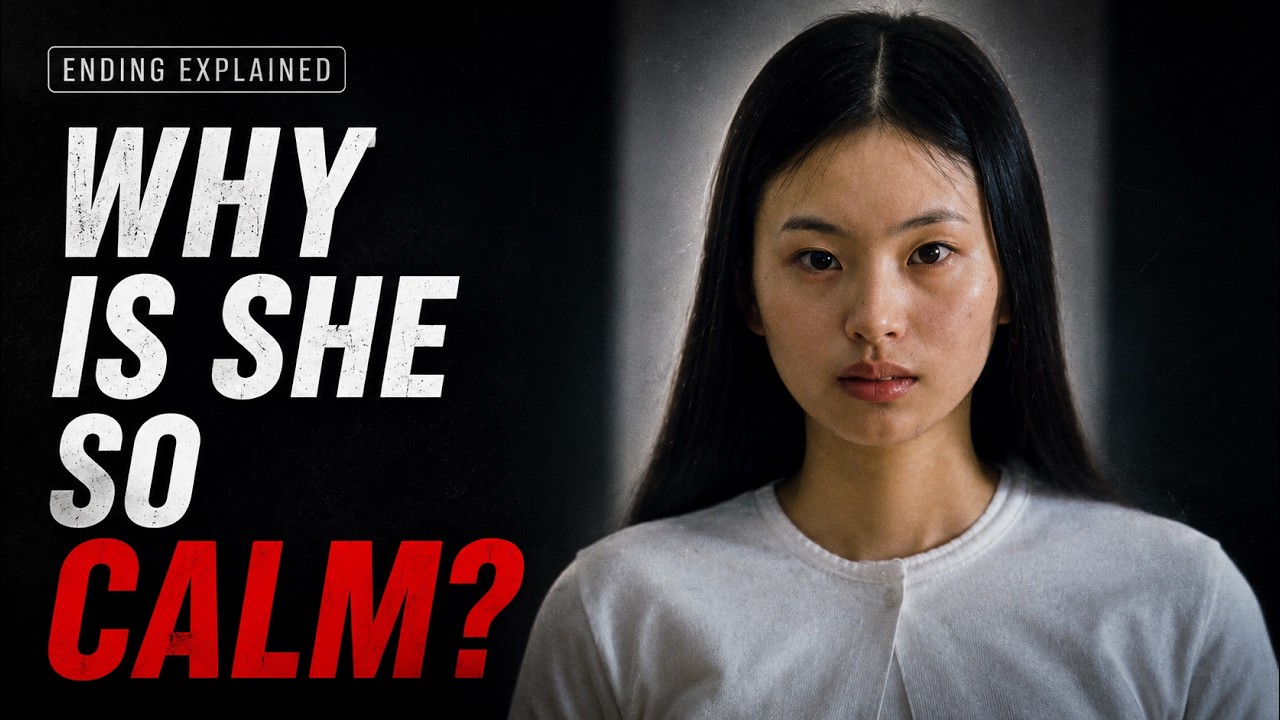
Horror hiding in a relationship drama
A movie can make you think you are watching the wrong genre for almost an hour – and that is exactly where its real horror begins. Takashi Miike’s 1999 Audition is infamous for its final act. But reducing the film to needles, wire and one torture scene misses why it lingers so powerfully. Audition is horror, but it is also a love story, a relationship drama and a psychological drama. On a first viewing, its quiet opening hour can almost feel like a test of patience. Once the ending is known, that entire hour changes in retrospect. Suddenly it becomes clear that something was happening all along – just not the thing we were trained to expect from the word horror.
Spoilers: detailed discussionContains story spoilers. Open deliberately.
Spoilers: an audition built on deception
From this point on, there are full spoilers through the ending. Shigeharu Aoyama is a widower, a loving father and, fundamentally, a sympathetic man. That is exactly what makes the setup interesting. His friend Yoshikawa organises a fake movie audition so Aoyama can select a potential partner from the applicants. Aoyama is not a monster, but the arrangement is still morally crooked. The women believe they are auditioning for a role. In reality, they are being judged on whether they fit one lonely man’s ideal: young, refined, beautiful and preferably reserved. Then Asami Yamazaki appears. Eihi Shiina plays her with such quiet vulnerability that Aoyama immediately sees the woman he has been looking for. The audience participates as well. We study her posture, listen to her answers and try to classify her. The title Audition therefore describes more than the fake casting. Asami presents precisely the version of herself that can pass this test. Later, the roles reverse: Aoyama must pass her audition by loving her and nobody else. That was always going to be impossible.
A conversation that makes reality slip
The restaurant scene already shows that time, space and truth are not entirely stable in this film. Asami insists that she is not lying to him. Aoyama replies, “Honestly …” – even though he is the one who built their entire meeting on a lie. The film cuts to him, and the customers in the background have suddenly disappeared. A wide shot reveals the restaurant to be empty except for the two of them. Moments later, in the middle of what seems to be the same continuous conversation, they are suddenly sitting in another restaurant. Of course, time may simply have passed. But Miike could have conveyed that invisibly. Instead, he allows the transitions to slip in plain sight. Just as they discuss honesty, deception and the supposed film, the film itself begins playing with our perception.
The person behind the perfect image
Yoshikawa quickly realises that Asami’s résumé does not add up. People she names have disappeared or cannot be reached. Aoyama ignores the warnings because the image he wants has become more important than the real person. The contrast between their homes is especially unsettling. His house is full of family, routine and memories. Her apartment is almost empty: a telephone, a sack and a woman sitting motionless as she waits for his call. When the phone rings, the sack moves as well. Something entirely different has been waiting beneath her perfect performance.
Whose reality are we watching?
After they spend the night together, Asami disappears. Aoyama searches for her and enters places that feel increasingly unreal. He learns about the dismembered owner of a bar and visits the man who taught Asami ballet as a child and abused her. From this point onward, the film openly folds Aoyama’s perception, memories, fantasies, Asami’s past and physical reality into one another. Miike is not necessarily showing us only what Aoyama himself could see or know. Some of these images have already been shown to the audience independently of him. That makes it increasingly difficult to determine whose memory, dream or reality we are actually watching.
A familiar bottle becomes a loss of control
The alcohol is worth noticing too. Earlier, while eating with his son, Aoyama casually takes out the bottle and pours himself a whisky. That is nowhere near enough to diagnose an alcohol problem. It does establish the bottle as part of his routine. Asami later exploits that routine by drugging his whisky. The man who tried to control which woman would enter his life ultimately loses all control over his body through his own bottle. And when memories, fantasies and nightmares start collapsing into one another, you may briefly wonder whether Miike watched a few too many David Lynch films before shooting this.
The torture is not simply a dream
So what actually happened? This is how I understood it: Asami really returns, drugs Aoyama:. She paralyses and brutally tortures him, ultimately leaving him severely injured. His son Shigehiko comes home, is attacked and eventually knocks Asami down the stairs. Aoyama survives, badly injured. The torture is therefore not simply “all a dream.” Miike overlays the physical events with dreams, memories, subjective perception and Asami’s past until it is no longer even clear which images belong to Aoyama’s consciousness and which the film is showing only to us. During the apparent awakening in the hotel, Asami accepts his marriage proposal. When Aoyama closes his eyes again, he could theoretically be slipping back into the same dream. That reading is possible. But the film never gives us clear evidence that the entire torture sequence is therefore only imagined.
Aoyama's self-image begins to fracture
The surreal montage also begins to damage Aoyama’s clean image of himself. The women in front of him suddenly change faces, revealing things the film had only hinted at before. Aoyama apparently did sleep with his secretary once. She had hoped it might mean more, while he seems to have moved on from it long ago. In retrospect, even the earlier scene in which she tells him that she is getting married takes on a different tone. Perhaps she is waiting to see whether Aoyama will finally react, whether he might actually want her after all. Whether she would really have reconsidered her marriage for him is pure speculation, but her strange hesitation in that scene suddenly makes much more sense. It becomes even more uncomfortable when Asami then takes the form of the young woman from his son’s circle. There is no indication that anything actually happened between them. Instead, the montage seems to expose a sexual desire Aoyama may not even want to acknowledge. These images are therefore not simply random shock imagery. They confront him with desire, guilt and the women he has used, wanted or turned into projections of his own needs. The kind, lonely widower remains sympathetic – but his self-image is no longer nearly as clean as it first appeared.
Love as possession
Why does Asami go this far? Her past explains the structure of her violence, but it does not excuse it. Abuse, loneliness and destroyed trust have damaged her idea of love. Intimacy means exclusivity, love becomes possession, and pain has become more reliable than words. She is not simply losing control. What makes her frightening is how controlled she remains. The drug, the paralytic, the needles and the wire are prepared. Asami takes power with horrifying precision.
A pattern without a precise victim count
Aoyama is clearly not her first victim. The man inside the sack is alive but horribly mutilated: both feet, his tongue, one ear and several fingers are missing. Extra body parts were found with the dismembered bar owner, and they correspond in a disturbing way. A music producer listed on Asami’s résumé has also disappeared. The film never gives us an exact number of people she has killed or mutilated. The ballet instructor is still alive when Aoyama visits him; his later decapitation belongs to the surreal montage and cannot safely be counted as a real event. What is clear is that Asami’s violence has become a pattern.
Care twisted into total domination
The man in the sack is also more than a shock image. He is the grotesque endpoint of the relationship Asami demands: completely dependent, voiceless and physically unable to leave. Even his most basic needs are controlled by her. Miike pushes this dependence to its most degrading extreme when Asami vomits into a dog bowl and the man eagerly eats what she has given him. It is not disgust for its own sake. Care has been twisted into total domination: Asami keeps a human being alive who is completely at her mercy and literally incapable of leaving her. That connects to the film’s recurring focus on legs and feet. For Asami, ballet, abuse and damaged legs have become inseparable. Her former instructor lives with prosthetic feet, the man in the sack has no feet and Aoyama loses one of his. Again and again, bodies are stripped of movement, autonomy and the possibility of escape.
Two versions of control
That is where Aoyama and Asami mirror each other. He tries to force a woman into the role of his ideal partner. She tries to bind a man to herself so completely that nobody else can exist beside her. His control is polite, socially accepted and initially packaged as something almost comic. Hers is physical, absolute and monstrous. Aoyama’s son, his dead wife and the life he already has inevitably stand between Asami and her demand for exclusive love. The son she sees as competition is ultimately the person who saves him.
The violence makes hidden power visible
The infamous torture scene therefore works through more than brutality. Sound, precision and Asami’s almost affectionate calm do most of the damage. Her soft “kiri-kiri-kiri” clashes so violently with what she is doing that much of the pain is created inside the viewer’s head. After the controlled first hour, the scene does not feel like an unrelated eruption. It turns the film’s invisible power dynamics into physical reality. Takashi Miike has even described Audition as a love letter. That sounds like a macabre joke, but it fits surprisingly well. In the final image, both characters lie helpless on the floor. Their roles have collapsed, the power games are over, and Asami repeats her earlier hope for a life together. Their most honest encounter comes only when there is nothing left to hide.
Verdict
Audition is therefore not a relationship drama that suddenly becomes a horror film. It was always a drama about loneliness, projection, deception and control. In the final act, Miike simply transforms those psychological conflicts into bodies, pain and violence. The longer you think about the film, the stronger it becomes. Audition earns 9 out of 10.
Watch the film at home
For your home collection
Check format, audio, region compatibility and current availability on Amazon.
As an Amazon Associate I earn from qualifying purchases. Using these links does not add to the price you pay.