

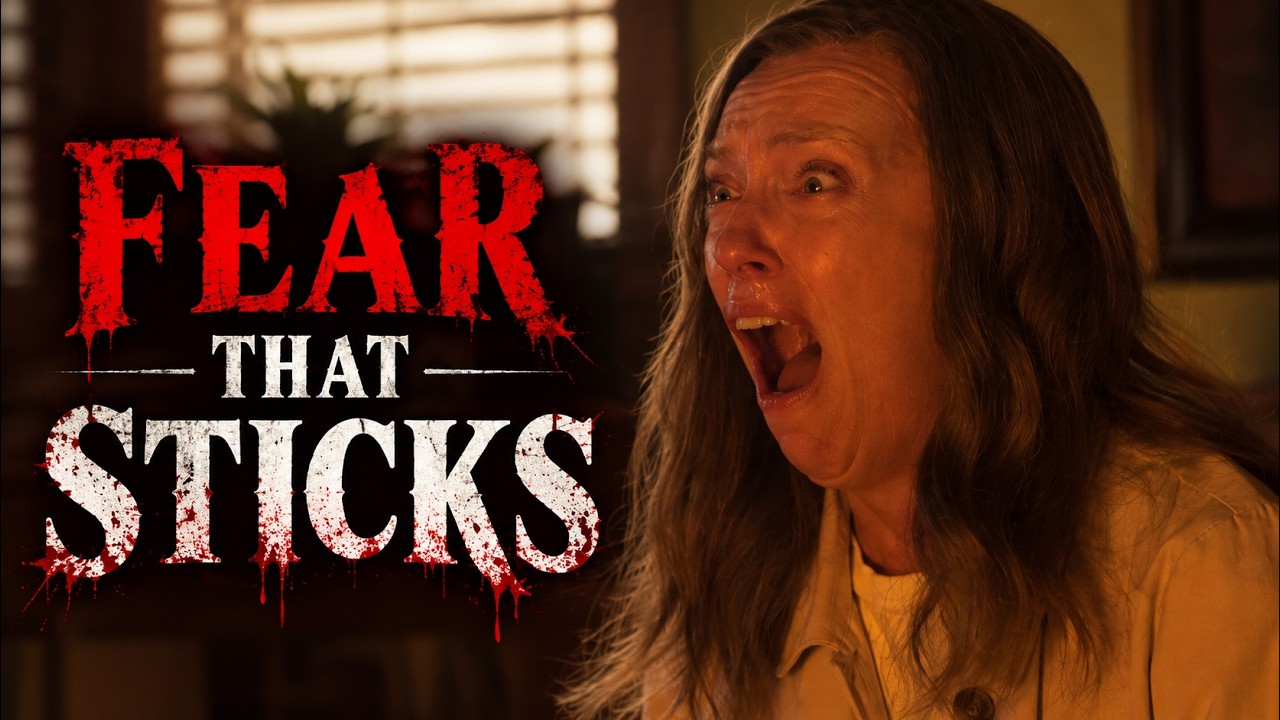
Ten different ways to make the familiar frightening
The 2010s did not just give horror a comeback. They gave us movies that could make a hallway, a family dinner, bright daylight or one distant figure feel unsafe. These are the ten that stayed with me the most.
10. A Quiet Place
John Krasinski takes a rule that sounds almost too simple for a feature film, make a sound and you may die, and turns it into a remarkably clean suspense machine. Silence is not a gimmick laid on top of the story. It changes how the family communicates, how they move through their home and even how we listen as viewers. Emily Blunt and Krasinski also give the film an emotional center strong enough that the creatures never become the only attraction. I do think the movie sometimes feels more like an extremely polished survival thriller than pure nightmare fuel, which is why it starts the ranking rather than finishes it. But as mainstream horror craft, it is incredibly efficient. One strong rule, understood immediately by the audience, creates more tension than pages of mythology.
9. Oculus
Before Mike Flanagan became one of the biggest names in modern horror, he made a film about a mirror that does something more disturbing than simply contain a ghost. The Lasser Glass attacks certainty itself. Kaylie believes she can study it, document it and beat it with preparation. Her brother Tim has spent years convincing himself that the supernatural explanation for their childhood is wrong. Then past and present begin folding into each other until neither the characters nor we can trust what is in front of us. That is what I like about Oculus. Its best weapon is not the mirror as an object, but the idea that evidence becomes useless when perception itself can be manipulated. The buildup is nasty, clever and very recognizably Flanagan: family trauma turned into a supernatural mechanism.
8. Midsommar
Ari Aster follows one of the darkest-looking horror films of the decade by moving almost everything into blinding daylight. Dani arrives in Sweden already carrying enormous grief, and Florence Pugh makes that emotional exhaustion present long before the community reveals how wrong this trip will become. Midsommar gives us none of the usual visual protection of darkness. The fields are bright, the costumes are beautiful, people smile, and ceremonies happen in open spaces. Somehow that openness becomes suffocating. But the images stay in your head, and Aster turns a failing relationship into part of the horror instead of a subplot next to it. The result is strange, cruel, occasionally funny and deeply uncomfortable. Very few films made sunlight feel this hostile.
7. Get Out
Jordan Peele's first feature works because social discomfort is already doing the horror work before the movie asks us to accept anything more extreme. Chris visits the family of his girlfriend Rose and has to navigate comments, smiles and gestures that are just plausible enough to be dismissed individually. Daniel Kaluuya is fantastic at showing how much calculation sits behind Chris's restraint. Peele keeps tightening that discomfort until comedy, paranoia and horror operate at once. What makes Get Out important is not simply that it has something to say. The achievement is how cleanly its ideas are built into suspense, character behavior and payoff. You can watch it as a sharp thriller and still feel the larger argument underneath. The films above it frightened me more on a gut level, but Get Out showed how commercially direct and culturally specific modern horror could be without turning into a lecture.
6. The Conjuring
Sometimes horror does not need to reinvent the genre. It needs someone who understands exactly how to stage the old tricks. James Wan takes a haunted farmhouse, strange noises, dark corners, frightened children and paranormal investigators, then directs the material with enormous confidence. The camera often tells us where to look and then makes us distrust that instruction. Vera Farmiga and Patrick Wilson also give Ed and Lorraine Warren enough warmth that the movie never becomes only a collection of scare setups. For me, The Conjuring is simply more frightening than Get Out, which is why I put it one place higher. It is polished and very mainstream, but it knows how to use that polish without sterilizing the fear. Forget the giant franchise that followed. The first film is still a brutally effective piece of old-school scare construction.
5. The Witch
Robert Eggers puts a Puritan family at the edge of a forest, isolates them physically and spiritually, and lets fear grow through language, faith, suspicion and the pressure they place on one another. The period dialogue could have turned the film into an academic exercise, but the performances make it feel lived in. Anya Taylor-Joy's Thomasin is trapped inside a family where every misfortune can become evidence against somebody, making the supernatural threat inseparable from the human one. What I love about The Witch is its patience. It is not constantly poking the audience to make sure we are still awake. It creates a world with rules and beliefs strong enough that a glance toward the woods can carry real weight. This is slow-burn horror in the real sense: dread accumulates until the family can no longer contain it.
4. Sinister
This one is mean. Scott Derrickson gives us a true-crime writer, a new house and a box of Super 8 home movies, then uses those films inside the film to create some of the most disturbing images of the decade. Ethan Hawke's Ellison is not a passive victim. His ambition keeps pulling him toward material that any sensible person would want out of the house immediately, so curiosity and ego help the horror along. The home movies are the obvious centerpiece, but sound is just as important. Sinister has an abrasive, ugly sonic identity that makes those sequences feel almost illicit. Once the mythology becomes more explicit, some mystery disappears, but by then the damage is done. I found Sinister genuinely frightening. It has that rare quality where even knowing a scare is being prepared does not make the room feel safer.
3. The Babadook
Jennifer Kent builds a horror film out of exhaustion, grief and the terrifying fact that love does not magically erase resentment. Amelia is raising her son Samuel after losing her husband, and Essie Davis plays her as someone whose emotional reserves are nearly gone before the strange book ever appears. That is why the Babadook works. The monster is frightening as an image, but the deeper fear is psychological. The house gets tighter, Amelia becomes less reliable, Samuel becomes both exhausting and vulnerable, and the film moves between supernatural terror and painfully recognizable emotions. This is one of the films that reminds me most of what I loved about It Follows: it does not need gigantic spectacle. It needs an idea, a mood and characters whose fear we can inhabit. I remember the pure creepiness of it, the feeling that the threat had entered not just the house but the way the characters were thinking. The Babadook is scary because it understands that some things cannot simply be defeated and forgotten.
2. Hereditary
Ari Aster's debut feels more polished and a little more Hollywood-sized to me than It Follows, but that does not make it safer. If anything, the precision becomes part of the cruelty. The Graham family is already dealing with grief when the film begins, and Aster keeps tightening the pressure until domestic drama, guilt and supernatural horror are impossible to separate. Toni Collette is extraordinary because Annie can be sympathetic, furious, wounded and frightening within the same sequence. What really got me was the buildup. Hereditary keeps accumulating tension instead of constantly releasing it, and by the final stretch it becomes almost vicious. The ending goes places that feel downright antisocial, but it works because the film has spent so long poisoning the atmosphere first. The family arguments can be nearly as uncomfortable as the supernatural material.
1. It Follows
This is the film that got me more than any other horror movie on this list. I was genuinely scared for Jay. The basic idea is terrifying because it is so easy to understand: something is coming toward you, it can look like almost anyone, and it never needs to run. David Robert Mitchell turns that rule into permanent background anxiety. You start scanning the frame. A person walking in the distance is no longer just a person walking in the distance. A wide shot becomes a threat assessment. Even when Jay is surrounded by friends, safety never feels permanent. Maika Monroe is crucial because I cared about her, and that made the fear much stronger than a clever premise alone could manage. What makes It Follows even more impressive to me is how much it gets from relatively modest means. It does not look cheap; it looks deliberate. The Detroit locations feel familiar and unreal at the same time. Disasterpeace's electronic score gives the film a pulse of its own. The technology and production design seem to belong to different decades, making the world feel detached from normal time. And the film gives us enough rules to fear the entity without explaining it to death. I had fun watching it, but it was the kind of fun where I was tense almost the entire time. Hereditary may be grander and more polished, and The Babadook may dig just as deeply into psychology, but It Follows gave me the strongest pure horror experience of the decade. For me, it is number one.
Fear that stays with you
The 2010s gave horror many different faces, but the best films found new ways to make ordinary spaces feel dangerous. Years later, these ten still know exactly where to find the nerve.