

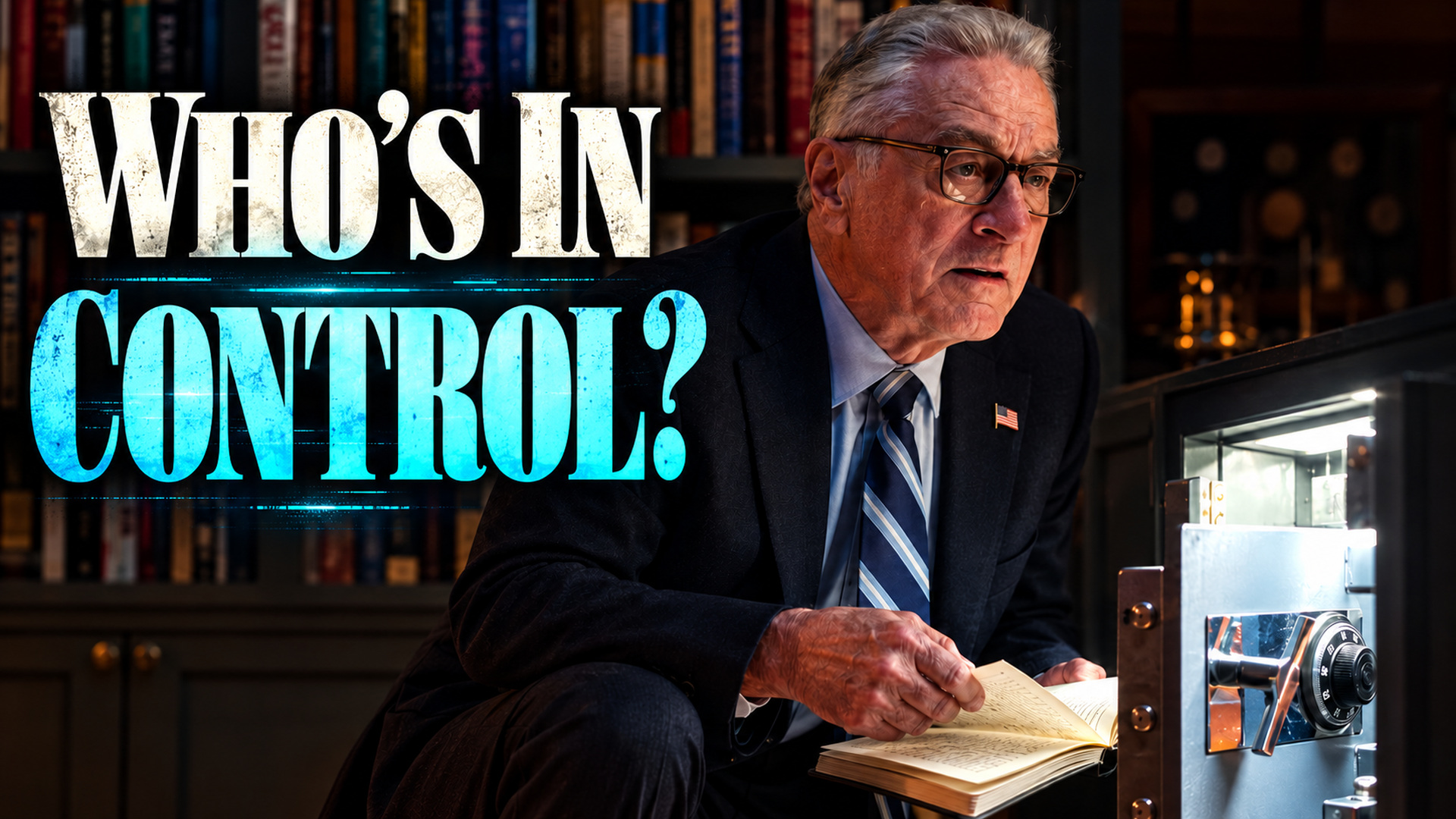
Zero Day turns a devastating cyberattack into a political and personal crisis. Former US president George Mullen is asked to lead the investigation, drawing a retired statesman back into a world of conflicting loyalties and extraordinary power. The attack disables the United States for exactly one minute, causing chaos and deaths. President Evelyn Mitchell asks Mullen to chair a commission to investigate and prevent another catastrophe, bringing the danger into his personal circle as well as public life.
Robert De Niro gives Mullen a convincing internal conflict, balancing authority against uncertainty about the people and forces around him. Angela Bassett brings determination to President Evelyn Mitchell. Lizzy Caplan and Jesse Plemons strengthen the family and professional tensions that complicate his task. Caplan’s Alexandra is Mullen’s daughter and a member of Congress, struggling with her father’s decisions. Plemons’s former aide Roger Carlson is pulled between loyalty and personal ambition. Joan Allen as former first lady Sheila Mullen and Connie Britton as former chief of staff Valerie Whitesell complete the strong ensemble.
Lesli Linka Glatter sustains a dense atmosphere across the six-part miniseries. The story connects political manoeuvring with the human consequences of the emergency instead of treating the attack solely as a technical puzzle. Glatter’s experience on Homeland is apparent in her command of political tension. Eric Newman, Noah Oppenheim and Michael S. Schmidt’s writing connects cybercrime and power games with personal sacrifice.
The fictional crisis makes institutions' vulnerability and the reactions of people in power dramatically tangible. Questions about trust and the response to danger give the series more interest than a simple pursuit of the perpetrators.
The production is polished, with assured images, editing and music supporting the intensity. Some strands could be more deeply explored and certain developments are predictable. Those weaknesses do not outweigh the performances and the involving direction for me. John Conroy and Joe Collins’s cinematography captures that dramatic pressure; Ben Lester, Hugo Diaz and Jon Otazua’s editing maintains the flow, while Jeff Russo’s score adds emotional intensity.
I find Zero Day worthwhile for viewers interested in political thrillers and substantial ensemble drama. Its strongest quality is the meeting of public responsibility and private conflict, carried by actors able to make both feel important. The combination is first-rate entertainment as well as a prompt to consider the digital age’s global vulnerabilities. For me, that cast and gripping storytelling set a new benchmark for the political-thriller genre.