

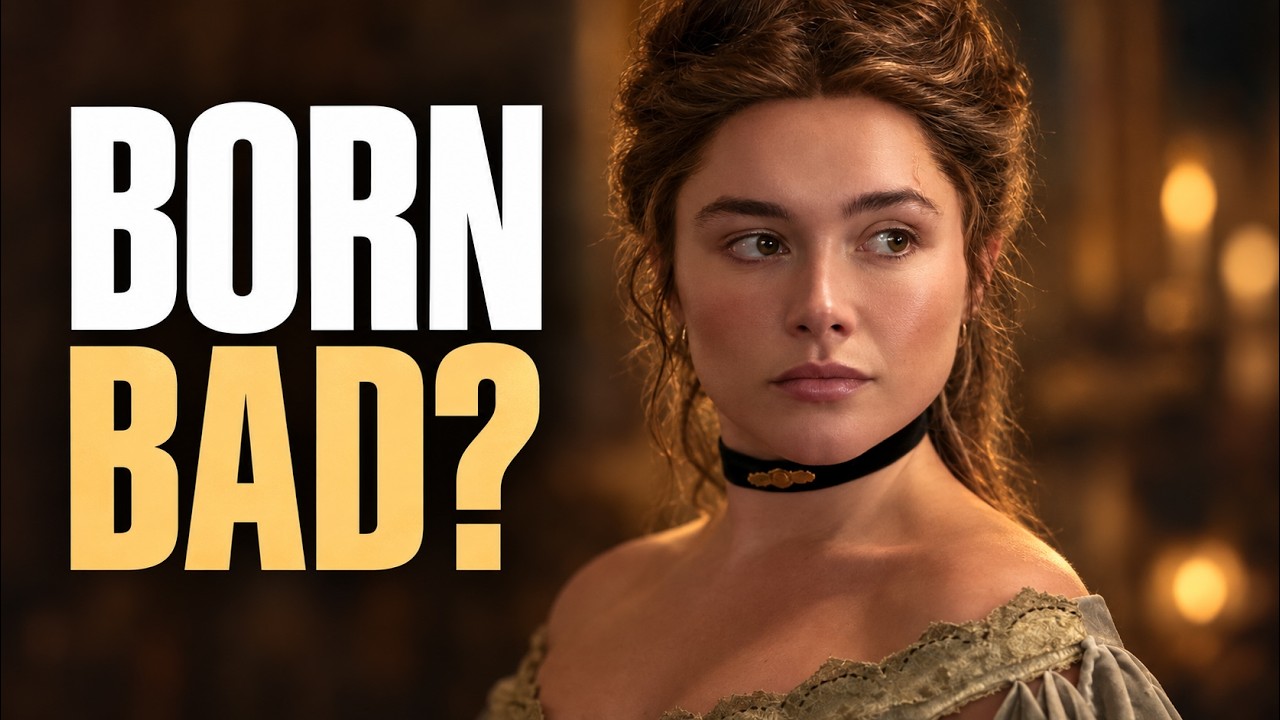
What a family passes down
Your family can give you a name, a home, and a lifetime of damage. Can you choose what you carry forward? East of Eden is Netflix's 7-episode period drama, released on October 1, 2026. Zoe Kazan adapts John Steinbeck's novel about two generations of the Trask family, with Florence Pugh as Cathy Ames, the woman who disrupts the lives of brothers Adam and Charles. Beneath the grand landscapes and period costumes sits a smaller, sharper question: how much damage can a family pass down before somebody chooses differently?
Florence Pugh keeps Cathy difficult to read
Pugh gives the series its strongest current. Cathy can make apparent tenderness feel like a negotiation, then reveal the force underneath without announcing a transformation. The performance makes her difficult to read, which matters more than making her easy to like. Giving this character a fuller history opens useful questions about autonomy and control. It also creates a risk: explain every disturbing impulse and the mystery starts shrinking.
The ensemble gives the moral questions human weight
Kazan mostly avoids turning Cathy into a simple case study. Understanding what constrains her doesn't erase what she does to other people. The drama becomes uncomfortable when Adam's longing for an ideal life prevents him from seeing the person in front of him. Christopher Abbott gives that longing a quiet sadness, while Mike Faist makes Charles's resentment feel tightly stored rather than constantly displayed. Hoon Lee provides a different kind of intensity as Lee. His intelligence and care aren't decorative reassurance around a troubled family. They expose the gap between people who claim authority and people who actually take responsibility. Ciarán Hinds brings warmth to Samuel Hamilton, helping the series breathe beyond its central conflicts. These relationships give the moral arguments human weight instead of leaving them as solemn speeches. The production has a patient, traditional sweep.
Open landscapes, dark interiors
New Zealand landscapes stand in for California, and the contrast between open country and restrictive interiors suits a story about freedom that keeps meeting locked doors. The handsome setting doesn't always make the images easy to read, though. Some interiors are very dark, and the passage of decades is more convincing in the writing than in the characters' appearance.
The younger generation gets less room
The larger problem is balance. The early relationships receive room to settle, but the younger generation arrives with less time to establish an equally strong presence. Cal and Aron's conflicts are crucial to the family pattern, yet the later chapters can feel compressed beside the long preparation. Cathy is magnetic enough to make that imbalance understandable; she doesn't make it disappear.
Inherited cruelty and the possibility of choice
East of Eden works best when it asks whether inherited cruelty is a sentence or a challenge. Its hope comes from the possibility of refusing the role a family has assigned you, rather than pretending the past stops hurting. This is a substantial adaptation with commanding performances and an uneven distribution of attention. If you enjoy deliberate family dramas, there's plenty here to engage with. I give the series 7 out of 10.