An explanation that feels too neat
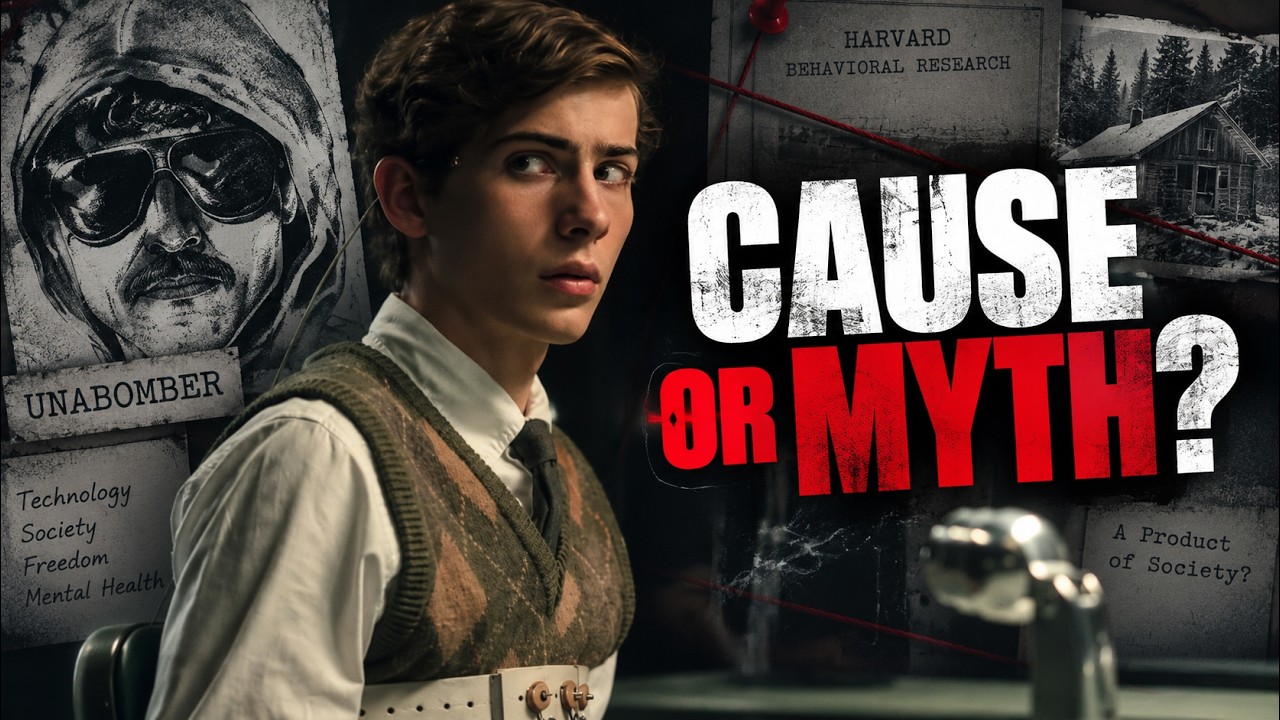
UNABOMBER wants to explain how a gifted teenager became a domestic terrorist. The problem is that the cleaner its answer becomes, the less convincing the movie feels.
Two timelines that barely connect
In 1958, 16-year-old Ted Kaczynski arrives at Harvard. Brilliant, socially isolated, and much younger than almost everyone around him, he is pulled into a psychological study run by professor Henry Murray. The movie then jumps forward to the 1990s, when the FBI is hunting the bomber who has terrorized the United States for years. Shailene Woodley plays Joanne Miller, a fictional agent who begins connecting Kaczynski to the case through language and writing patterns. The problem is that these two halves often feel like they met for the first time at the Netflix login screen.
The Harvard story is far stronger
The far stronger movie is the Harvard story. Jacob Tremblay does not play young Kaczynski as a fully formed monster. He makes him intelligent, vulnerable, socially awkward, and increasingly rigid, which makes the performance uncomfortable in exactly the right way. Russell Crowe is even more compelling as Henry Murray: charismatic, vain, intellectually seductive, and just warm enough to make the power he holds over this teenager feel more disturbing. Director Janus Metz gives these scenes a dark, claustrophobic atmosphere, and for a while UNABOMBER feels like a genuinely specific psychological drama.
The FBI plot feels generic
The FBI material is much more generic. Miller is the familiar investigator with the right instinct while colleagues hesitate and bureaucracy gets in the way. It works as basic thriller machinery, but it often feels like a compressed version of a better limited series. Marco Beltrami’s heavy score tries to manufacture extra urgency, but the material rarely becomes distinctive enough. Making Miller fictional is not inherently a problem. The problem is that the screenplay does very little with that freedom. She mostly exists to move the investigation from one checkpoint to the next.
A possible influence becomes an origin story
The more serious issue is the question the film desperately wants to answer: why did Kaczynski become the Unabomber? His participation in Murray's controversial Harvard experiments is documented. A direct causal path from those experiments to his later murders is not. Kaczynski himself later downplayed their impact. The movie technically leaves room for uncertainty, but dramatically it draws the line so boldly that a possible influence starts to resemble an origin story.
Explanation slides into simplification
And that is where explanation slides into simplification. Showing a terrorist as a human being is not the same as excusing him, and understanding radicalization is a legitimate subject. But when a movie invests this much energy in constructing a psychologically satisfying trigger, it also needs to give equal weight to ideology, personal agency, and the people harmed by those choices.
Strong parts, unresolved whole
UNABOMBER has two strong performances, a genuinely unsettling Harvard half, and enough tension to keep 100 minutes moving. As a complete film, though, it remains stuck between psychological portrait and procedural thriller, too often treating an interesting question like a proven answer. That lands at 5.5 out of 10.