

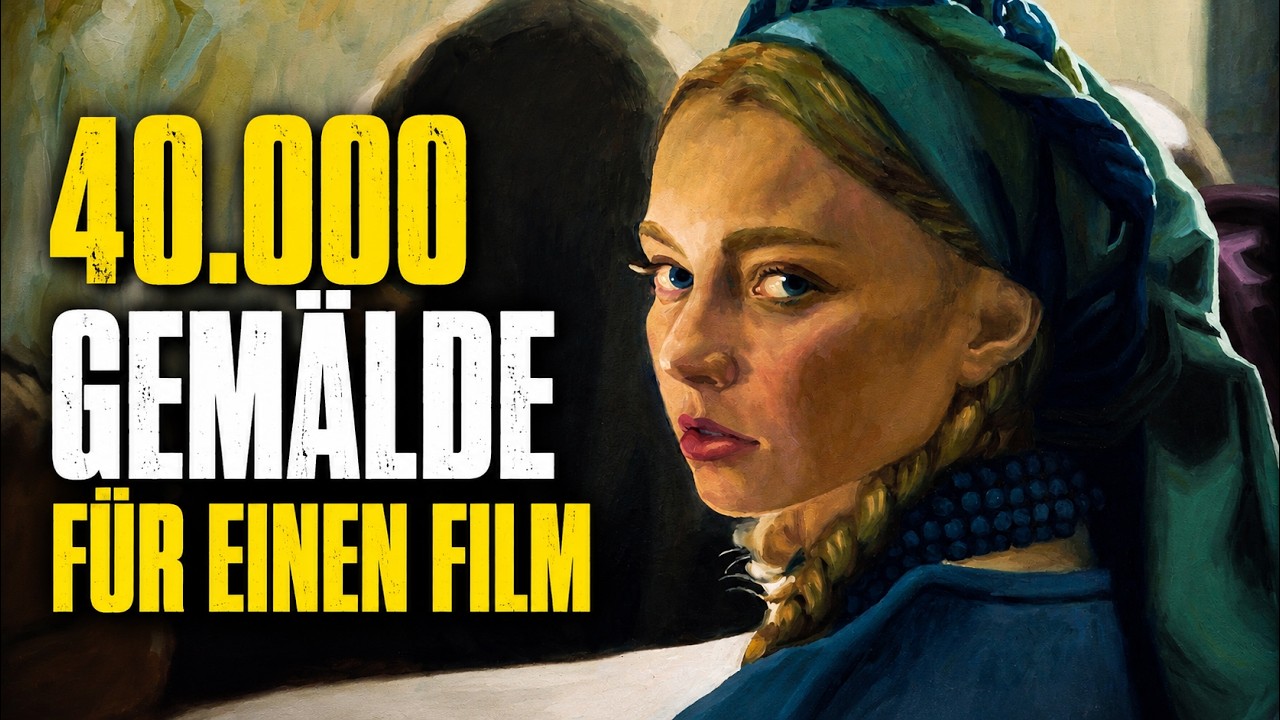
Jagna and other people’s expectations
Jagna lives in a nineteenth-century Polish village that leaves little space for her wishes. She is expected to marry the wealthy farmer Maciej Boryna, although she loves his son Antek. Personal feelings collide with claims of ownership and the community’s rules.
DK and Hugh Welchman take that conflict seriously. Their adaptation of Władysław Reymont’s novel shows how readily a young woman can become the object of decisions made by others. The historical setting offers distance, but the struggle against patriarchal oppression remains recognisable.
Painting with movement and feeling
The footage transformed into hand-painted oil images is exceptionally impressive. Light, shadow and the changing seasons give the world depth. The animation remains alive: it carries movement and emotion rather than becoming a succession of attractive still pictures.
Careful compositions and flowing transitions connect poetic views of nature with the human drama. This approach is more than decoration around the plot. It shapes how fully the viewer enters Jagna’s world.
Performances and music matter
Kamila Urzędowska is persuasive as Jagna, combining vulnerability, strength and emotional expressiveness. Robert Gulaczyk’s Antek and Mirosław Baka’s Maciej Boryna also give the relationships substance. The people remain visible beneath the painted surface.
Łukasz “L.U.C” Rostkowski’s music has an important role too. Songs and dances make village life tangible, while the soundtrack’s energy strengthens the emotional passages. Images, performances and music work together with considerable impact.
Verdict
The Peasants is visually outstanding and emotionally powerful. Its remarkable artistic treatment makes freedom, social pressure and Jagna’s vulnerability more intense rather than pushing the themes aside. This is a rewarding film whose form and story belong together.
Watch the film at home
As an Amazon Associate I earn from qualifying purchases. Using these links does not add to the price you pay.