

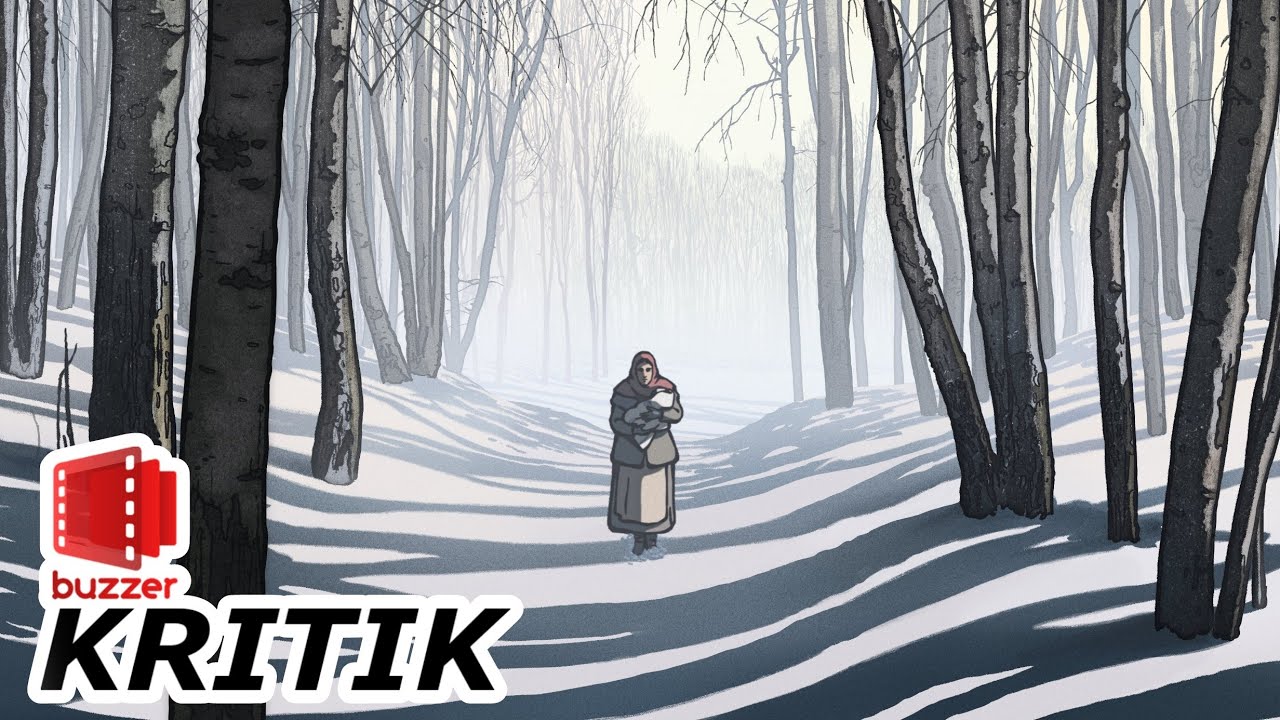
The Most Precious of Cargoes uses the shape of a fairy tale to tell a story rooted in the Holocaust. A child thrown from a deportation train is found by a poor woodcutter's wife. Her decision to care for the baby places compassion inside a world organised around its destruction.
Michel Hazanavicius's animation is poetic without making the underlying reality comfortable. Snow-covered forests, cold colour and heavy shadows emphasise the fragility of life. The contrast between drawn beauty and historical cruelty gives the images their force.
The woodcutter's wife is the emotional centre. Her unconditional care matters because it is directed towards a child who is not her own, despite the risks and hardship. The gradual change in her husband is sensitively handled and genuinely moving.
Dominique Blanc, Grégory Gadebois and narrator Jean-Louis Trintignant give the original voice performances gravity and feeling. Alexandre Desplat's music intensifies the relationship between the images and the emotion without turning it into a separate display.
The film's formal choice does not erase the horror. It makes the human gestures against that horror more visible. A small act can mean the difference between life and death, and the telling allows that fact to remain both terrible and hopeful.
This is a moving, artistically impressive work that stays with me. It can disturb and offer hope at once. Its humanity comes from the care it shows inside the story, not from pretending that the surrounding world is less cruel than it was.
Watch the film at home
As an Amazon Associate I earn from qualifying purchases. Using these links does not add to the price you pay.