

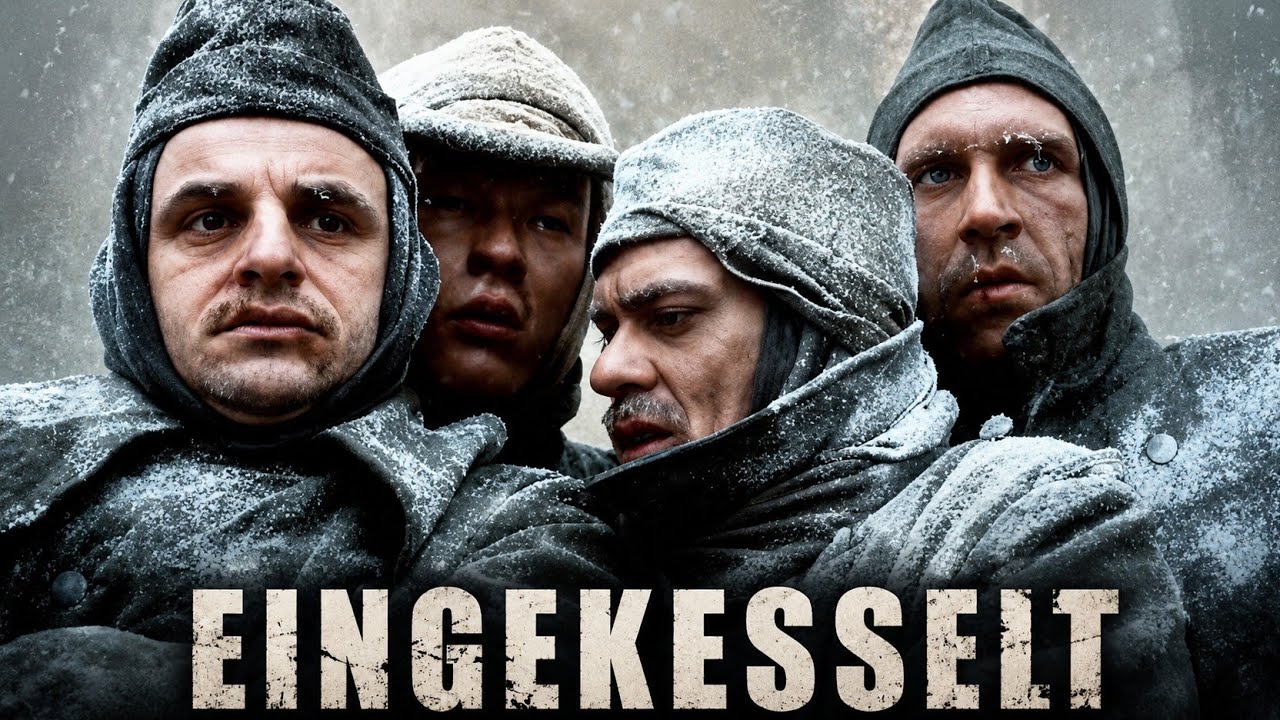
Stalingrad confronts the destruction caused by war through the experiences of German soldiers at the Eastern Front. Joseph Vilsmaier's intense images and uncompromising staging make it a powerful anti-war film.
A group of soldiers arrives at the battle after a brief period away from the front. Initial confidence gives way to hunger, cold, combat and moral conflict. Survival becomes increasingly inseparable from questions about responsibility and the loss of humanity.
Thomas Kretschmann makes Lieutenant von Witzland's movement toward doubt and despair convincing. Dominique Horwitz gives Fritz Reiser a struggle to preserve his humanity under brutal conditions. Jochen Nickel and Sebastian Rudolph strengthen the ensemble with performances full of disorientation and inner conflict.
Detailed settings and realistic battle scenes bring the circumstances close. The camera contrasts cramped trenches with the freezing expanse beyond them, creating a persistent feeling of isolation. Enjott Schneider's music reinforces the bleak atmosphere without providing an escape from it.
For me, the film's strength lies in the connection between physical destruction and damage to the people within it. It asks about moral integrity without offering the comfort of straightforward heroism. Stalingrad is an affecting, thought-provoking statement against war, carried by strong performances and images that make its hopelessness difficult to distance yourself from.