

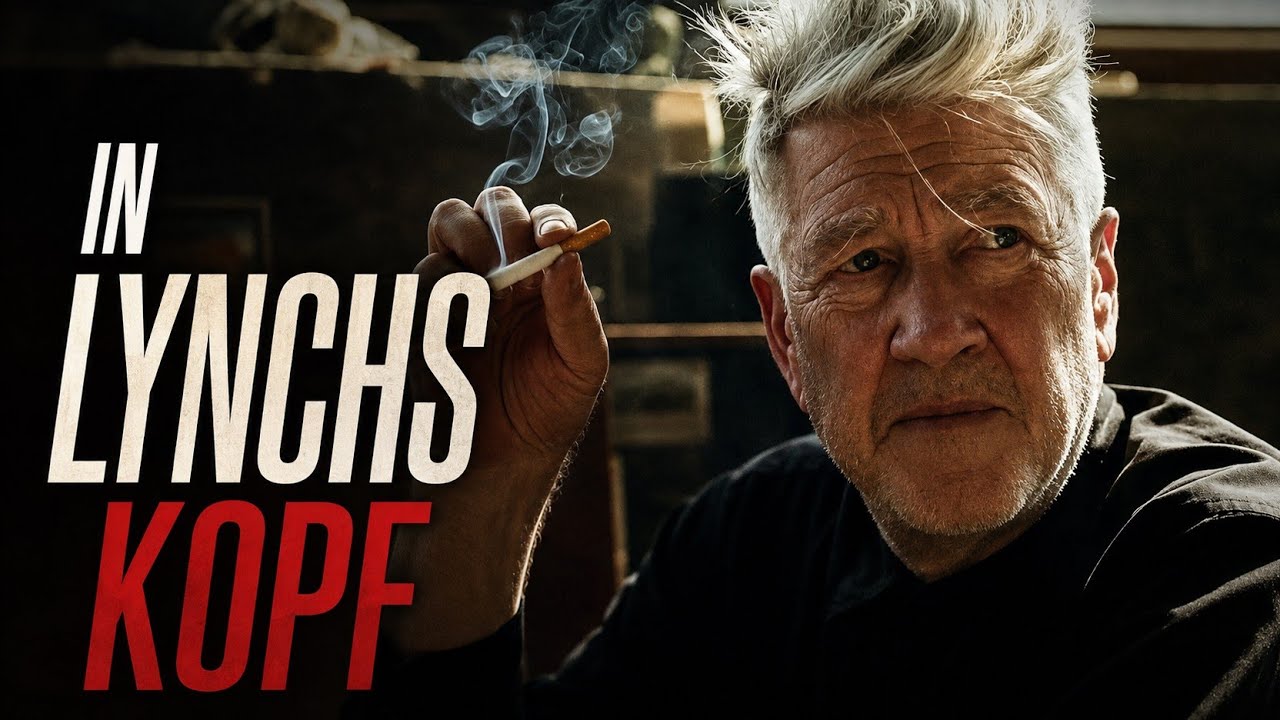
David Lynch: The Art Life opened in German cinemas on 31 August 2017. Directed by Jon Nguyen, Rick Barnes and Olivia Neergaard-Holm, it examines the early years of one of the most influential filmmakers of the twentieth and twenty-first centuries.
The film offers more than a conventional documentary. It is an intimate reflection on art, inspiration and the formation of a creative mind. Lynch takes us through his childhood in Montana, Idaho and Washington State, his time in Philadelphia and the early artistic steps that eventually brought him to cinema. His recollections follow an associative flow resembling the surreal images in his work.
The quiet, meditative direction makes the film distinctive. In more than twenty interviews recorded over several years in his studio, Lynch speaks thoughtfully about formative experiences. Atmospheric views of paintings, drawings and sculptures accompany his stories. The connection between his visual art and filmmaking is striking: viewers familiar with Eraserhead or Twin Peaks will recognise moods and motifs already present in his early paintings.
The camerawork supports this intimacy. Long shots allow time to examine the works instead of rushing through them in quick cuts. Colours and textures unfold in a way other documentaries often neglect. The sound mix deserves particular attention, creating a mysterious, almost hypnotic atmosphere.
At the centre is the idea of the art life, an existence devoted entirely to art. Lynch discusses solitude, inspiration and disturbing childhood experiences that shaped his work. His memory of a bleeding woman walking naked through the night offers a concrete example of how deeply personal experiences influenced his imagination.
This is not a complete biography or an analysis of his films. It concentrates on the early years and his painting; later works such as Blue Velvet, Mulholland Drive and Inland Empire are not explored. That may disappoint some film fans. For those interested in his artistic roots, the narrower focus makes it a unique experience.
Beyond the years covered here, Lynch’s career developed through Eraserhead, a surreal nightmare that made him a cult figure. The Elephant Man brought success and an Oscar nomination. Hollywood also created obstacles: Dune was a disappointing experience for him. Blue Velvet marked a return to his personal style and firmly established him as a master of modern surrealism.
He remained a distinctive artist in the following decades, resisting commercial pressure. Twin Peaks transformed television, while Lost Highway and Mulholland Drive led audiences into labyrinthine narratives. His last feature, Inland Empire, was a radical digital experiment. In his later years he devoted more time to painting, music and Transcendental Meditation.
Following Lynch’s death at seventy-eight, The Art Life acquires particular significance. It records the development of a visionary artist and serves as a tribute to a man whose work inspired generations of filmmakers.