

When the film stays with you
Some movies end when the credits roll. These ten keep rearranging themselves in your head long afterward — and number one barely behaves like a normal movie at all.
10. Triangle
At number ten: Triangle. Christopher Smith’s 2009 thriller starts with a simple nightmare setup: friends, bad weather, and an apparently abandoned ocean liner. Then the movie begins folding back on itself. Triangle makes repetition terrifying. The same corridors, objects and decisions carry different meanings depending on what Jess understands at that moment. Melissa George sells panic, confusion and the growing sense that the real trap may not be the ship at all. What makes Triangle work is that the puzzle never replaces the horror. You can map the loops, compare details and build theories, but the movie keeps an emotional sting underneath the machinery. It is nasty, surprisingly sad, and much smarter than its modest presentation suggests.
9. Coherence
At number nine: Coherence. James Ward Byrkit takes the opposite route from giant science-fiction spectacle. Most of Coherence happens around one dinner table, with a small cast, ordinary rooms and almost no visual effects. That limitation becomes the weapon. A comet passes overhead, the power goes out, and tiny inconsistencies turn a friendly evening into a reality crisis. The film gives you just enough information to start making rules, then introduces details that force you to question those rules. Because the performances feel loose and conversational, the paranoia lands harder than polished exposition could. And the real anxiety is not simply that reality may have split. It is the suspicion that, given another version of your own life, you might immediately start comparing, envying and replacing.
8. Predestination
At number eight: Predestination. Predestination should come with one warning: do not read the plot first. The Spierig brothers adapt Robert A. Heinlein’s “All You Zombies” into a time-travel thriller that treats causality like a knot pulled tighter every time you think you have loosened it. Ethan Hawke plays a temporal agent on a final assignment, but Sarah Snook gives the film its emotional weight. Without that human center, the structure could feel like a diagram. Instead, identity, loneliness and the desire to belong become inseparable from the paradoxes. The film is remarkably confident about withholding context. Scenes that initially seem straightforward later acquire entirely different meanings. Predestination does not just ask where a timeline begins. It keeps pushing until the idea of a clean beginning becomes the wrong question.
7. Black Swan
At number seven: Black Swan. Black Swan messes with your head without time travel, alternate dimensions or elaborate rules. Darren Aronofsky simply traps us inside Nina’s increasingly unstable perception. Natalie Portman plays a ballet dancer whose pursuit of perfection turns discipline into self-destruction, and the movie makes the body itself feel unreliable. Reflections misbehave. Familiar faces become threatening. Tiny sensations become horror images. Solving every moment as “real” or “imagined” misses the point, because Nina can no longer make that distinction cleanly either. The White Swan and Black Swan are not just roles; they become competing versions of the self she believes she must control. Aronofsky turns artistic obsession into psychological horror where perfection is basically a demand to erase the person underneath the performance.
6. Donnie Darko
At number six: Donnie Darko. Donnie Darko is a suburban teen drama, apocalyptic science fiction, dark comedy and a nightmare about a man in a rabbit suit occupying the same movie. Richard Kelly gives Donnie a countdown toward the end of the world, but the film’s power comes from how uncertain everything around it feels. Is Donnie seeing a structure nobody else can see, or constructing meaning out of fear and alienation? The movie gives you mythology to investigate while leaving disturbing empty space. Jake Gyllenhaal grounds the weirdness in adolescent anger, loneliness and intelligence. That is why Donnie Darko became a cult object rather than just a puzzle. Its timeline invites diagrams, but its mood stays with you: October skies, strange coincidences, suburban hypocrisy and the feeling that time itself has become personal.
5. Fight Club
At number five: Fight Club. Fight Club is so embedded in pop culture that it is easy to forget how unstable it feels when you encounter it cold. David Fincher shoots the Narrator’s world as if reality is already contaminated: insomnia, consumer numbness, flashes of aggression and Tyler Durden appearing like an answer to a question the Narrator cannot properly ask. Brad Pitt gives Tyler dangerous charisma; Edward Norton makes exhaustion and self-disgust almost comic. The movie keeps changing what kind of story it seems to be — satire, male bonding fantasy, underground rebellion, psychological thriller. Its sharpest idea is how easily anger can become another identity sold back to someone desperate to feel authentic. Fight Club invites misreading because Tyler’s certainty is seductive. It becomes most unsettling when you notice how carefully Fincher makes that seduction exciting before exposing its cost.
4. Shutter Island
At number four: Shutter Island. Shutter Island announces itself as a mystery, but Martin Scorsese directs it like a nightmare that already knows you are trapped. U.S. Marshal Teddy Daniels arrives at Ashecliffe Hospital to investigate a disappearance, and almost immediately the island feels hostile to ordinary logic. The weather, music, performances and architecture seem slightly too intense, as though Teddy has stepped into a world built from suspicion. Leonardo DiCaprio plays him with force but also tiny fractures of uncertainty. Scorsese’s great trick is encouraging you to behave like Teddy: inspect every look, locked door, contradiction and strange answer as evidence. The investigation becomes a machine for producing more doubt. Shutter Island works beyond its mystery mechanics because it asks how badly the mind can need one explanation to be true — especially when another would be unbearable.
3. Inception
At number three: Inception. Inception is the rare blockbuster that can explain its rules for half the movie and still leave people arguing afterward. Christopher Nolan builds a heist inside shared dreams, then stacks those dreams so time, gravity and cause-and-effect operate differently on each level. The miracle is not simply that the structure is complicated. It is that several clocks can run at once while the climax remains emotionally legible. Leonardo DiCaprio’s Cobb is the anchor: a professional who manipulates other people’s subconscious but cannot keep his own memories from invading the job. That contradiction gives the puzzle a heart. The deeper the team goes, the more the movie suggests that reality is partly something we accept because we need to live inside it. Inception makes architecture, editing and memory part of the same game — cerebral, enormous and surprisingly coherent.
2. Memento
At number two: Memento. Memento does something even more ruthless: it makes the audience share the protagonist’s disadvantage. Leonard Shelby cannot form new memories, so Christopher Nolan refuses to give us the normal security of chronology. The major color sequences move backward while black-and-white material moves forward, forcing context to arrive after the decisions it would normally explain. You meet people before you know whether Leonard should trust them, and because he relies on notes, Polaroids and tattoos, information looks solid even when its meaning is unstable. That structure is not a gimmick pasted onto the story. It is the story’s moral engine. If memory helps create identity, what happens when you outsource memory to messages written by a version of yourself you can no longer question? Memento turns revenge into an argument about certainty, self-deception and the stories people choose to keep moving.
1. Mulholland Drive
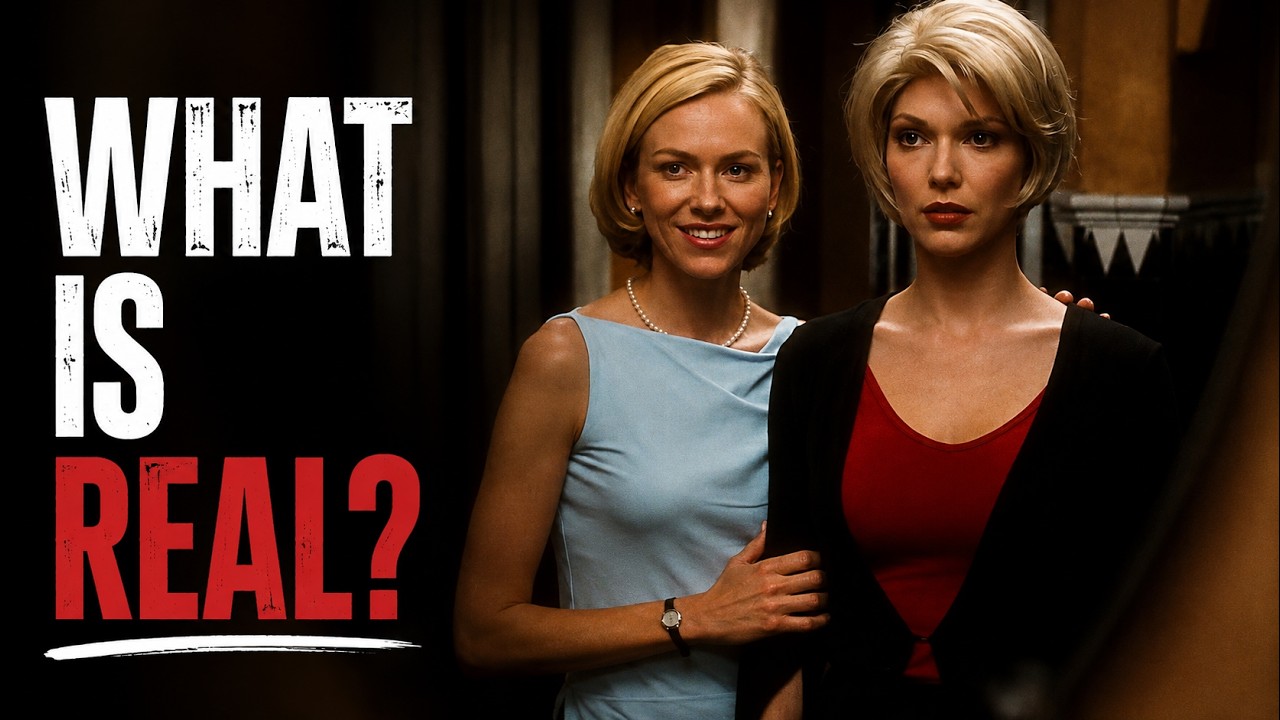
And at number one: Mulholland Drive. David Lynch’s Mulholland Drive wins because it refuses to become safe even after you think you have found the key. Betty arrives in Hollywood full of optimism and meets an amnesiac woman who calls herself Rita. Their search for Rita’s identity feels like a mystery, while other scenes drift into casting rooms, apartments and encounters connected by dream logic rather than conventional plot. Naomi Watts is essential because she can make innocence, performance, longing and despair feel like different realities occupying the same face. There are convincing ways to interpret Mulholland Drive. You can trace identities, echoes, objects and repeated emotional patterns. But Lynch never reduces the film to a code with one satisfying answer. Hollywood becomes part dream factory, part machine for manufacturing identities, fantasies and failure. Scenes can turn funny, romantic or terrifying without warning, and you never know whether a moment is revealing truth or creating another layer of illusion. That is why it beats Memento here. Memento rewards reconstruction. Mulholland Drive keeps resisting it. You do not simply solve the movie; you negotiate with it. That is the kind of film you do not finish — you escape from it. Then, inevitably, you start rebuilding it in your head.