

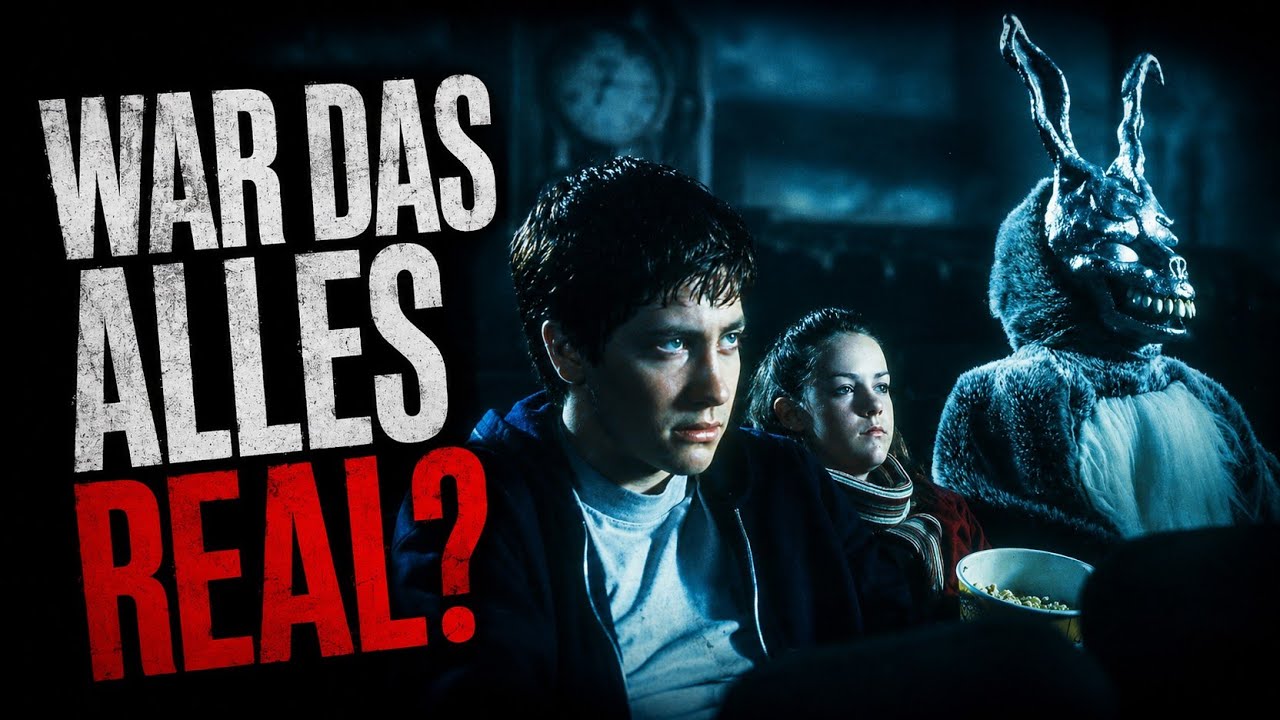
Today, calling Donnie Darko a cult classic feels almost too obvious. The film is regularly revisited, re-released and endlessly discussed by viewers still trying to decide exactly what Richard Kelly's story is doing.
In 2001, none of that was guaranteed. After Sundance, the more realistic possibility was that the film might simply disappear.
For its 25th anniversary, Donnie Darko returns to US theaters from October 2 through October 4, 2026, in a new 4K presentation. The timing is fitting because the story of the movie isn't only about Donnie, Frank and a jet engine falling from the sky. It's also about a film that somehow survived its own terrible start.
Sundance didn't solve anything
Kelly was only in his mid-twenties when he made his directorial debut, and he certainly didn't design it to make a distributor's job easy.
Donnie Darko mixes teenage drama, science fiction, time travel, black comedy and psychological mystery, then throws in a deeply unsettling man wearing a giant rabbit costume.
Sundance brought attention but no easy path to release. Kelly has since described the initial response as brutal, and for a while the prospect of the film bypassing theaters altogether was very real.
Christopher Nolan and Emma Thomas later helped persuade Newmarket Films to give the movie a theatrical chance. Drew Barrymore had already supported the project as a producer.
It got its release.
Then came the worst possible timing.
A jet engine after September 11
Donnie Darko opened in the United States on October 26, 2001, only weeks after the September 11 attacks.
That would have been an extremely difficult environment for any dark and unconventional independent film. This particular movie also revolved around the image of an aircraft engine crashing into a suburban home.
You don't need several years of marketing experience to see the problem.
The film played on only a few dozen screens and finished its original US theatrical run with roughly $517,000. Under normal circumstances, that would have been the end of the story.
The movie had failed theatrically. Home video would follow, everyone would move on, and eventually it might become an answer in a particularly difficult film quiz.
Instead, Donnie Darko started building an audience after the box office had already rejected it.
The audience arrived late
The movie reached DVD in 2002 and began appearing as a midnight attraction. New York's Pioneer Theater became particularly important, running Donnie Darko repeatedly and attracting audiences long after its conventional theatrical life was supposed to be finished.
Kelly has described walking past the venue, spotting his own poster and being confused about why the supposedly dead film was playing there. When he discovered the midnight shows were selling out, he realized the movie had developed a second life without waiting for anyone's permission.
That kind of growth is almost impossible to manufacture.
One viewer watches Donnie Darko, spends the next half hour trying to explain why it's either brilliant or completely incomprehensible, and two more people decide they need to see it.
As cult-film distribution strategies go, it has proved surprisingly durable.
Confusion became part of the appeal
The crucial difference is that Donnie Darko doesn't become smaller once somebody explains part of it.
The timeline, Frank, the Tangent Universe, Donnie's mental state and the strange predictability of events can all be discussed at length, yet every answer seems to create another question.
Kelly expanded the mythology through The Philosophy of Time Travel material and later through the Director's Cut. What had initially made the movie difficult to market eventually became one of the reasons viewers kept returning to it.
That's the irony at the heart of its success.
In 2001, people didn't know how to explain Donnie Darko.
Later, everyone wanted to explain Donnie Darko.
The flop with an unusually long afterlife
Twenty-five years later, the film is back in theaters. Nobody needs to be convinced that there's an audience for a Jake Gyllenhaal movie involving time travel and an alarming six-foot rabbit.
The reputation already exists.
But it wasn't created by a studio suddenly admitting a mistake and relaunching the film with a massive campaign. The cult grew through home video, UK success, midnight screenings and viewers who kept passing the film along.
Sometimes opening weekend decides the fate of a movie.
Sometimes the movie simply refuses to accept the decision.
Film background
Watch the film at home
For your home collection
Check format, audio, region compatibility and current availability on Amazon.
As an Amazon Associate I earn from qualifying purchases. Using these links does not add to the price you pay.