

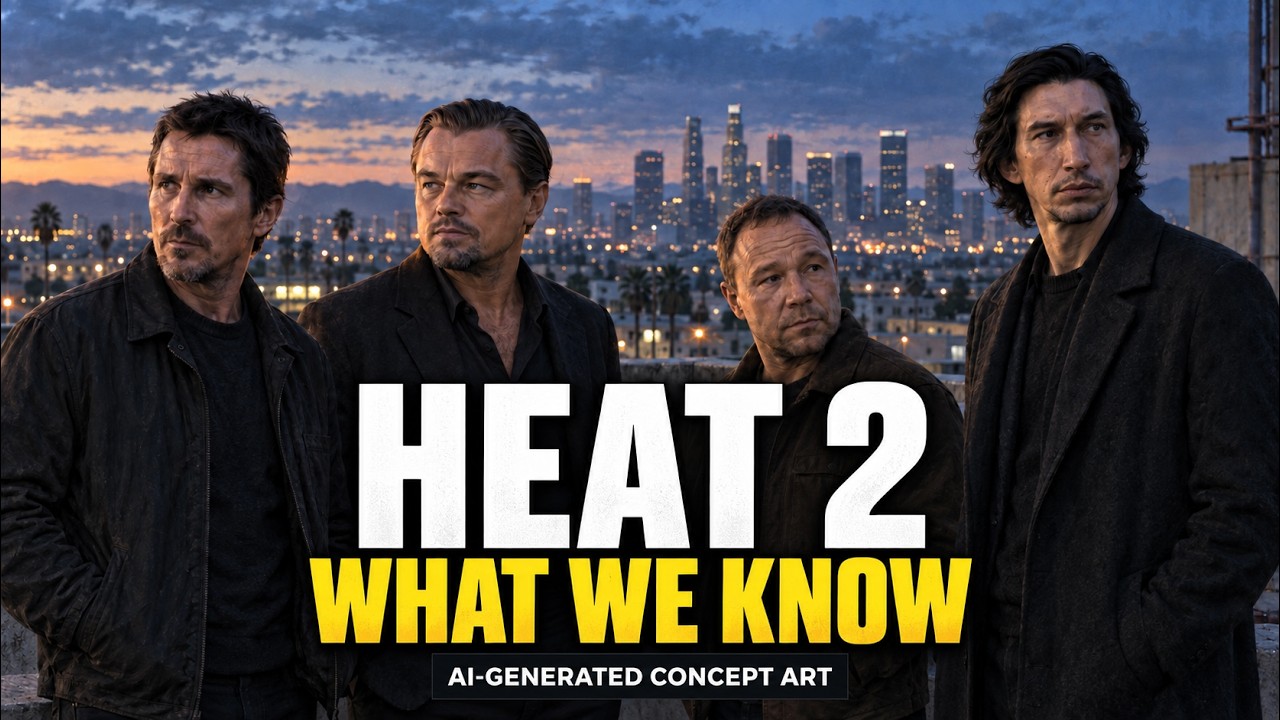
Heat 2 has an advantage over a sequel assembled around familiar faces: there is already a story to adapt. Michael Mann and Meg Gardiner’s 2022 novel extends the world of the 1995 film across periods before and after its events. That gives the project a stronger starting point than simply asking an audience to recognise a title.
Another chapter needs another perspective
A prequel and sequel structure creates room to examine how these lives developed, and what their professional commitments cost. The attraction of Heat was never confined to the mechanics of a robbery. Its people organise their lives around work that leaves little space for ordinary intimacy. Expanding that conflict is more interesting than reproducing a famous confrontation.
The novel’s wider timespan offers that possibility. It can place familiar relationships in a different context without requiring the new film to pretend that nothing has changed. This is a reason for interest, not a verdict on an unfinished adaptation. Having material and translating it effectively to cinema remain separate achievements.
The names should serve the characters
Casting reports naturally attract attention. TheWrap’s July 2026 reporting linked Christian Bale to Vincent Hanna and Leonardo DiCaprio to Chris Shiherlis, while an Amazon MGM spokesperson said deals were not finalised at that point. Those are dated production reports, not an excuse to turn every circulating role assignment into settled fact.
The useful question is what new actors could do with those characters. An imitation of a recognisable voice or mannerism would be an easy promotional moment and a limited artistic goal. Hanna and Shiherlis need lives within this particular story, not a succession of reminders that someone else once played them. Different performers can be an opportunity if the adaptation allows them more than respectful impersonation.
Scale cannot replace the human pressure
A larger canvas also creates a danger: the sequel could mistake more locations and more action for a deeper understanding of its people. A novel has room to move between settings and periods. A film must decide what to keep and how each movement changes the emotional pressure.
Heat 2 earns its strongest case when the added history and consequences make the original conflicts richer. It earns its weakest case when recognition becomes the point of the exercise.
That is the standard worth carrying into the adaptation. The names on a poster will sell the first conversation. The relationship between work, loyalty and the possibility of another life must sustain the film. The novel supplies a genuine path forward; cinema still has to make that path necessary.